As part of my MA final project, I wanted to explore what was happening in the art and poetry world during and before the Industrial Revolution. In my research, I came across an interesting article on the Art UK website.
Posted 21 Mar 2019, by Lydia Figes
Romanticism was one of the most important movements of the late eighteenth and early nineteenth centuries. It refers to the birth of a new mindset and sensibility that flourished in Europe, eventually spreading to the rest of the world. It has been seen as a radical reaction against modern industrialisation, a new way of thinking which permeated the visual arts, music, philosophy and literature. Rather than worshipping God, the Romantics revered nature, driving a new rationalist and individualist way of thinking.
Here we take a look at some of the key figures in the movement in Britain.
First Generation Romantic Poets
William Blake
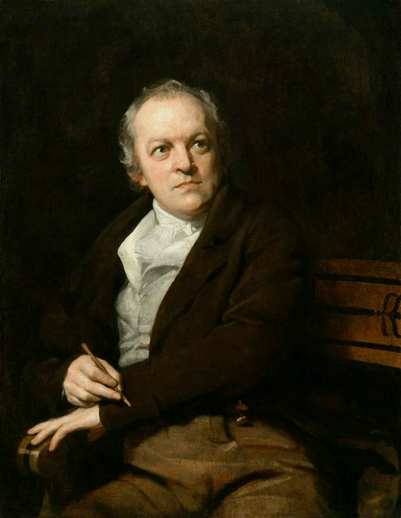
Fig 1: Image credit: National Portrait Gallery, London. Used via Art UK. W
illiam Blake (1807), oil on canvas by Thomas Phillips. Dimensions: 36 1/4 × 28 3/8 in. (921 × 720 mm). National Portrait Gallery, London. NPG 212. On display at Home of the Arts, Surfers Paradise, Australia.
Image © National Portrait Gallery, London. Accessed via National Portrait Gallery, London.
William Blake (1757–1827) was a pioneering figure of the Romantic movement, who was celebrated for his unique fusion of art, poetry, and radical thought. Often considered both an artist and a prophet, William Blake rejected the rationalism of the Enlightenment and the dehumanising effects of the Industrial Revolution, instead embracing imagination, emotion, and spiritual freedom.
William Blake’s work defied convention. His illuminated books, where he combined hand-painted illustrations with poetic verses, reflected his belief in the power of creativity as a force for personal and social liberation. In poems like Songs of Innocence and Experience, William Blake explored the contrasts of purity and corruption, nature and industry, freedom and oppression.
His visual art was equally radical — filled with mythical figures, biblical themes, and bold symbolism. William Blake criticised the rise of industrialisation, seeing it as a force that crushed human imagination and spiritual connection. He described the factories of London as “dark Satanic Mills,” a phrase that remains iconic today.
Though largely unrecognised in his lifetime, William Blake’s work became a cornerstone of Romanticism, influencing generations of artists and writers. His commitment to individual vision, emotional expression, and social justice makes him one of the most enduring and fascinating figures in British cultural history.
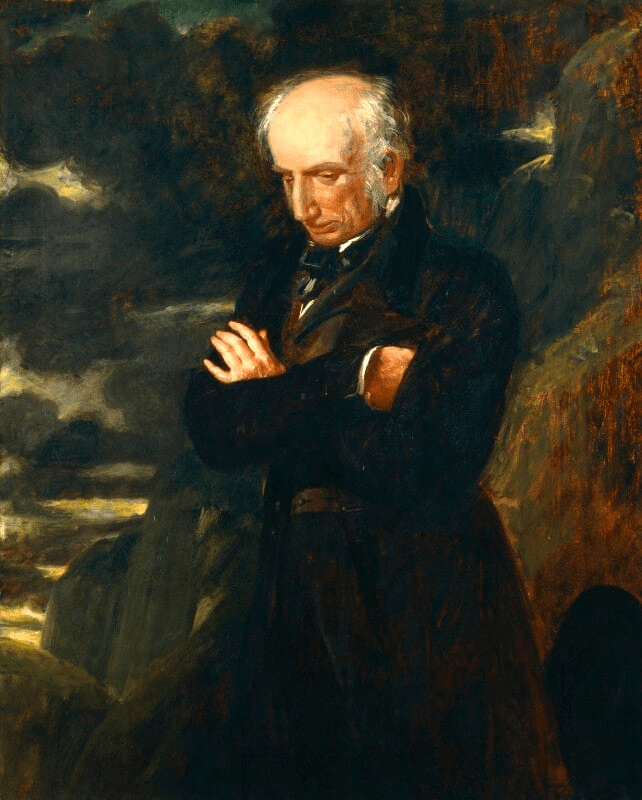
Fig 2: William Wordsworth (1842), by Benjamin Robert Haydon. Oil on canvas, 49 x 39 in. Collection of the National Portrait Gallery, London (NPG 1857). Featured in the Regency Portraits Catalogue.
Image © National Portrait Gallery, London. Accessed via National Portrait Gallery, London.
William Wordsworth (1770–1850) was born the same year that Thomas Chatterton, the young poet whose life ended tragically at just 17, took his own life. William Wordsworth would rise to become one of Britain’s most renowned Romantic poets, later serving as Poet Laureate from 1843 until his death in 1850. In the early nineteenth century, William Wordsworth honoured Chatterton’s brief but impactful life in his poem “Resolution and Independence,” a reflective and lyrical tribute that explores the emotional struggles faced by poets and the creative spirit.
William Wordsworth spent much of his life in Dove Cottage, Grasmere, in the heart of the Lake District, alongside his sister Dorothy Wordsworth, herself a gifted writer and poet. The natural beauty of the countryside deeply shaped William Wordsworth’s poetry, which often celebrated the simplicity and power of the natural world. Running through his work was a clear disdain for industrialisation—railways, factories, and viaducts represented everything he felt distanced people from nature. It’s no surprise that his most famous poem, “Daffodils,” remains a timeless celebration of nature’s quiet joy.
One of Wordsworth’s closest friends and confidants was the fellow Romantic poet Samuel Taylor Coleridge – they lived close to one another in England and later Germany and often published their poems together. Alongside Robert Southey, Wordsworth and Coleridge became known as the Lake Poets.
Samuel Taylor Coleridge

Fig 3: Samuel Taylor Coleridge (mezzotint), by William Say, published by Marseille Middleton Holloway, after James Northcote. Published 2 November 1840. Plate size: 15 1/8 × 11 in. (384 × 280 mm); paper size: 17 5/8 × 13 1/4 in. (448 × 338 mm). Given by Sir Herbert Henry Raphael, 1st Bt, 1913. National Portrait Gallery, London. Reference Collection, NPG D19942.
Image © National Portrait Gallery, London. Accessed via National Portrait Gallery.
Samuel Taylor Coleridge (1772–1834) was one of the most influential figures of the Romantic movement in Britain, known for his vivid imagination, lyrical poetry, and groundbreaking literary criticism. Born in Devon, Samuel Taylor Coleridge is best remembered for his enduring poems “The Rime of the Ancient Mariner” and “Kubla Khan,” both celebrated for their rich imagery, supernatural themes, and exploration of the human psyche.
Samuel Taylor Coleridge was a close friend and collaborator of William Wordsworth, and together they published Lyrical Ballads in 1798, a collection that helped define the Romantic era by breaking away from rigid classical forms and focusing on nature, emotion, and everyday life. While William Wordsworth’s poetry celebrated the simplicity of nature, Samuel Taylor Coleridge often delved into the mysterious, the gothic, and the fantastical.
Throughout his life, Samuel Taylor Coleridge struggled with ill health and an addiction to opium, which influenced much of his work and personal relationships. Despite these challenges, his contributions to literature extended beyond poetry — his lectures and essays on philosophy and literary theory were highly respected, laying foundations for modern literary criticism.
Samuel Taylor Coleridge’s work reflects the Romantic fascination with imagination, emotion, and the sublime, and his legacy continues to inspire writers, artists, and thinkers across generations.
Second Generation Romantic Poets
Lord Byron
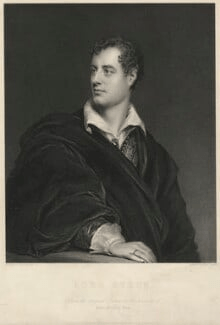
Fig 4: Lord Byron (1836), line engraving by Robert Graves, after Thomas Phillips. Paper size: 16 1/2 × 12 1/2 in. (418 × 318 mm). National Portrait Gallery, London. Reference Collection, NPG D32523.
Image © National Portrait Gallery, London. Accessed via National Portrait Gallery.
Lord Byron (George Gordon Byron) was born on 22 January 1788 in London and later became the 6th Baron Byron, inheriting the title at age 10 after the death of his great-uncle.
Later in life, he added the surname Noel—becoming George Gordon Noel Byron—to fulfill a condition in his mother-in-law’s will and inherit part of her estate. So if you ever see “George Noel Gordon Byron,” that’s still our famously “mad, bad, and dangerous to know” Romantic poet.
Lord Byron was one of the most famous and controversial figures of the Romantic movement. Known for his bold personality, rebellious spirit, and passionate poetry, Lord Byron helped shape Romanticism with his focus on intense emotion, individual freedom, and defiance of social convention.
Lord Byron’s poetry often explored themes of love, nature, personal struggle, and political liberty. His works, such as “Childe Harold’s Pilgrimage” and “Don Juan,” combined personal reflection with sharp social commentary. He became known for creating the idea of the “Byronic hero” — a brooding, charismatic figure marked by rebellion, pride, and a troubled past — a character type that influenced literature and culture far beyond his lifetime.
Lord Byron lived a dramatic and unconventional life, travelling extensively across Europe and becoming involved in political causes, most famously supporting the fight for Greek independence. His openness about his personal life, romantic affairs, and political views made him both celebrated and scandalised during his lifetime.
For Lord Byron, Romanticism was not just about poetry but about living passionately and fighting against injustice. His legacy remains a symbol of artistic freedom, emotional depth, and fearless self-expression.
Percy Bysshe Shelley
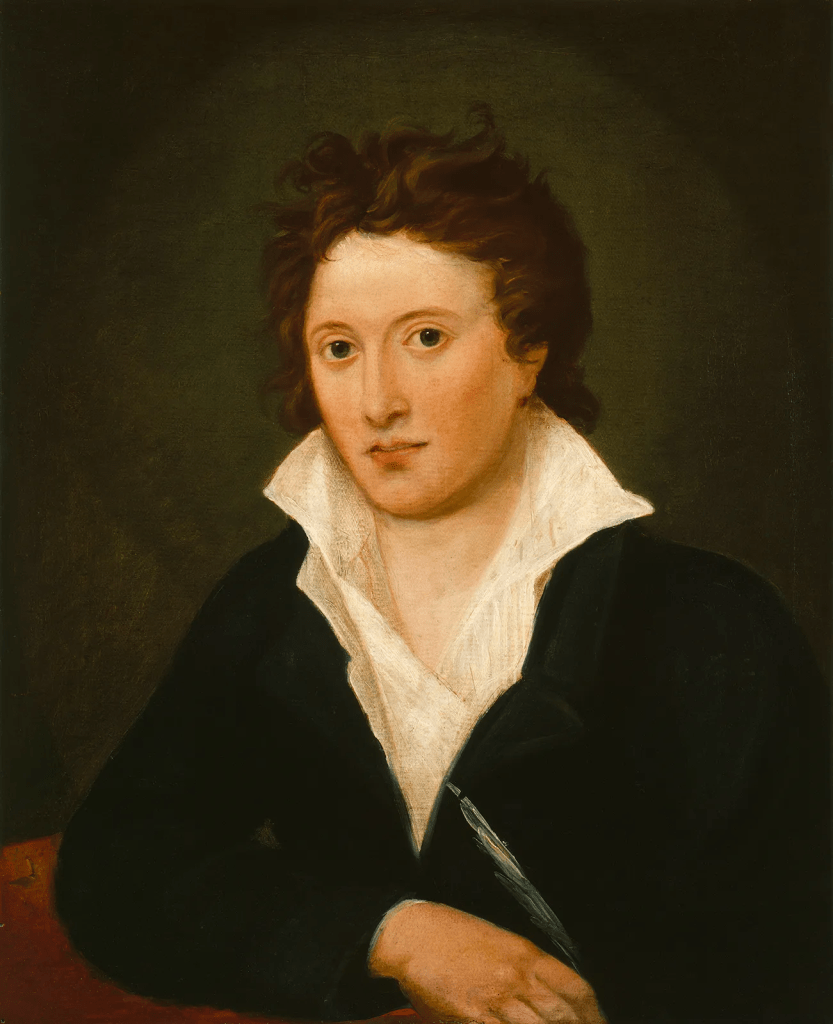
Fig 5: Percy Bysshe Shelley (1819), oil on canvas by Amelia Curran. Image as seen on Encyclopædia Britannica website. Used for informational/reference purposes only. Accessed via https://www.britannica.com/biography/Percy-Bysshe-Shelley.
Percy Bysshe Shelley (1792–1822) and his wife Mary Shelley (1797–1851) were close friends of Lord Byron, whom they first met in 1816 during a stay at Lake Geneva, Switzerland. It was at Lord Byron’s villa during this famous summer gathering that Mary Shelley began writing her landmark Gothic novel, Frankenstein.
As one of the era’s most remarkable literary couples, Percy Bysshe Shelley was known not only for his lyrical poetry but also for his strong commitment to social justice and radical political ideals. A revolutionary thinker and outspoken non-conformist, Percy Bysshe Shelley was expelled from Oxford University, eloped with Harriet Westbrook, and became involved in campaigns such as Irish independence. His controversial views led to censorship, with some publishers refusing to print his work out of fear of charges like blasphemy or sedition.
Percy Bysshe Shelley was ahead of his time, writing essays advocating for vegetarianism, nonviolence, and social reform. Unlike Lord Byron, much of Percy Bysshe Shelley’s work was underappreciated during his lifetime, with his influence only growing after his death. In July 1822, shortly before his 30th birthday, Percy Bysshe Shelley tragically drowned off the coast of Italy. Some accounts have suggested that his death may not have been accidental, with theories of suicide emerging, though these remain speculative. Today, Percy Bysshe Shelley is remembered as one of the boldest and most visionary voices of Romanticism.
John Keats

Fig 6: John Keats (1821–1823), oil on canvas by Joseph Severn. Dimensions: 22 1/4 × 16 1/2 in. (565 × 419 mm). Given by S. Smith Travers, 1859. National Portrait Gallery, London. Primary Collection, NPG 58.
Image © National Portrait Gallery, London. Accessed via National Portrait Gallery.
John Keats (1795–1821) is celebrated as one of the greatest poets of the Romantic era, known for his rich, sensual imagery and deep emotional expression. Though his life was tragically short—he died at just 25 from tuberculosis—John Keats left behind an extraordinary body of work that continues to influence literature today.
John Keats came from humble beginnings and trained as a surgeon before dedicating himself fully to poetry. His works are marked by a fascination with beauty, nature, love, and mortality, often exploring how fleeting life can be. Some of his most famous poems, including “Ode to a Nightingale,” “Ode on a Grecian Urn,” and “To Autumn,” reflect his signature style of vivid description and meditative reflection.
John Keats lived during a time of personal and political turmoil. Despite harsh criticism from literary reviewers of the time, he remained committed to his belief in “truth and beauty,” famously writing, “Beauty is truth, truth beauty—that is all / Ye know on earth, and all ye need to know.”
His final years were spent in Italy, where he hoped the warmer climate would improve his health, but he passed away in Rome in 1821. His tombstone poignantly reads, “Here lies one whose name was writ in water,” reflecting his belief that he would be forgotten. Ironically, John Keats is now remembered as one of the most beloved figures in English poetry, admired for his lyrical mastery and the intense humanity of his verse.
References:
Images:
Fig 1: National Portrait Gallery
Fig 2: National Portrait Gallery
Fig 3: National Portrait Gallery
Fig 4: National Portrait Gallery
Fig 5: Britannica
Fig 6: National Portrait Gallery
Websites:
 Rachel Bakewell