What is Synaesthesia?
Best described as a union of the senses, synaesthesia is when one sensory experience involuntarily, and consistently, prompts another. There are up to 70 different types, such as the ability to see sounds, hear time, and taste shapes; however, the most common involve colour.
Some scientists believe that synaesthesia results from “crossed-wiring” in the brain. This means that for synesthetes (people who have synaesthesia), neurons and synapses that are usually contained within one sensory system cross to another. It is not known exactly why this might happen but some researchers believe that these crossed connections are present in everyone at birth—it’s not until later that the connections are refined.
Master Artists of the Past Who Painted Sounds
Vincent Van Gogh
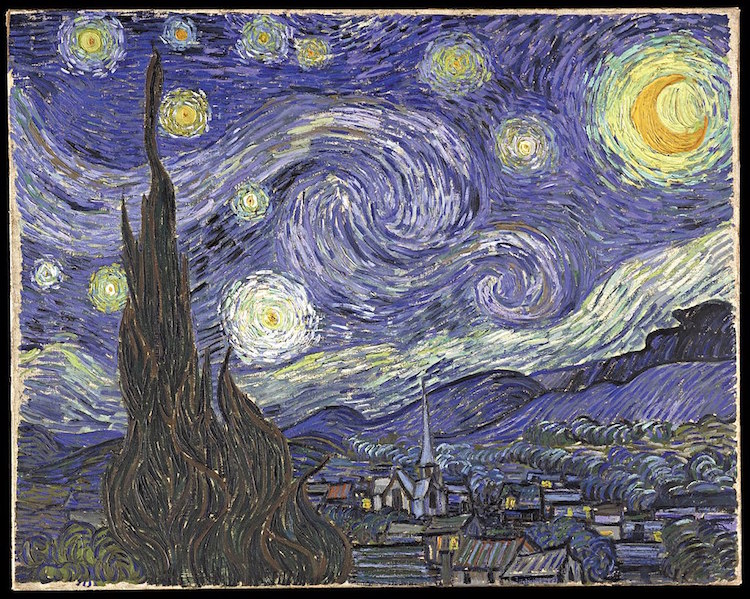
“Starry Night” by Vincent van Gogh. (Photo: WikimediaCommons Public Domain)
The work of Vincent van Gogh is known for being vibrant and full of expressive movement, but perhaps there’s a reason for his distinct style. Many art historians believe that Vincent van Gogh had a form of synaesthesia called chromesthesia—an experience of the senses where the person associates sounds with colours. This is evident in various letters that Van Gogh wrote to his brother—in one he reveals, “Some artists have a nervous hand at drawing, which gives their technique something of the sound peculiar to a violin.”
Van Gogh also took up piano in 1885 but struggled to grasp the instrument. He declared that the experience of playing was overwhelming because each note evoked a different colour. Unfortunately for Van Gogh, the teacher took this as a sign of insanity and forced him to leave.
Wassily Kandinsky

“The Lyrical” by Wassily Kandinski. (Photo: WikimediaCommons Public Domain)
For Russian artist Wassily Kandinsky, music and colour were inextricably linked. The abstract painter, cellist, and synesthete created an iconic collection of abstract paintings that expressed how he associated each musical note with an exact hue. He once said, “The sound of colours is so definite that it would be hard to find anyone who would express bright yellow with bass notes or dark lake with treble.”
Contemporary Synaesthesia Artists
MELISSA MCCRACKEN
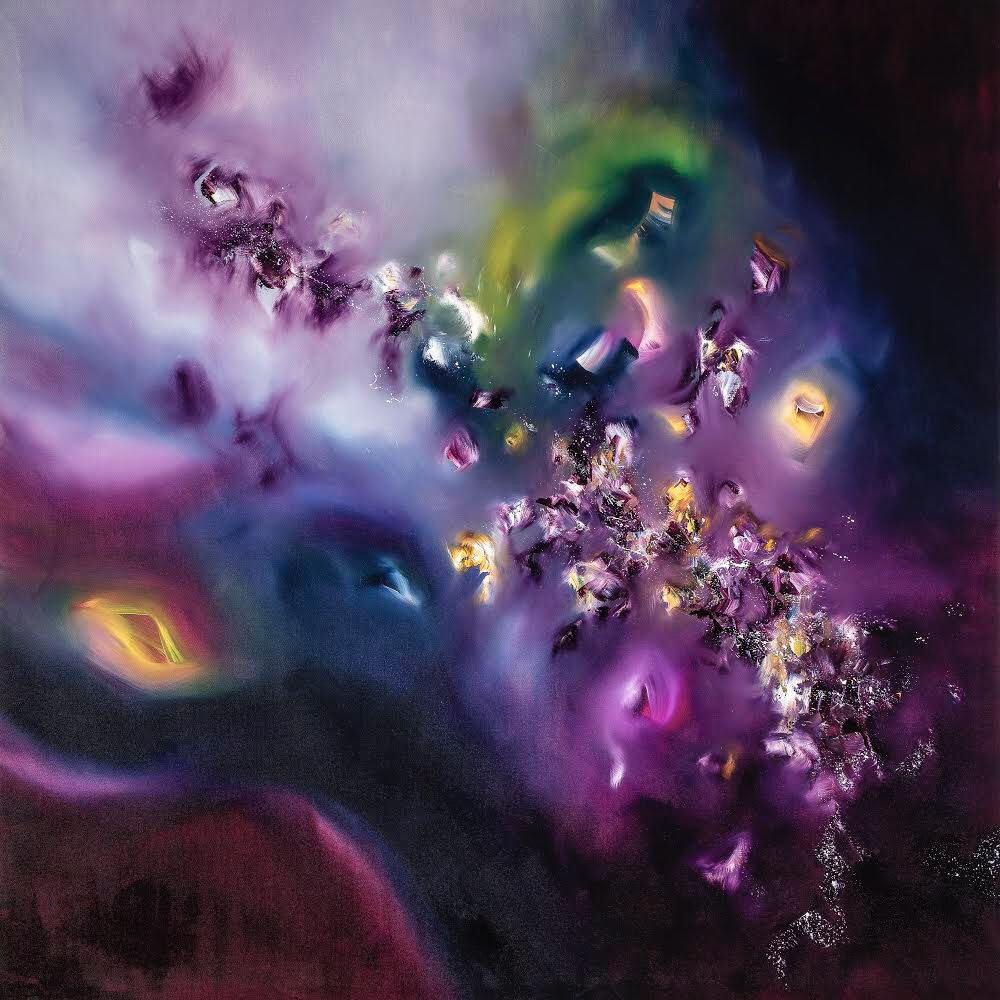
Missouri-based artist Melissa McCracken translates the sounds she hears into vibrant splashes of colour on canvas. Her vivid oil paintings are inspired by certain songs, showcasing how she sees musical notes as different textures and hues.
“I experience the ‘wrong’ sensation to certain stimuli,” says McCracken. “Each letter and number is coloured and the days of the year circle around my body as if they had a set point in space.” The artist enjoys the many creative experiences of synaesthesia, especially when it comes to music. “The most wonderful ‘brain malfunction’ of all is seeing the music I hear,” she says “It flows in a mixture of hues, textures, and movements, shifting as if it were a vital and intentional element of each song.”
I have gone into more detail about Melissa McCracken’s work here.
Jack Coulter
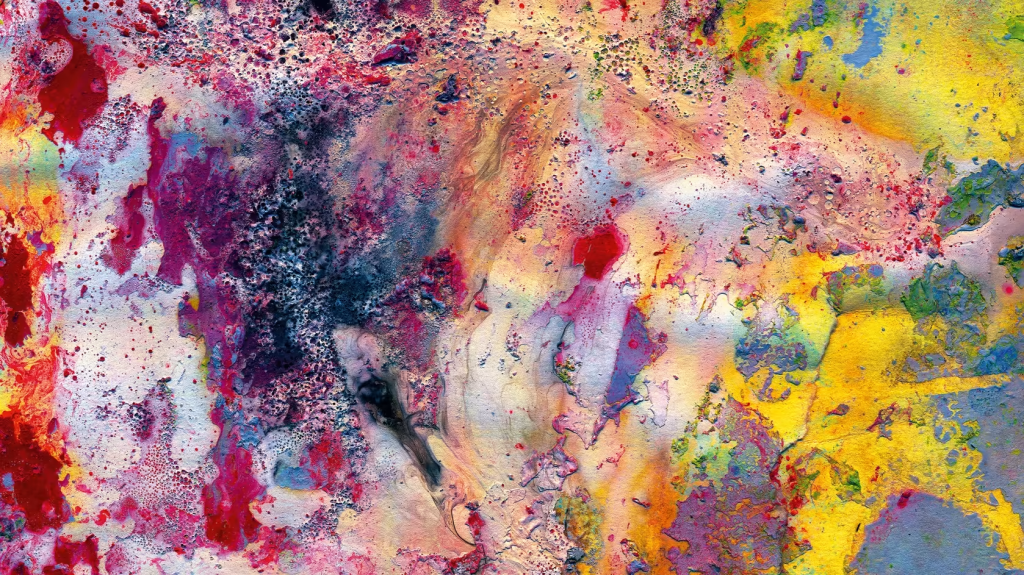
Northern Irish artist Jack Coulter has a rare gift: he can see sounds. He uses his synaesthesia experiences to inform his abstract expressionist paintings, each of which is full of vivid brushstrokes. At just 25 years old, the talented artist has already gained huge respect in the contemporary art world and was recently chosen by M&C Saatchi to collaborate with the worldwide music streaming service, Deezer. The project involved producing a “musical painting” for Glastonbury Festival 2016, which Coulter composed after listening to every artist who was performing at the event in chronological order.
Coulter explains, “When I listen to a piece of music, the bleeds of my visual auditory senses are in need of freedom, I feel the instant urge to birth a painting that represents what I am intrinsically and extrinsically experiencing.”
Daniel Mullen
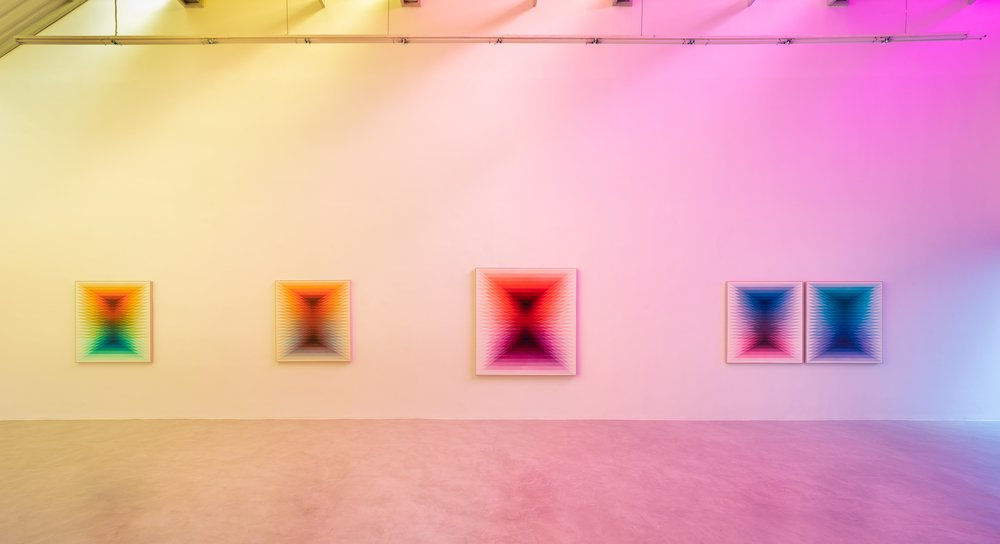
Amsterdam-based artist Daniel Mullen explores the sensory phenomenon with an ongoing painting series titled Synaesthesia. Although Mullen doesn’t experience the condition himself, he teamed up with artist, filmmaker, and synesthete Lucy Engelman to visualise how she perceives time, numbers, and letters.
At first glance, Mullen’s artwork looks like rows of colourful plexiglass. However, each piece is actually painted by hand, rendered in bright, rainbow hues. Each piece is a close-to-perfect visualisation of Engelman’s experiences at various times. For example, the 1950’s-80’s are visualised in vibrant pink, orange, blue and green. In another piece, representing ancient times between 5132-5097 CE, the colours appear softer, and the lines are thin.
Online Source:
Images as per websites
Websites:
https://rachelbakewellartistcom.uk/artist-melissa-mccracken/
5 Synesthesia Artists Who Paint Their Multi-Sensory Experiences (mymodernmet.com)
https://www.ft.com/content/58f53219-0276-4b0c-b7fd-0690913e85af
#Synaesthesia #Synesthesia #Sensory #Senses #Synesthetes #VincentVanGogh #VanGogh #WassilyKandinsky #Chromesthesia #StarryNight #MelissaMcCracken #McCracken #DanielMullen #Mullen #JackCoulter #Coulter #VisualAuditory
 Rachel Bakewell