When an established artist embarks on creating work for an exhibition, it may seem like a seamless process, but behind the scenes, it’s a complex and deeply personal endeavour. The process involves a blend of creativity, discipline, and logistics, from choosing a theme and planning each piece to the actual creation. Let’s explore how artists approach their work, their process, and how key elements like sketchbooks, studio spaces, and exhibition venues play a role.
Starting the Artistic Process: The Seed of an Idea
For many artists, the first step in preparing for an exhibition is a conceptual phase. What is a conceptual phase? This is often sparked by a particular theme, a message, or even a feeling they want to explore. Some artists are approached with offers to exhibit, while others seek out opportunities to present their work to the public. Established artists often collaborate with curators or galleries, where an exhibition theme or concept might emerge as part of a broader conversation between them and the exhibition space.
In some cases, the artist will have free rein to explore their ideas, while in others, the gallery or curator may have a specific vision in mind. Either way, this stage is crucial because it sets the tone for the entire body of work that will be created. For many artists, the creative process begins in their sketchbooks.
The Role of Sketchbooks and Studio Spaces
Sketchbooks are often seen as an artist’s sacred and intimate tool. For some, they are an indispensable part of their process because they serve as a place where ideas can freely flow without the pressure of creating a polished final product. Sketchbooks allow artists to experiment, make mistakes, and develop their ideas over time and for many artists, flipping through old sketches provides inspiration and helps to refine concepts.
On the other hand, some artists use sketchbooks sparingly, as they prefer to go straight onto the canvas and artists may have other media to explore their ideas directly. For them, this act of making art is the primary method of discovery. Using the sketchbook, in this case, may play a less significant role, acting more as a brainstorming tool rather than a fully developed artistic practice.
Studio spaces vary in significance and depend on the artist. For some, the studio is a deeply personal and almost sacred environment where they can focus and tap into their creative energy. It’s where they have their materials, tools, and works-in-progress all within arm’s reach, creating a space where the art can come alive. The studio can also be a space of ritual and routine, where an artist’s creative process is honed in and their best work is produced. However, for other artists, the studio might be more of a functional space—simply a workshop where art is made, rather than a source of inspiration in itself. These artists may prefer to work outdoors, in public spaces, or wherever inspiration strikes, as opposed to relying solely on a fixed location.
Creation: Experimentation and Refinement
Once the initial concepts are in place, the artist begins the process of creation. This can be a period of intense focus, where the artist may spend long hours in their studio or workspace developing each piece. The work evolves as they experiment with materials, compositions, and techniques and many artists will create several drafts or iterations of a work before they feel it is ready for exhibition.
During this phase, an artist may rely heavily on their sketchbooks to map out ideas, test different colour schemes, or refine shapes and forms. In contrast, others might use the canvas or the particular medium they use to work through their ideas in real-time, making changes and adjustments as they go along.
Choosing the Exhibition Space
The choice of exhibition space is a critical one for an artist, as it can greatly influence how their work is experienced by the public. For well-established artists, galleries or museums may approach them with exhibition offers and will often tailor the space to the artist’s needs. However, in other cases, an artist might work closely with curators or gallery owners selecting a venue that aligns with the vision of their show. Some artists are deeply involved in how their work will be displayed, taking into account the lighting, layout, and overall atmosphere of the space.
For artists at the height of their careers, exhibition spaces are often offered rather than chosen. However, even with an established reputation, some artists may actively seek out spaces that challenge or complement their work in new ways. For example, an artist known for large-scale installations might prefer expansive, open galleries, while a painter who focuses on intimate portraiture might prefer smaller, more personal spaces.
The Role of Agents and Curators
Much like actors or comedians, established artists often have agents or representatives who help to manage the business side of their careers. These agents negotiate exhibition contracts, manage relationships with galleries, and handle the logistics of getting the artist’s work in front of an audience. Curators also play a significant role, especially in larger museums and galleries. They collaborate with the artist to shape the vision of the exhibition, by deciding on the selection of works, the arrangement, and the overall narrative of the show.
For some artists, the agent’s role is more practical, helping to relieve them of administrative burdens so they can focus solely on their creative process. For others, an agent or curator can be a valuable sounding board, offering feedback and helping the artist refine their ideas as they prepare for the exhibition.
Importance of the Exhibition
For an artist, an exhibition is much more than just an opportunity to display finished works—it’s a chance to communicate with the public and express their vision on a larger scale. Exhibitions give artists a platform to reach audiences, share ideas, and receive feedback on their work. Some may view it as a culmination of months or years of work, while others see it as part of an ongoing conversation with their audience and the world around them.
In many cases, an exhibition itself shapes the final stages of the artistic process. The space, the audience, and even the logistics of displaying certain works might influence the finishing touches or presentation of the art. Artists often view this public display as an important moment of engagement, where their ideas are tested, interpreted, and experienced in real-time by viewers.
The creative process of preparing for an exhibition is deeply personal and varies from artist to artist. While some find their studio and sketchbooks to be sacred, vital tools in their process, others may work more spontaneously, creating wherever inspiration strikes. Ultimately, the journey from concept to exhibition is shaped by a blend of personal ritual, experimentation, and collaboration with curators and galleries, making each exhibition a unique reflection of the artist’s vision.
I recently came across a fascinating article about sketchbooks and their role in the creative process. It delves into how artists use sketchbooks to explore ideas, experiment with techniques, and document their journeys. Whether viewed as a sacred tool or just a place for rough drafts, sketchbooks offer unique insights into an artist’s mind. Have any of you ever kept a sketchbook or come across artists who share theirs? A summary of part of the article can be seen below.
Immensely private’: inside great sketchbooks from history
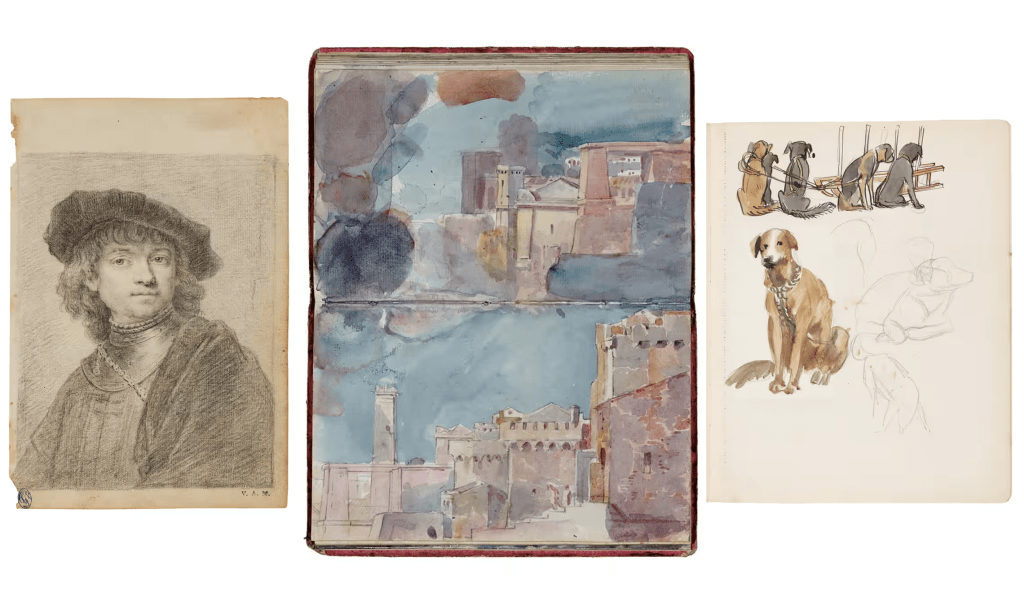
L-r: Sketches by Angelica Kauffman, John Samuel Hayward and Rhoda Bickerdike. All images © Victoria and Albert Museum, London
On the morning of 26 September 1814, John Constable was in Dedham Vale, sketching the landscape with quick pencil strokes. In his sketchbook, it is revealed that his detailed observations, including shadows, trees, and a distant steeple, (which later inspired his painting Stour Valley and Dedham Church). Constable even noted the exact time, 8:30 AM, which added a sense of immediacy to his sketch. Sketchbooks offer a glimpse into the artist’s creative process, by capturing moments of inspiration. Similarly, Edward Burne–Jones’s 1880s sketchbook for The Legend of the Briar Rose shows him experimenting with different compositions before finalising his design.
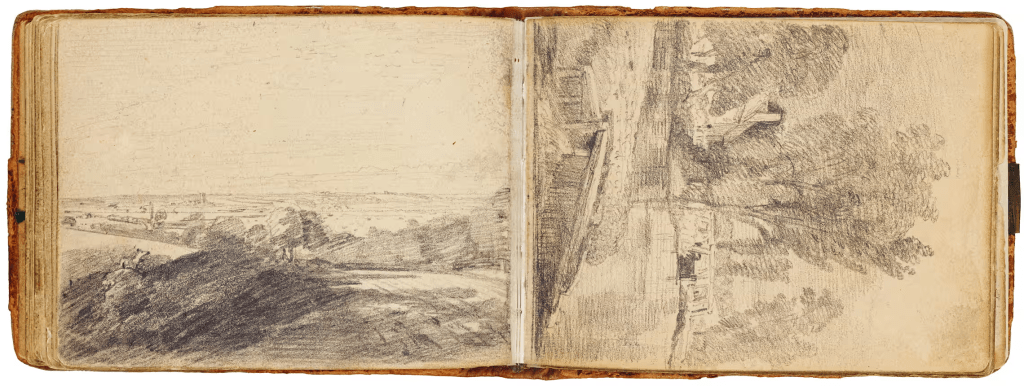
Dedham Vale, a study connected with the picture The Stour Valley and Dedham Valley (left); Flatford Lock (right) by John Constable (1776‑1837).
Full article here
 Rachel Bakewell