I found an interesting article about a study exploring the power of emotional language imagery that is derived from popular music genres which is a source of inspiration for creating innovative textile prints. By employing auditory and synaesthetic imagery, the study seeks to uncover how different genres evoke emotional responses and how these responses can be translated into tangible concepts for designing textiles.
Purpose of the Study
The main aim of the research is to investigate the positioning of emotional language images across six popular music genres that will inspire new ideas in textile print design. This study draws from auditory and synaesthetic imagery, where sounds can trigger a visual or emotional response, that allows researchers to analyse emotional language associated with each genre. The cross-disciplinary approach enables a deep understanding of how music can influence emotional perception, ultimately offering new directions for creative textile designs.
Methodology: Music Genres and Emotional Imagery
Stimuli were selected as six distinct genres of popular music for this research: ballad, new age, hip-hop & rap, dance, metal-rock, and one other genre. Participants were surveyed to examine how they perceived emotional language imagery in each genre, revealing differences and similarities in emotional responses.
The emotional responses were analysed using factor analysis and multidimensional scaling uncovering key themes in emotional imagery and allowing for a nuanced understanding of how various music genres can evoke a distinct emotional tone.
Key Findings
The study identified six main emotional language categories:
- Lyrical-Feminine
- Intense-Masculine
- Euphoric-Active
- Gloomy-Melancholy
- Abstruse-Sophisticated
- Addictive-Continuous
When you look at the emotional responses that are associated with specific music genres, interesting patterns emerge:
- Ballad and new age music evoked similar emotional responses, often described as Lyrical-Feminine and Gloomy-Melancholy.
- On the other hand, genres like hip-hop & rap, dance, and metal-rock shared similarities, with responses tied to Intense-Masculine and Euphoric-Active imagery.
The study used multidimensional scaling analysis to position these genres along emotional axes, which resulted in:
- New age music being strongly associated with Lyrical-Feminine qualities.
- Metal-rock positioned as Intense-Masculine.
- Dance music representing Euphoric-Active energy.
- Ballads aligned with a Gloomy-Melancholy emotional tone.
Synaesthesia and Textile Design: The Artistic Influence
The study draws inspiration from artists like Wassily Kandinsky, a synesthete who was renowned for his ability to visualise music through his art. His works, including Impression III (Concert) and Composition V, are prime examples of how auditory experiences can manifest as vivid, emotional imagery on a canvas.
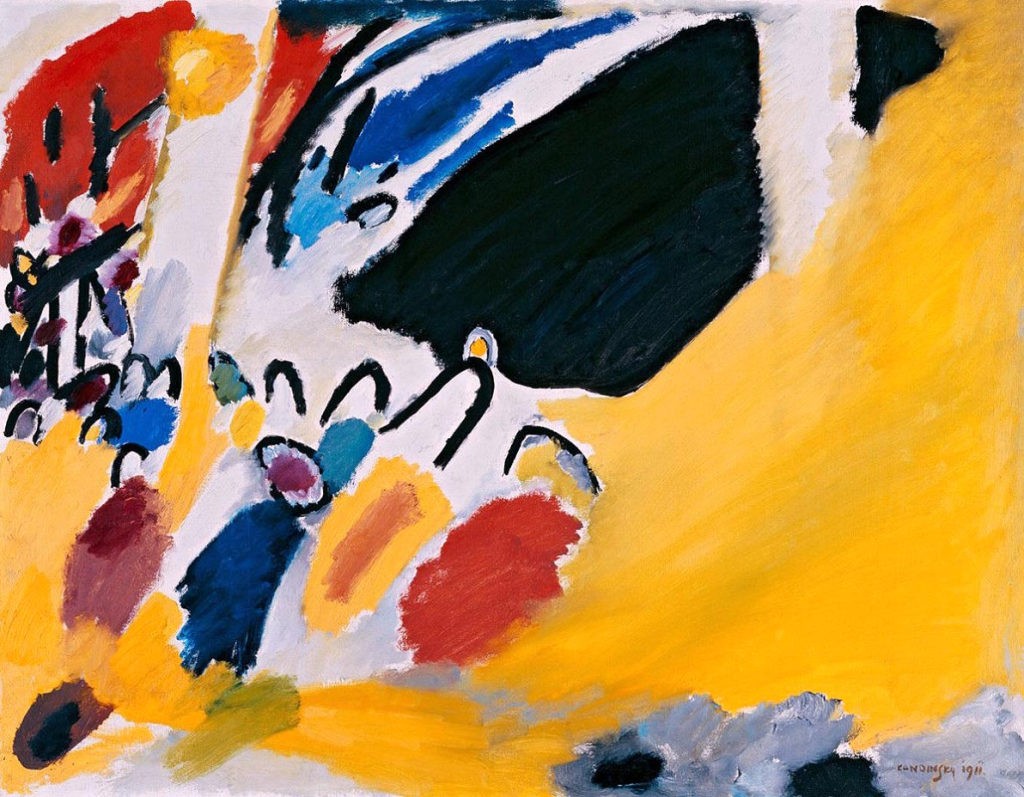
Impression III (Concert)
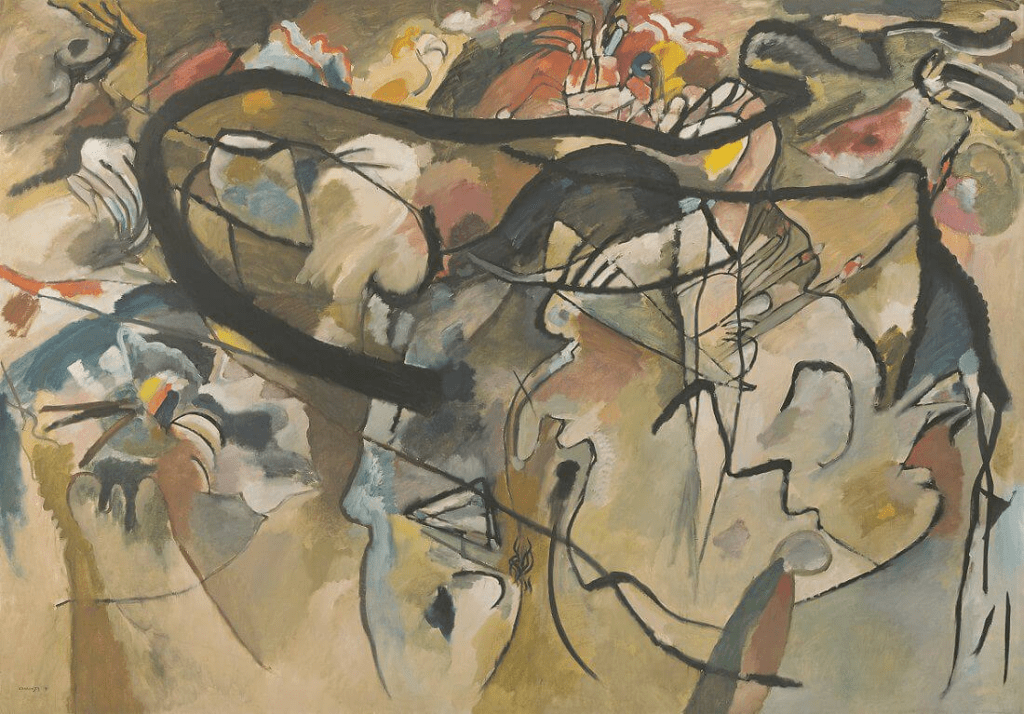
Composition V
Kandinsky’s work serves as a parallel to how this study conceptualises music genres in a visual and emotional term. By understanding how music genres evoke specific emotional responses, textile designers can channel this into their creative process, by crafting prints that resonate emotionally and visually with audiences.
Implications for Textile Print Design
This research has opened up an exciting avenue for textile and fashion designers, that offers an elementary resource for creating textiles that reflect the emotional characteristics of various music genres. By drawing on the emotional imagery that is associated with each genre, designers are able to craft textiles that evoke specific moods, whether it’s the intense energy of metal-rock or the melancholic beauty of a ballad.
This approach has been echoed in previous studies, such as Jung (2002), which explored fashion design based on the musical sensitivities of jazz, and Lee (2004), who focused on visualising music through punk rock in fashion. Both of these studies emphasised the potential of synaesthetic interpretations in fashion design, by revealing how auditory experiences can shape visual expression.
Conclusion
The results of this study will highlight a profound connection between music, emotional imagery, and textile design and by understanding how different genres evoke distinct emotional language imagery, designers can draw inspiration from music to create innovative and emotionally resonant textiles. The research adds a unique dimension to the ongoing exploration of music-inspired fashion, offering a fresh perspective on how auditory experiences can translate into visual design elements.
For those interested in exploring further, the works of Wassily Kandinsky serve as an essential reference, offering a window into how music can be visualised and interpreted through art and design.
Further Reading:
- Jung, 2002. A study of fashion design based on musical sensitivities: Centered on synesthetic interpretation about Jazz.
- Lee, 2004. A study of fashion design based on visualization of music: Centered on expressing cosmos image by synesthetic interpretation about punk rock.
Images:
https://www.wassilykandinsky.net/
#TextilePrintDesign #SynesthesiaInArt #EmotionalLanguageImagery #FashionDesignResearch #WassilyKandinsky #MusicInspiredFashion #SynaestheticImagery #ArtAndScienceCollaboration
 Rachel Bakewell