Dried fruit is a timeless, natural decoration that adds warmth and charm to your home during the holiday season. Whether strung into garlands, hung as ornaments, or displayed in bowls, dried fruit creates a festive atmosphere while being sustainable and biodegradable. One of the easiest ways to prepare dried fruit for home décor is by using your oven. Here’s a guide to drying fruit at home for beautiful, fragrant decorations.
Why Use Dried Fruit for Décor?
- Sustainable: Dried fruit is compostable and avoids the waste of synthetic decorations.
- Affordable: It’s an inexpensive way to add a festive touch using items you may already have in your kitchen.
- Versatile: Use dried fruit slices for garlands, wreaths, ornaments, or even potpourri.
- Fragrant: Many fruits release a subtle, natural aroma that enhances the holiday ambiance.
What You’ll Need
Fruits:
- Citrus: Oranges, lemons, limes, or grapefruits for their vibrant colours and durability.
- Apples: Red or green apples add a rustic touch.
- Other fruits: Pears, starfruit, or pomegranates for unique shapes and textures.
Cutting Tools:
- A sharp knife or mandoline for evenly sliced fruit.
Oven:
- Preheat to a low temperature, around 200°F (93°C).
Baking Supplies:
- Parchment paper or a silicone baking mat.
- Baking sheet(s).
Optional Spices:
- Sprinkle with cinnamon, nutmeg, or clove powder for added fragrance and a festive look.
Step-by-Step Guide to Drying Fruit
Prepare the Fruit
- Wash and dry the fruit thoroughly to remove any dirt or residue.
- Slice the fruit:
- Cut citrus fruits into thin, even slices (about 1/4 inch thick).
- Slice apples and pears horizontally to reveal the star-shaped core.
- Keep the skin on for colour and texture.
- Discard any seeds if desired, though they can add a natural look.
Preheat the Oven
- Set your oven to 200°F (93°C), Gas Mark 1/2. A low temperature ensures the fruit dries slowly without burning.
Arrange the Fruit
- Line a baking sheet with parchment paper or a silicone mat to prevent sticking.
- Place the fruit slices in a single layer, ensuring they do not overlap.
Dry the Fruit
- Bake low and slow:
- Place the trays in the oven and bake for 2-4 hours. The exact time depends on the thickness and type of fruit.
- Flip the slices halfway through to promote even drying.
- Check:
- The fruit should be dry and slightly leathery but not brittle.
- Remove slices as they finish drying, as some may be ready sooner than others.
Cool and Store
- Let the fruit slices cool completely before handling.
- Store in an airtight container if not using immediately. Properly dried fruit can last for several weeks.
Creative Ways to Use Dried Fruit in Décor
Garlands
- Thread dried fruit slices onto natural twine or ribbon to create a festive garland. Alternate with other elements like cinnamon sticks, greenery, or wooden beads for added texture.
Ornaments
- Use a needle and thread to loop a string through the dried fruit slices. Hang them on your Christmas tree or around the house for a rustic touch.
Wreaths
- Attach dried fruit slices to a wreath base using twine. Combine with evergreen branches, pinecones, and dried flowers for a stunning centrepiece.
Table Décor
- Scatter dried fruit slices across your holiday table or arrange them in bowls with star anise, cloves, and cinnamon sticks for a fragrant display.
Gift Wrapping
- Add a slice of dried fruit to your wrapped gifts for a unique, sustainable embellishment.
Tips for Success
- Even Slices: Thinner slices dry faster and more uniformly.
- Avoid Burning: Keep the temperature low and check on the fruit regularly.
- Spice It Up: Sprinkle fruit with ground spices before drying for a festive aroma.
- Layer Scents: Pair dried fruit with fresh greenery or essential oils for enhanced fragrance.
Sustainability Matters
Dried fruit décor is a wonderful alternative to plastic holiday decorations. Once the season ends, compost the fruit slices to return them to nature. By creating your own dried fruit decorations, you reduce waste and embrace a more sustainable holiday tradition.
Drying fruit in the oven is a simple, and sustainable way to add a festive touch to your home. With just a few ingredients and some time, you can create beautiful decorations that reflect the warmth and joy of the season. So, gather your favourite fruits, turn on the oven, and let your creativity shine with this sustainable holiday craft!
If your oven uses gas marks instead of Fahrenheit or Celsius, you’ll need to set it to Gas Mark 1 for drying fruit. This equates to approximately 275°F (135°C), but since drying fruit requires a low and slow process, you can also lower the temperature slightly to Gas Mark ½ (250°F or 120°C) if your oven tends to run hot.
Tips for Using Gas Ovens:
- Preheat Your Oven: Allow it to reach the correct gas mark before placing your fruit inside.
- Use the Lowest Rack: Gas ovens often have a more intense heat source at the bottom. Place your baking sheet on a higher rack if needed to prevent scorching.
- Keep the Door Ajar: To improve airflow and mimic a dehydrator, prop the oven door open slightly. This helps excess moisture to escape and ensures even drying.
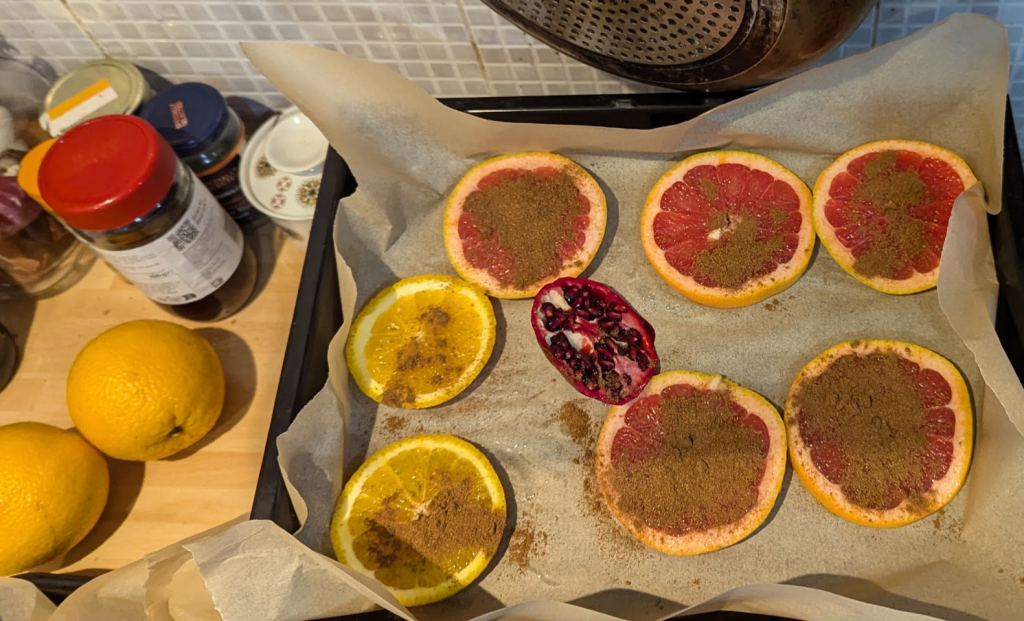
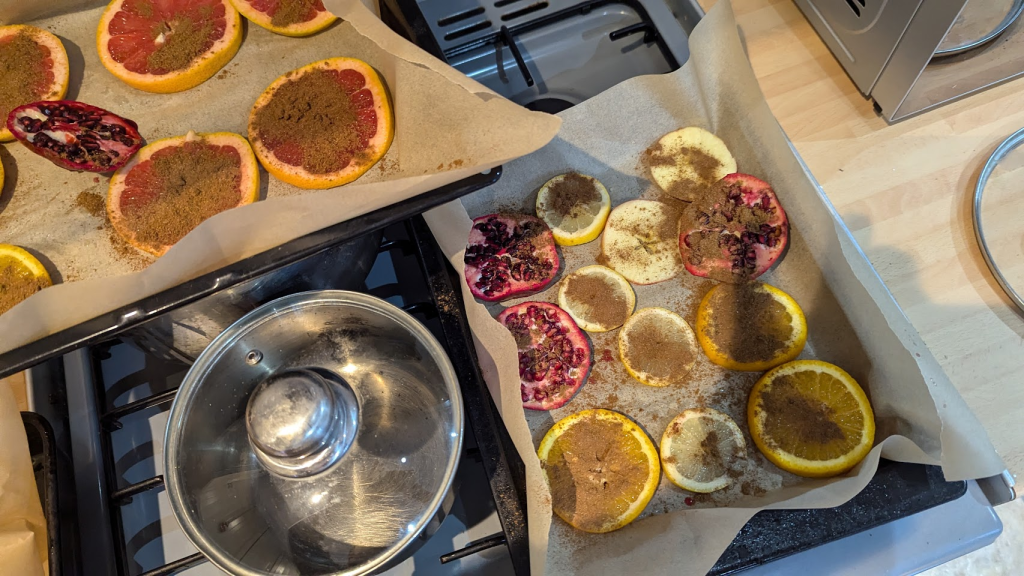
I went a little overboard with the spices but I enjoyed the process!
Updated: 31/12/2024
I was pleased with the initial outcome of my dried fruit, but after a few days, I noticed that the dried fruit had become mouldy, forcing me to throw them away. This was disappointing, but it led me to research natural ways to prevent mould growth. I have since discovered that clove oil can be used as a natural preservative. Its antifungal properties help inhibit the growth of mould, making it an excellent solution for preserving dried fruit and other organic materials in a safe and sustainable way.
Here are a few ways to use clove oil for preserving dried fruit:
Spray Solution: Mix a few drops of clove oil with water in a spray bottle and lightly mist the dried fruit. This can help prevent mould from forming.
Storage: Place a few drops of clove oil on a piece of cloth or paper and store it with the dried fruit in an airtight container before use. The oil’s aroma will help keep mould at bay.
Direct Application: For small batches, you can apply a few drops of clove oil directly onto the dried fruit ensure even coverage.
Remember to use clove oil sparingly.
 Rachel Bakewell