Why I Use the Word “Queer” in This Post
I want to take a moment to explain why I’m using the word queer in this post and acknowledge the complexities and sensitivities surrounding it. My goal is to communicate with care, celebrate identity, and foster inclusivity—not to cause offense.
The term queer has a complex history. It was once widely used as a slur against LGBTQ+ individuals, but over time, many within the community have reclaimed it as a term of empowerment, pride, and inclusivity. Today, queer often serves as an umbrella term for people who exist outside of cisgender and heterosexual norms. It is celebrated for its flexibility, its rejection of rigid labels, and its capacity to embrace diversity within the LGBTQ+ community.
That said, I recognise that queer carries different meanings for different people. For some, it is a deeply affirming identity; for others, it is still a painful reminder of prejudice. My use of the word here is intended in the spirit of its reclamation—as a way to celebrate creativity, resistance, and identity, particularly in contexts like art, culture, and self-expression.
If the word feels uncomfortable for you, I respect that and want to make clear that I am not using it casually or thoughtlessly. My intention is to honour the evolving language of identity and the rich history it carries. Thank you for engaging with this post, and I’m open to dialogue if you’d like to share your thoughts or feelings about the word or its use here.
Textiles have long served as a medium for storytelling, resistance, and expressing personal and cultural identities. Within the LGBTQ+ community, the art and craft of textiles—spanning fabric, weaving, embroidery, and quilting—plays a distinctive and powerful role. Queer textiles weave together threads of history, activism, and self-expression, offering a vibrant lens through which to understand and celebrate queer lives.
A History Woven in Threads
Historically, textiles have been a means of survival and expression for marginalised groups, including LGBTQ+ individuals. In societies where open expression of queer identity was dangerous or taboo, textiles provided a quieter, yet no less impactful, medium for communication. Codes such as lavender, green carnations, or hidden messages embroidered in clothing became discreet but powerful markers of queer solidarity.
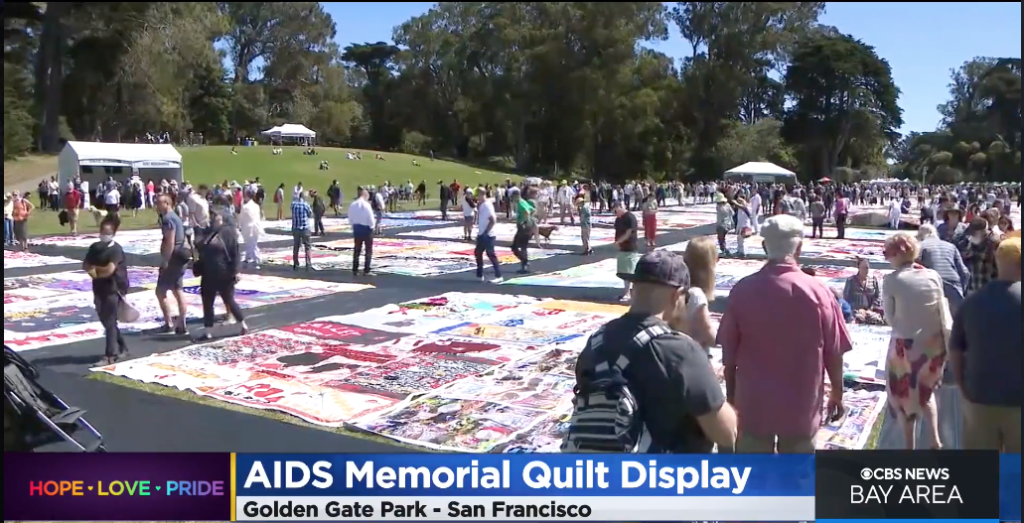
During the AIDS crisis of the 1980s and 1990s, textiles took on a monumental role in activism through the AIDS Memorial Quilt which remains one of history’s largest collaborative art projects. Each panel of the quilt memorialises someone who died of AIDS, transforming grief into a powerful public statement. It is a striking example of how queer textiles bridge personal loss with collective action, turning fabric into a tool for both mourning and resistance.
Textiles as a Medium of Queer Identity
Queer creators often use textiles to explore and assert their identities. The tactile nature of the fabric allows for intimate engagement with ideas of gender, sexuality, and selfhood. Nonbinary and genderqueer artists, for example, frequently use textiles to challenge traditional notions of “masculine” and “feminine” aesthetics. Soft, flowing fabrics might be juxtaposed with sharp patterns or bold colours, creating pieces that defy binary categorisation.
Drag culture, too, embraces the transformative power of textiles. Drag performers often craft intricate, extravagant costumes that blur the lines between art and clothing, highlighting the fluidity of gender and the performative aspects of identity. These garments serve not only as personal expressions but also as acts of defiance against societal norms.
Quilting and Queerness: A Legacy of Community
Quilting holds a particularly special place in queer textiles, both as an art form and as a community-building practice. The tradition of quilting often involves collaboration, making it a powerful metaphor for the interconnectedness of queer lives and histories.
For LGBTQ+ people, quilting can also represent a reclamation of domestic arts, historically associated with women’s work and dismissed as secondary to fine art. By infusing quilting with queer themes, artists reclaim the medium’s narrative potential, turning what was once deemed mundane into a celebration of identity and resilience.
Resistance Through Craft
Queer textiles are inherently political. In a world where queer identities are still policed and marginalised, the act of creating, wearing, or displaying queer-themed textiles is a form of resistance. Textiles, as everyday objects, infiltrate spaces that might otherwise be hostile, subtly asserting the presence and humanity of queer individuals.
Embroidery, for example, has become a tool for protest art. Bold slogans, subversive imagery, or satirical takes on heteronormativity are stitched into hoops, banners, or clothing. Such pieces disrupt the perception of embroidery as delicate and apolitical, turning it into a weapon of dissent.
Moreover, queer textile artists often work to preserve the stories of their communities, stitching histories that might otherwise be erased or forgotten. Projects like the “Queer Threads” exhibition, curated by John Chaich, highlight how contemporary textile artists use fabric to explore themes of sexuality, identity, and queerness in ways that are deeply personal and universally resonant.
A Tapestry of Celebration
Beyond resistance, queer textiles are also a space for celebration. The riotous colours, patterns, and textures in queer textile art reflect the diversity and vibrancy of LGBTQ+ communities. Pride flags themselves are an iconic example of how textiles embody queer joy and solidarity.
The fabric also serves as a canvas for celebrating cultural and intersectional identities within the queer community. Textiles that incorporate Afro-futuristic patterns, Indigenous beading techniques, or Asian silk traditions reflect the multifaceted identities of queer people of colour, weaving their cultural heritage into the broader tapestry of queer expression.
Conclusion
Queer textiles are more than just art or utility; they are living, breathing artefacts of identity, history, and resistance. Whether through the AIDS Memorial Quilt, a drag queen’s dazzling gown, or an embroidered protest banner, these pieces carry the stories of a community that has persisted, thrived, and celebrated against all odds.
In every stitch, weave, and dye, queer textiles tell tales of love, defiance, and self-discovery, reminding us that the fabric of queer identity is as rich, resilient, and beautiful as the threads that compose it.
References:
Image:
Website:
 Rachel Bakewell
hello,
Do you have texts, books or visual references that you could send me at @augusthzephyr on instagram or at my mail please ?
i’m doing a research on this subject.
have a good day 🙂
LikeLike
Hi,
Thank you so much for your message. I’m really glad the post resonated with you — it’s such a rich area of research. I can share a few texts and references that explore queer identity, textiles, and material culture from different angles.
• “Queer Threads: Crafting Identity and Community” – exhibition catalogue curated by John Chaich
• “The AIDS Memorial Quilt” – the National AIDS Memorial website has a lot of archival material
• Ann Cvetkovich, An Archive of Feelings – not textile‑specific, but foundational for understanding queer affect, memory, and craft
• Julia Bryan‑Wilson, Fray: Art and Textile Politics – brilliant for thinking about textiles as political and embodied practice
• Elissa Auther, String, Felt, Thread – explores fibre art and gender, useful context for queer readings
• The “Queer Craft” issue of The Journal of Modern Craft – if you have access
If you’d like, I can also point you toward specific artists or projects working in this space.
Feel free to message me on Instagram or email — happy to share more.
Have a good day,
Rachel
LikeLike