
Frances Lockett, Cotton Queen 1930-31, returning to Hyde. © Tameside Culture
Original Article by Rachel Cornes, 18-01-18
In the heart of Hyde during the 1930s, the cotton industry, alongside the hatting and gloving trades, remained a cornerstone of local employment. These industries, although they were beginning to decline, continued to rely heavily on the labour of women and girls. Among the countless workers at the time, one young woman from Hyde achieved extraordinary fame, transcending the boundaries of her everyday life to become a symbol of glamour and hope: Frances Lockett, Britain’s first Cotton Queen.
Humble Beginnings
Frances Lockett was born into a working-class family, living in a modest two-up two-down house. Her father was a policeman, and like many young women of her time, Frances left school at the age of 14 to begin work at Newton Mill in Hyde. For five years, she laboured at the mill, her days defined by the rhythm of the machines and the camaraderie of her fellow workers.
In 1930, at the age of 19, Frances’ life changed dramatically when she was crowned the very first Cotton Queen of Great Britain in a dazzling ceremony in Blackpool’s Tower Ballroom. It was a title that came with nationwide recognition, catapulting Frances into a year of prestige and celebrity.
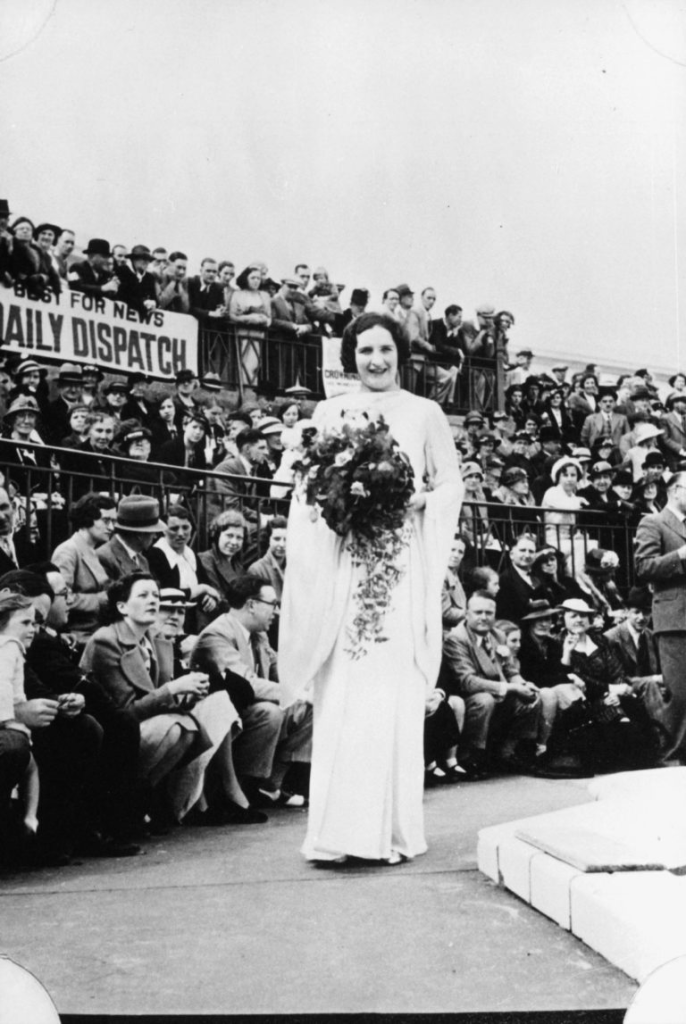
Frances Lockett, in the finals of the ‘Cotton Queen’, Blackpool 1930. © Tameside Culture
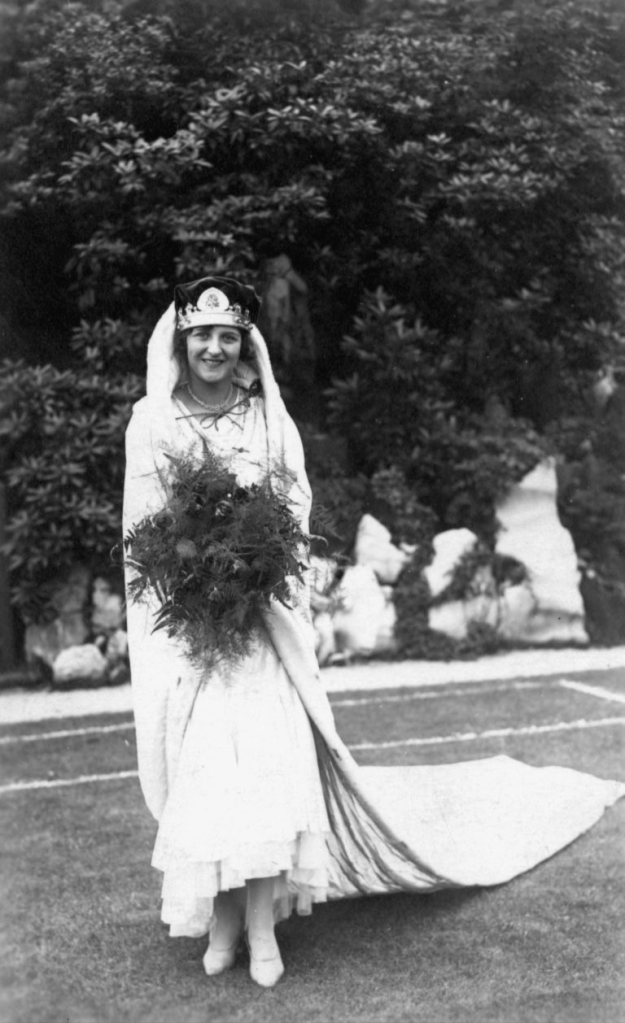
Miss Frances Lockett, Hyde Cotton Queen 1930. © Tameside Culture
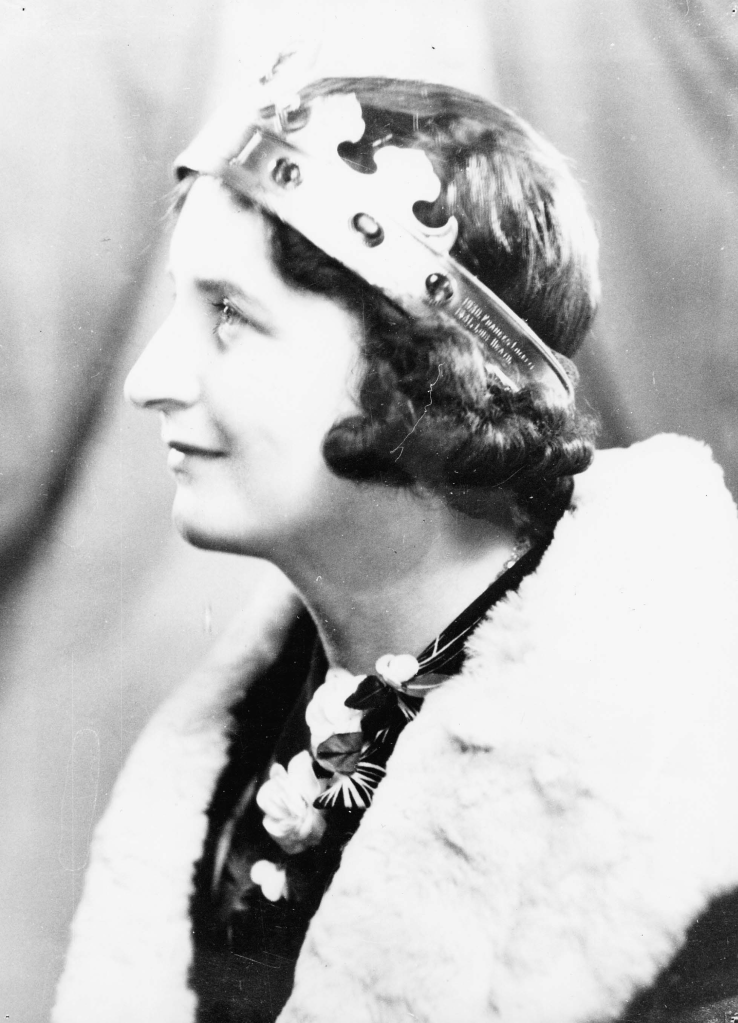
Cotton Queen studio portrait, Frances Lockett (aged 21), 1930-31, Britain’s first Cotton Queen © Tameside Culture
The Glamour of the Cotton Queen
The Cotton Queen competition captured the public’s imagination at a time when the nation faced economic hardships. Every cotton town in the North West selected a local girl deemed suitable to represent their community. After a public vote, these local winners convened in Blackpool for a three-week event culminating in the crowning of the national Cotton Queen. Frances Lockett stood out not only for her beauty but for her intelligence, poise, and ability to advocate for the industry.
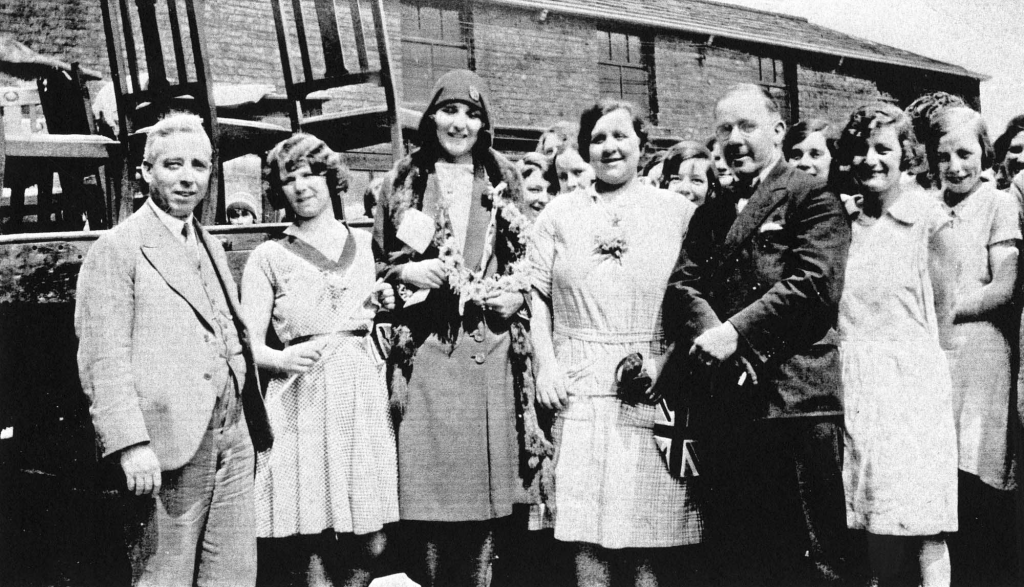
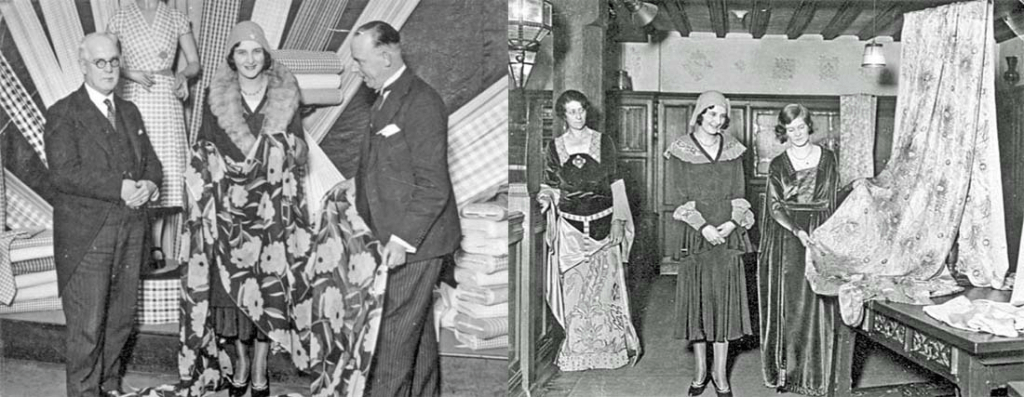
Cotton Queen Frances Lockett at J.J. Ashtons, Hyde. John Andrew is gentleman on left. Courtesy Tameside
Frances Lockett – photographed on a trip to London. Hyde’s first Cotton Queen 1930 – 1931. © Tameside Culture
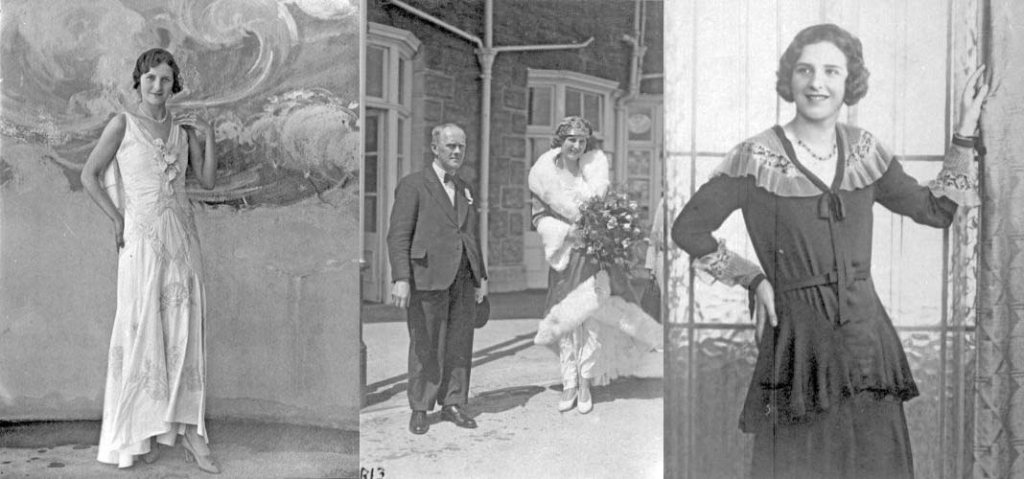
(L and r) Studio portraits of Hyde’s first Cotton Queen 1930 – 1931, Frances Lockett and (centre) a trip to Llandudno. © Tameside Culture
Suddenly, Frances traded her workwear for glamorous gowns. She travelled the country with a chauffeur and chaperone, visiting department stores, promoting cotton products, and attending public events. Archive photos reveal Frances towering above many she met, her height lending her an air of elegance and confidence as she gave speeches, attended formal lunches, and even dined at the House of Commons with prominent figures like Ramsay MacDonald and Lloyd George.
Her role was demanding, involving relentless travel, hotel stays, and public appearances, yet Frances thrived in the limelight. Interviews from the time portray her as articulate and intelligent—a true ambassador for the cotton industry.
A Community Icon
Back in Hyde, Frances remained a source of immense pride. She was celebrated in song with “The Waltz of the Cotton Queen,” which encapsulated her grace and the hope she brought to a struggling industry.
‘She walked the pace in stately form
So graceful and serene
And Hyde is proud of such a lass
Britain’s first cotton queen.
All England hopes our Cotton Mills
Again will run full time
And we shall see a smile again
Upon all faces shine.’
Her image graced promotional merchandise, including postcards and handkerchiefs bearing the words: “Queenetta fabric as made by Britain’s first Cotton Queen, Miss Frances Lockett.”
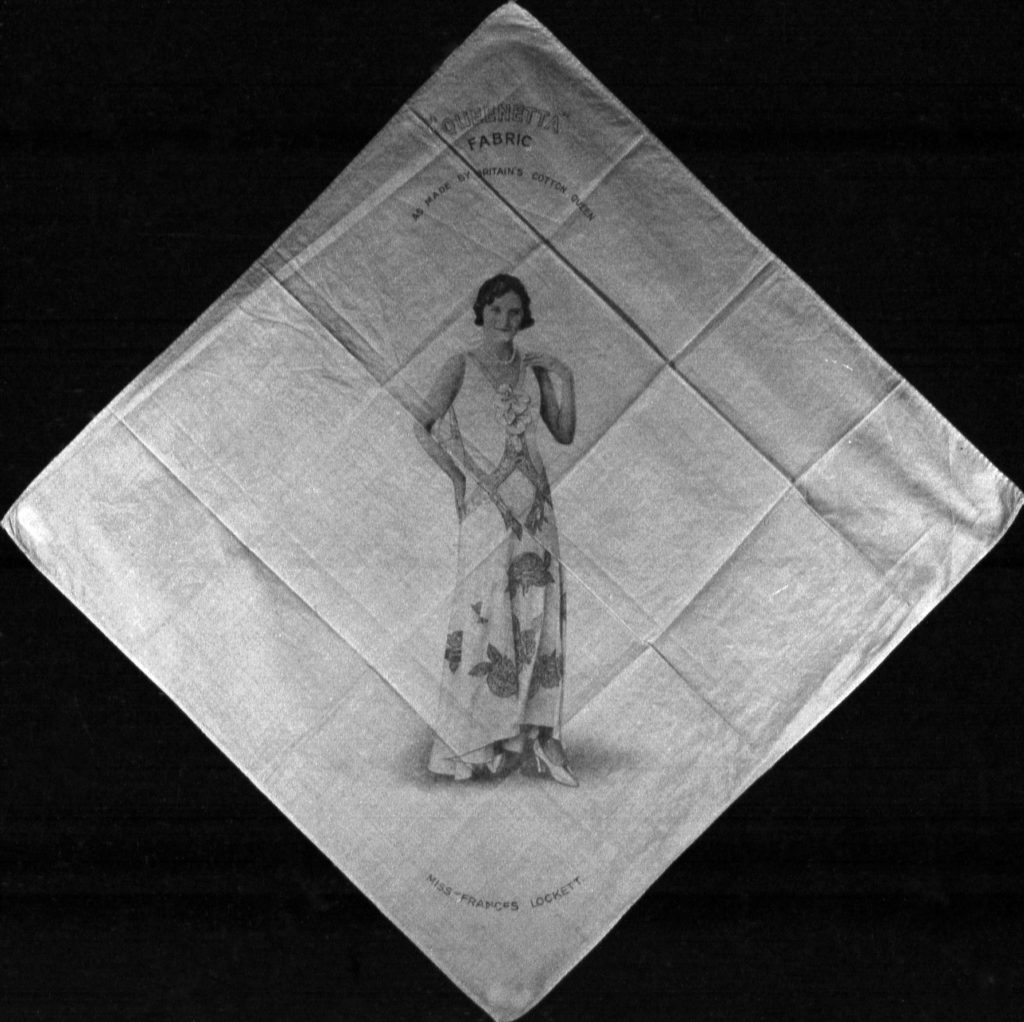
Lockett, Francis. Handkerchief showing the first Cotton Queen of Great Britain with the words – Queenetta fabric as made by Britain’s Cotton Queen. © Tameside Culture
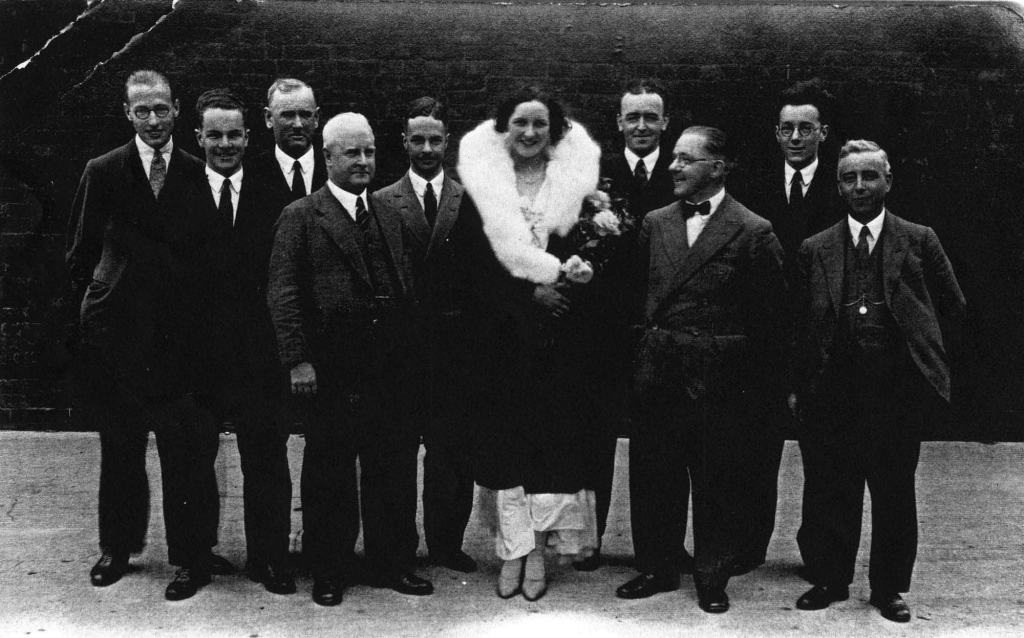
Cotton Queen, Frances Lockett with J & J Ashton Management Staff. © Tameside Culture
Her Cotton Queen gown, a slim-fitting, off-the-shoulder evening dress adorned with intricate beadwork, remains a testament to her elegance. This iconic dress is now displayed at the Portland Basin Museum, alongside artifacts of Hyde’s industrial heritage.
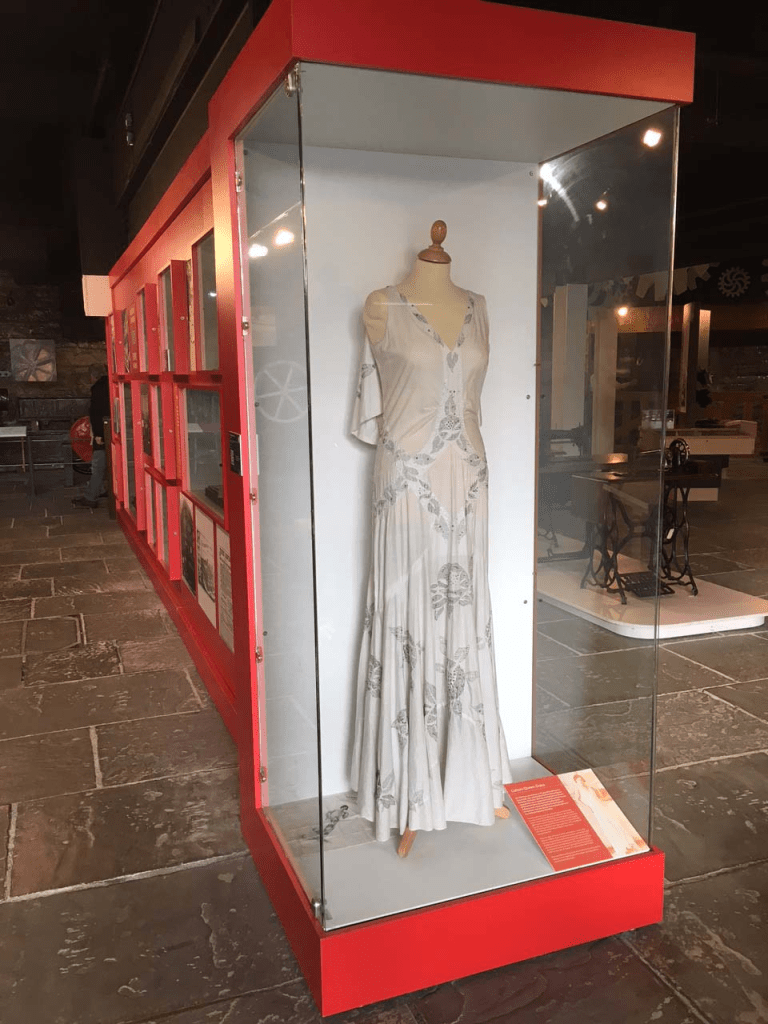
Frances Lockett’s Cotton Queen dress on display at Portland Basin Museum. Photo Rachel Cornes Courtesy Tameside Culture
Life After the Crown
When her reign ended, Frances returned to work in the mills, later joining J & J Ashton’s in Hyde. In 1937, she married James Burgess, a local policeman, in a wedding that drew the whole town to celebrate. Though she left the mills after her marriage, Frances continued to play a prominent role in local life, often called upon to open events and attend fetes. She remained a beloved figure until her death in 1993.
Legacy of the Cotton Queen
The Cotton Queen competition ran from 1930 until 1939, ceasing with the outbreak of World War II. Frances, as the first winner, embodied the pride and aspirations of her community during a challenging era. Her niece, who preserved Frances’ memorabilia, speaks volumes about the enduring pride Frances felt for her title—and the pride Hyde felt for her.
Frances Lockett’s story is one of transformation, resilience, and community spirit. From a cotton mill worker to a national icon, she bridged the divide between the industrial working class and the glamorous world of public life, leaving an indelible mark on Hyde’s history.
References:
Website & Images:
The story of Frances Lockett, Britain’s first Cotton Queen – Museum Crush
 Rachel Bakewell
This a lovely article Rachel… Frances was my great auntie (grandads sister) she was lovely, humble lady
LikeLike
Thank you so much for sharing that, it means such a lot to hear. Frances sounds like she was a truly wonderful person, and I’m honoured that my article resonated with you. If you have any personal stories or memories about her, I’d love to hear them!
LikeLike