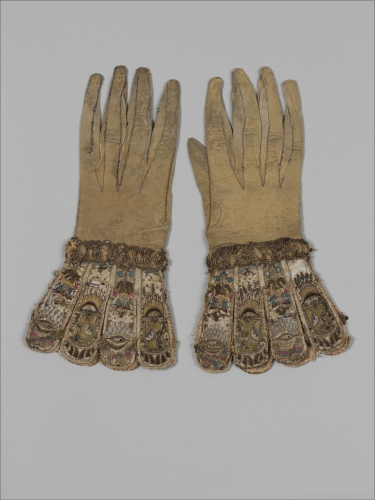
Handsome embroidered, scented gloves were fashionable in the late-1500s and early-1600s
Fashion and Status
During his period, gloves were more than just a protective garment for the hands; they were symbols of wealth, power, and refinement. The nobility and upper classes often wore gloves adorned with intricate embroidery, made from fine leather, silk, or velvet, and they were embellished with gold or silver threads, pearls, and gemstones. Their luxurious design signalled the wearer’s social status and sophisticated taste.
Wearing such gloves at court, public events or formal gatherings conveyed elegance and style, enhancing one’s reputation amongst peers.
Practicality and Hygiene
The 16th and 17th centuries were not known for advanced sanitation, and unpleasant odours were common in urban and rural areas. To mask these smells, scented gloves, infused with fragrances such as rose, lavender, sandalwood, or bergamot were created. By perfuming the gloves, wearers could carry a pleasant aroma with them, elevating their comfort and experience in daily life or at crowded events.
Romance and Gifting
Scented gloves were also popular as romantic gifts, often exchanged between lovers or admirers. The embroidery and scent of the gloves carried personal significance, with the designs sometimes including motifs like hearts, flowers, or initials. Scented gloves became tokens of love, loyalty, or admiration, making them deeply meaningful to both the giver and recipient.
Cultural and Religious Symbolism
In some cases, gloves played ceremonial roles. For example, scented gloves were presented as gifts to monarchs, dignitaries, or members of the clergy as a gesture of respect and loyalty. Their elaborate designs often incorporated religious or heraldic symbols, connecting them to faith and tradition.
Craftsmanship and Artistic Expression
The creation of embroidered gloves was an art form that showcased the skills of artisans. Each pair was a testament to the meticulous craftsmanship of embroiderers and perfumers, combining technical expertise with creative vision. Gloves adorned with unique designs became coveted pieces of wearable art, often passed down through generations or preserved as heirlooms.
Materials and Techniques
Embellishments: Gloves were embroidered with metallic threads, beads, and sequins to achieve intricate floral or geometric patterns.
Fragrances: Essential oils, herbs, and dried flowers were used to scent the gloves. Popular fragrances of the time included rose, jasmine, musk, and ambergris.
Construction: Gloves were typically made from fine leather, silk, or velvet. They were tailored for a snug fit, emphasising the hands and complementing the rest of the attire.
The Decline of the Trend
As hygiene and sanitation practices improved in the 18th century, the practical need for scented gloves diminished. Fashion trends also shifted, and gloves became more utilitarian. However, the legacy of embroidered, scented gloves remains a fascinating glimpse into the past, reflecting the artistry and cultural priorities of the late Renaissance and early Baroque periods.
Conclusion
Embroidered, scented gloves were not only practical accessories but also powerful symbols of wealth, romance, and artistry in the late 1500s and early 1600s. They combined functionality with beauty, leaving an enduring mark on fashion history. These gloves remind us of a time when even the smallest details of attire were imbued with cultural meaning and personal expression.
#Gloves #ScentedGloves #Embroidered #Scent #Embroidery #Perfumery
References:
Image:
 Rachel Bakewell