Below is a link to an informative video about dyslexia. From the TedEd series of videos on YouTube.
What is dyslexia? – Kelli Sandman-Hurley
Dyslexia is a specific learning difference that affects how people read, write, and process language. It’s not about intelligence — in fact, many people with dyslexia are highly creative, analytical, and bright. It simply means the brain processes written language a little differently.
It’s About Processing, Not Intelligence
Dyslexia often shows up as:
- Difficulty reading quickly or smoothly
- Struggling to spell or decode words
- Mixing up letters or word order
- Finding it hard to organise written thoughts
But here’s the thing: dyslexia doesn’t mean you can’t read or learn. It means you may need different methods, tools, or more time — and that’s okay.
A Brain Wired Differently
Neurologically, dyslexia is linked to how the brain handles language and people with dyslexia tend to use different areas of the brain when reading, especially areas that work with sounds and symbols. This can make tasks like reading aloud or copying from a board more challenging.
Strengths Often Seen with Dyslexia
Many people with dyslexia have amazing strengths, like:
- Creative thinking and problem-solving
- Big-picture thinking
- Strong verbal reasoning and storytelling
- Spatial awareness and visual imagination
Think of people like Albert Einstein, Whoopi Goldberg, or Richard Branson — all dyslexic, all brilliant in their own ways.
Why Talking About It Matters
Many people with dyslexia grow up thinking they’re “slow” or “not smart,” when in fact, they just haven’t been given the right support. The more we talk openly about dyslexia, the more we help others feel understood and empowered.
Here’s an example from one of my old school reports. If you look at the bottom of the page, you’ll see a comment from my teacher. This was quite a few years ago, and thankfully, things have changed a lot since then — but it’s a powerful reminder of how challenging learning can be, especially when your brain works a little differently.
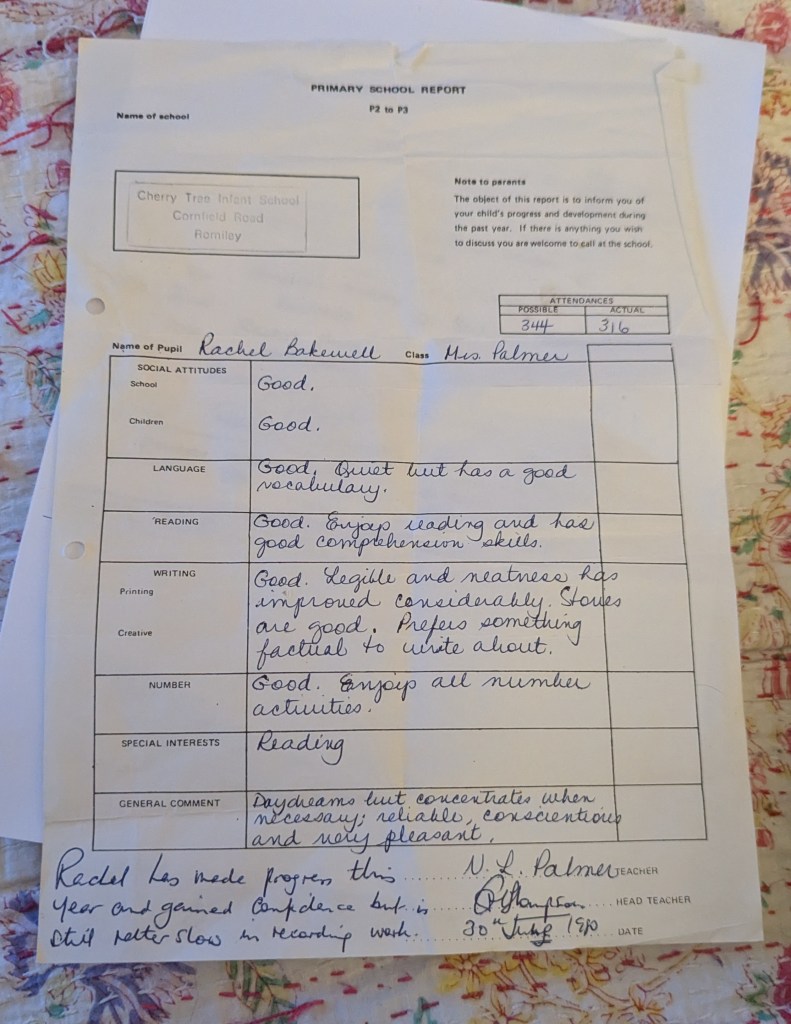
If you’ve ever struggled with written instructions, spelling, organising your thoughts on paper, or finding the right words, you’re not alone. Dyslexia doesn’t define you. It’s just one part of how your amazing brain works.
References:
 Rachel Bakewell