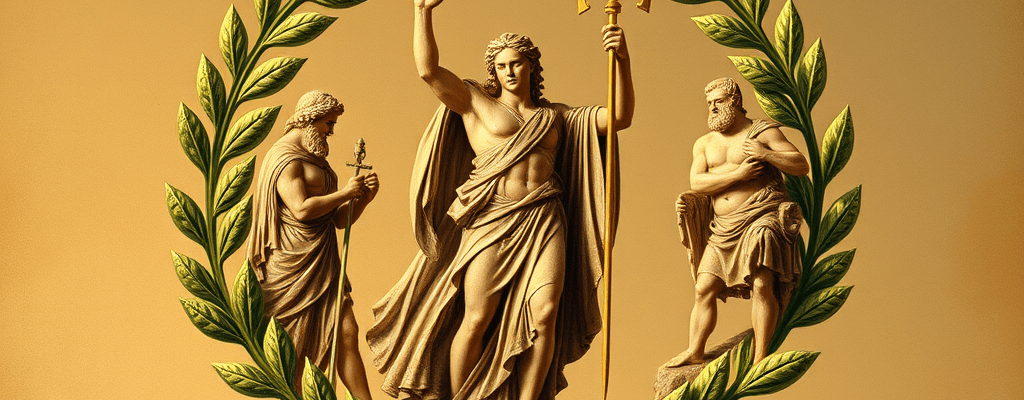
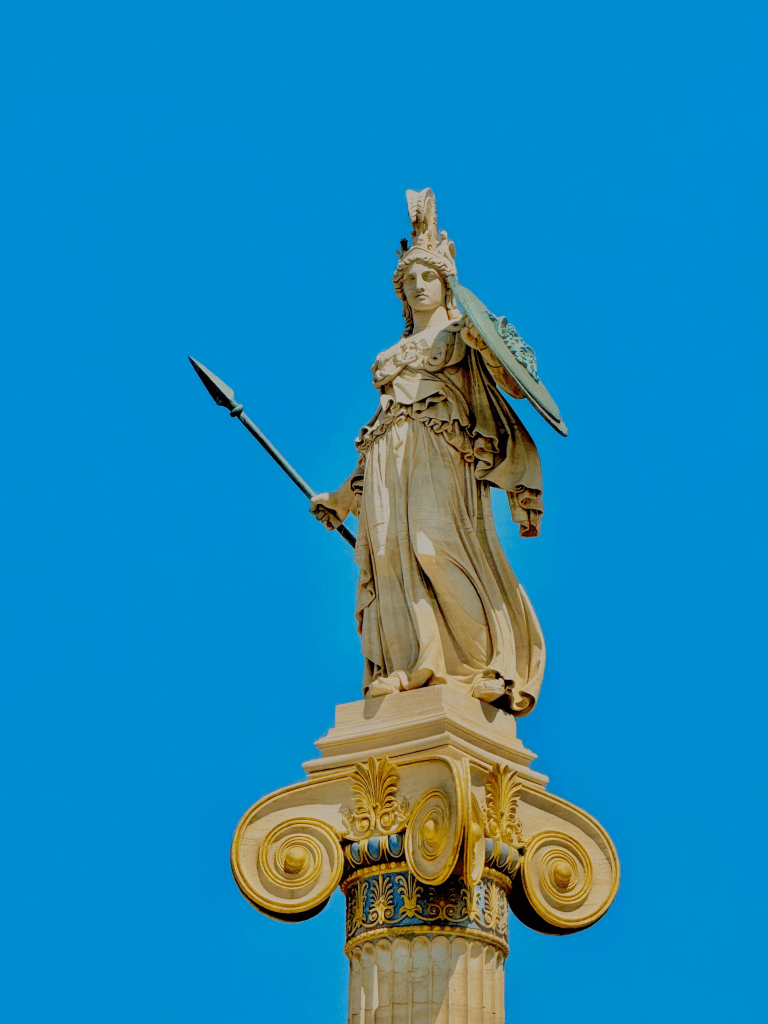
From government buildings to great works of art, the visual and symbolic language of ancient Greece and Rome continues to resonate in Western culture. Known as classical symbolism, this tradition draws on the classical world’s myths, ideals, and imagery to express complex ideas about virtue, justice, identity, and power. Far from being relics of the past, these symbols are active components of political, artistic, and cultural expression.
Defining Classical Symbolism
Classical symbolism refers to the use of figures, motifs, and narratives derived from Greco-Roman antiquity to convey deeper meanings. These symbols may take the form of mythological characters (e.g., Athena, Hercules), allegorical figures (e.g., Liberty, Justice), or even architectural elements like columns and domes that evoke order, permanence, and civilisation.
These images function not merely as aesthetic choices but as conceptual tools carrying embedded messages about human values, morality, and societal ideals.
Examples of Classical Symbols:
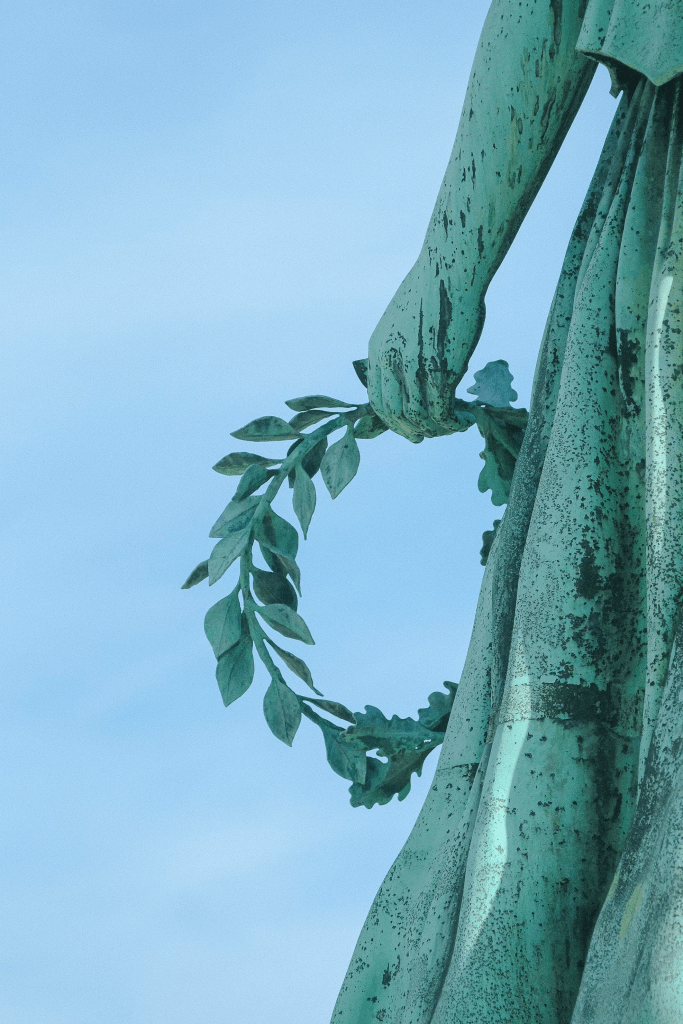
- Laurel Wreath – A symbol of victory and honour, worn by Roman generals and emperors. Still used in academic and sporting contexts today.
- Fasces – A bundle of rods with an axe symbolises authority and unity under Roman law.
- Phrygian Cap (Liberty Cap) – A soft, red cap worn by freed slaves in Rome; later became an emblem of revolutionary liberty, especially during the French and American revolutions.
- Owl of Athena – Represents wisdom, associated with the goddess Athena; used on ancient Athenian coins and echoed in modern university seals.
Classical Symbolism in Visual Art
Visual artists across the centuries have turned to classical symbols to reinforce political, spiritual, or philosophical themes. During the Renaissance, figures such as Botticelli and Raphael revived classical mythology as a means of expressing both humanist and religious ideas. The Neoclassical period (late 18th to early 19th centuries) embraced Greco-Roman ideals to emphasise rationality, civic virtue, and moral clarity.
In these works:
- Venus might represent ideal beauty or divine love.
- Hercules often symbolises strength and virtue through struggle.
- Minerva (Athena) appears as a symbol of wisdom, strategy, and enlightened governance.
These images linked contemporary societies with the perceived grandeur and moral authority of the ancient world.
References:
Literary and Political Symbolism
Classical symbolism has also deeply influenced literature and political discourse. Writers from Shakespeare to Shelley have invoked classical figures to convey personal or national transformation. Political thinkers and revolutionaries looked to Rome as a model republic, co-opting its imagery to support their causes.
Key Examples:
- The Roman Republic served as a prototype for Enlightenment thinkers advocating limited government and civic virtue (e.g., Montesquieu, Jefferson).
- Libertas, the Roman goddess of liberty, became a central figure in the symbolism of the French and American Revolutions.
- In Percy Bysshe Shelley’s poem The Mask of Anarchy (1819), classical allegory merges with political protest.
“Rise like Lions after slumber / In unvanquishable number…”
– Shelley, The Mask of Anarchy
References:
- Barzun, Jacques. From Dawn to Decadence: 500 Years of Western Cultural Life. HarperCollins, 2000.
- Roberts, Jennifer Tolbert. Athens on Trial: The Antidemocratic Tradition in Western Thought. Princeton University Press, 1994.
Modern Uses and Interpretations
Classical symbolism is alive today in architecture, civic design, and branding. The U.S. Capitol building, for instance, is modelled on Roman temples and adorned with classical motifs. The Statue of Liberty, though created in the 19th century, draws heavily on Roman iconography, combining classical robes, a radiant crown, and the torch of enlightenment.
Yet the modern use of classical symbols is not without criticism. Some scholars argue that these symbols have been used to:
- Legitimise imperialism: Exclusionary ideas of civilisation.
- Whitewash histories: By elevating a narrow Greco-Roman narrative as the sole heritage of the West.
- Serve authoritarian aesthetics: A visual and stylistic language used to project power, control, unity, and ideological dominance, often employed by authoritarian regimes.
This has led to a growing movement to reinterpret or diversify symbolic traditions in public spaces.
References:
- Beard, Mary. SPQR: A History of Ancient Rome. Liveright, 2015.
- Elsner, Jaś. Imperial Rome and Christian Triumph: The Art of the Roman Empire AD 100–450. Oxford University Press, 1998.
Conclusion
Classical symbolism remains a powerful and evolving language. Whether it’s used to celebrate democratic ideals, express timeless virtues, or critique contemporary power structures, symbols from ancient Greece and Rome continue to shape how we see ourselves and the societies we build. Understanding them allows us to read between the lines of art, architecture, and literature and to reflect critically on the values these images have carried across centuries.
The following is a curated list of further reading and visual resources for exploring classical symbolism, with a mix of academic depth and accessible content, including museum collections where you can see classical symbols in art and architecture:
Further Reading: Books & Articles
Simon Schama – The Power of Art
- This beautifully illustrated book explores how symbolism functions in Western art, including classical references in the works of artists like Jacques-Louis David and Bernini.
- Focus: Symbolism in Neoclassicism and Baroque art.
A link to the BBC Series by Simon Schama, Power of Art, can be found here.
Kenneth Clark – The Nude: A Study in Ideal Form
- Examines how the classical ideal body became a symbol of balance, virtue, and perfection in Western art.
- Focus: Human form as a classical symbol in Renaissance and later art.
Jaś Elsner – Roman Eyes: Visuality and Subjectivity in Art and Text
- A more academic book on Roman art and how its imagery shaped viewer identity and perception.
- Publisher: Princeton University Press, 2007
- Focus: Ancient visual symbolism and its cultural legacy.
Edith Hall – Introducing the Ancient Greeks
- Explains key cultural and symbolic concepts from Greek civilisation and how they were interpreted across time.
Museum Collections & Online Resources
The British Museum – Classical World Collection
Search terms like “Athena,” “laurel wreath,” or “fasces” yield artefacts and art pieces with deep symbolic meanings. Also includes interpretive texts and educational materials.
The Louvre – Greek, Etruscan, and Roman Antiquities
Explore classical sculptures, inscriptions, and mythological artworks with detailed provenance and symbolism.
The Metropolitan Museum of Art (New York)
Use filters to view Neoclassical works, ancient Roman sculptures, or early modern paintings using classical allegory.
Academic Articles & Journals (Online Access)
You can search this subject further via: JSTOR, and Project MUSE.
References:
Image:
Website:
https://unsplash.com/photos/a-statue-of-a-woman-holding-a-sword-on-top-of-a-building-XIMRV2HUM1E
 Rachel Bakewell