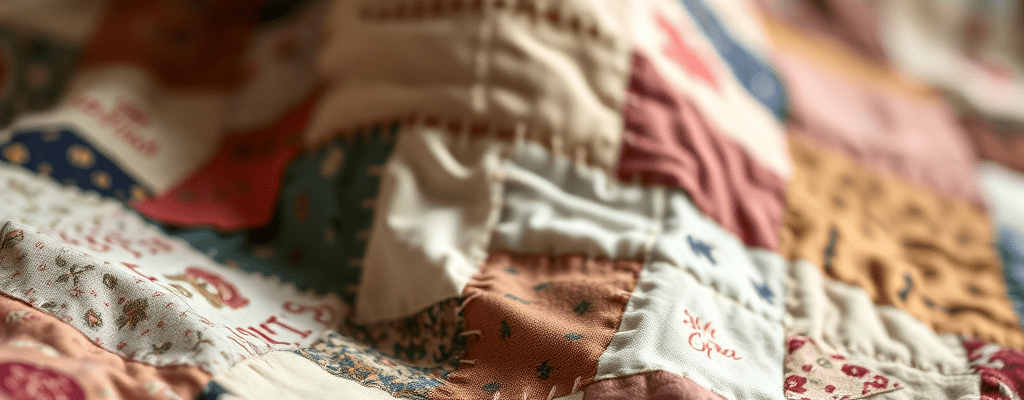
There’s something so evocative about the phrase “threads of memory.” I love how it captures the way fabric can hold stories, a narrative—whether it’s a scrap of cloth from a loved one’s garment or a hand-stitched detail that has been passed down through generations. It reminds me that textiles are not just materials; they’re keepers of experience, comfort, and connection. That idea resonates deeply with me, and it’s something I want to explore more through my work and this blog.
Textiles have long served as silent storytellers—woven, stitched, or pieced together to preserve the narratives of individuals, families, and communities. Among the most poignant examples are memory quilts, garments made from passed-down fabrics, or embroideries that commemorate events and emotions. These storytelling textiles not only provide comfort and connection; but they act as living archives of heritage, tradition, and identity. In today’s design landscape, the resurgence of heritage-driven aesthetics and values is bringing these textile stories back into focus—reminding us that cloth can carry far more than pattern and function.
The Legacy of Memory Quilts
Memory quilts are perhaps the most recognisable form of narrative textile. Traditionally sewn from scraps of worn clothing, handkerchiefs, or household linens, they were often made to mark a significant transition: births, deaths, marriages, or migration. Each patch held significance—a grandfather’s shirt, a child’s baby blanket, or the lace from a wedding gown. Over time, these fabric fragments became deeply personal storytelling devices, allowing the maker to preserve both physical remnants and emotional resonance.
This form of textile storytelling embodies slow craft: every stitch is intentional, every fabric a token of experience. The quilt becomes a tactile family tree, a canvas of remembrance.
Heritage-Driven Design in the Modern Age
Today, there’s a growing appetite for design that is rooted in cultural authenticity and sustainability. Heritage-driven design looks to the past not simply for visual inspiration but for ethical grounding. It values traditional techniques, local materials, and craft knowledge passed through generations.
In the context of textiles, this manifests in:
- Reviving traditional motifs from specific regions or communities.
- Using fabrics with historical or familial significance, often repurposed.
- Collaborating with artisans who hold intergenerational skills in weaving, embroidery, or dyeing.
This approach not only honours lineage but fosters emotional and environmental sustainability. It asks us to slow down and consider the story behind what we wear or use.
Storytelling as Resistance and Identity
In many cultures, textile storytelling has also served as a quiet form of resistance or cultural preservation. Indigenous and diasporic communities around the world have used cloth to pass down languages, symbols, and teachings that might otherwise have been lost under colonisation or migration.
Examples include:
- Palestinian tatreez embroidery, where motifs encode village names and experiences.
- South African narrative cloths, which depict political histories through appliqué.
- African American story quilts, such as those by the Gee’s Bend quilters, that carry powerful histories of survival, creativity, and voice.
In these cases, textile design becomes a heritage act—a way of saying, “we were here, we are still here.”
Reviving the Personal in the Global Age
In an era dominated by mass production and digital experiences, heritage storytelling through textiles reintroduces the deeply personal. It encourages creators and consumers alike to ask:
- Where did this fabric come from?
- Whose hands made it?
- What memory does it hold?
Whether through making a quilt from a loved one’s clothing, tracing one’s cultural patterns in a scarf design, or learning an ancestral embroidery technique, engaging with storytelling textiles allows people to reconnect with themselves and their past.
Moving Forward: Weaving the Old with the New
Designers, crafters, and artists are increasingly merging traditional storytelling methods with modern innovation. Digital fabric printing now allows for photographic and textual narratives on cloth. QR codes embroidered into garments can lead viewers to oral histories. And craft workshops worldwide are teaching new generations to stitch meaning into fabric.
These evolving practices demonstrate that storytelling textiles are not just nostalgic—they’re resilient, adaptable, and deeply relevant.
I’m excited to share that I’m considering starting a new project called “Threads of Memory”—an exploration into how fabrics and textiles can hold personal stories and help people reconnect with their identity. This project is especially close to my heart, and I’m particularly interested in how textile-based practices might support those living with brain injury or dementia. Textures, patterns, and the simple act of touch can stir memories in profound and unexpected ways.
At this point, I’m seeking collaborators—individuals, carers, artists, or anyone who feels a connection to this theme. If you have experience or interest in the healing and narrative potential of fabric, I’d love to hear from you. You can get in touch via the contact page, leave a comment or subscribe to my blog for updates as this project begins to take shape. I’ll be sharing ideas, research, and ways to get involved as it grows.
This reflection resonates with the sensory-led, co-creative approach explored in UCL’s “Threads of Memory” project, which invites healing through tactile art and shared storytelling.
To explore more reflections, resources, and sensory-led stories, you’re warmly welcome to subscribe and stay connected.
 Rachel Bakewell