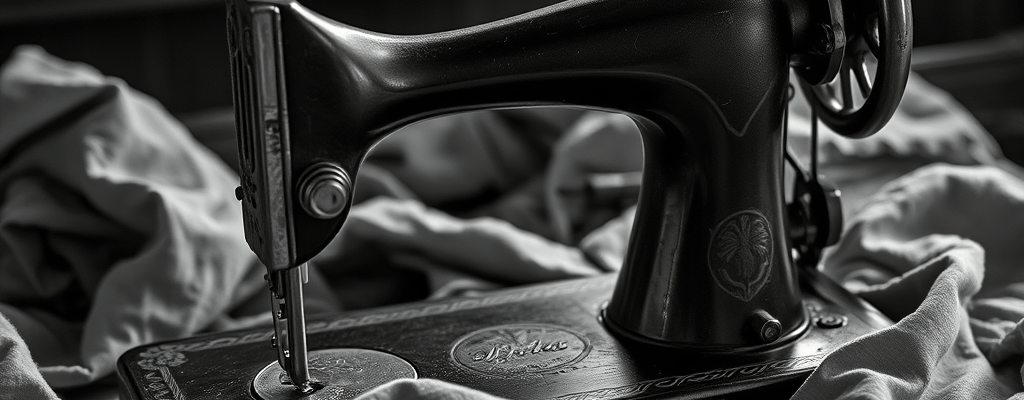
In 19th-century Britain, the word workhouse struck fear and shame into the hearts of the poor. Established under the Poor Law Amendment Act of 1834, these institutions were designed to deter people from seeking public assistance by offering a last resort: food and shelter in exchange for hard, monotonous labour. Though framed as charity, the reality was stark, and for many, degrading.
But amid the misery, silence, and stigma, stories of resilience endured—and among them are stories interwoven, quite literally, with textiles.
What Was a Workhouse?
A workhouse was a government-run institution where the destitute—men, women, and children—were housed, fed, and put to work. They were meant to be harsh to discourage all but the truly desperate. The idea was rooted in Victorian values of self-reliance and the belief that poverty was often a result of moral failure.
By 1840, there were hundreds of workhouses across England and Wales, housing tens of thousands of people. Residents, known as inmates, included orphans, the elderly, the mentally ill, unmarried mothers, and the disabled. Families were typically split up on arrival, with men, women, and children sent to different wards.
Daily Life: Harsh and Humiliating
Conditions varied from one workhouse to another, but the underlying principle was always discipline and austerity. Life inside was regimented, institutional, and dehumanisng:
- Food: Meals were basic and bland—often just gruel, bread, and soup. The diet was deliberately plain to discourage reliance on the system.
- Work: Inmates worked long hours at repetitive and often backbreaking tasks. These included: breaking stones, picking oakum (unraveling tarred rope), laundry, or factory-style sewing.
- Clothing: Uniforms were issued, typically shapeless and coarse. Inmates’ individuality and dignity were erased.
Workhouses and the Textile Industry
Textiles played a major role in daily life—and exploitation—of workhouse inmates, particularly women and girls. Sewing, weaving, mending, and laundering were among the most common tasks assigned to female inmates.
Sewing and Uniform Production
Many workhouses had sewing rooms where women and older girls made and repaired institutional clothing—not just for themselves, but also for other institutions like hospitals or even prisons. This labour was unpaid and relentless, often carried out under poor lighting and strict supervision.
Oakum Picking
This was a common task for both children and the elderly. It involved separating fibres from old ropes (soaked in tar), which would later be reused in shipbuilding. The work was painful and tedious, and the tarred fibres often caused skin infections and respiratory issues.
A Voice from the Needle: Lorina Bulwer
One of the most remarkable stories to emerge from a workhouse is that of Lorina Bulwer, confined to the Great Yarmouth Workhouse in the late 19th and early 20th centuries. Likely suffering from mental illness, Lorina created extraordinary embroidered samplers—long, angry scrolls of densely stitched text that poured out her pain, rage, and accusations against those who confined and neglected her.
In one of her works, she writes:
“I LORINA BULWER SPINSTER DRESSMAKER … WAS PUT INTO THE WORKHOUSE.”
Her embroideries—now preserved in museums—are a rare, powerful act of self-expression from someone silenced by poverty, gender, and mental illness. They show how textile labour, though forced and degrading, could become a medium of resistance and selfhood.
More about Lorina Bulwer here.
Children and Textile Training
Many workhouses also acted as grim vocational schools. Young girls were taught to sew from an early age—not to foster creativity, but to prepare them for domestic service. Stitching samplers, mending garments, and laundering sheets became tools of discipline. In some cases, this training helped girls secure jobs outside the workhouse, but more often it trapped them in cycles of low-paid, exploitative labour.
The End of the Workhouse System
By the early 20th century, the cruelty of workhouses was increasingly criticised. The system began to wind down in the 1920s and was formally abolished in 1930, though many buildings continued as public hospitals or poor-law institutions under other names.
The legacy of the workhouse lingers—not just in records or ruins, but in stories like Lorina Bulwer’s, and in the worn seams of institutional clothing sewn by anonymous hands.
Conclusion: Threads of Humanity in Harsh Times
The workhouse was a place of suffering, silence, and social exclusion. But within it, people sewed—not only out of duty, but sometimes as a means of endurance, or even quiet rebellion. From stitched uniforms to secret samplers, textiles tell part of the human story behind institutional walls.
Today, artists, historians, and curators are rediscovering these forgotten threads—reminding us that even in places designed to strip away dignity, creativity and resistance found a way to survive.
For those interested in visiting a historical workhouse site, please see the information below.
A workhouse The Workhouse and Infirmary: A National Trust Property
About The Workhouse and Infirmary
Built in 1824 as a last resort for many people, this rural workhouse is one of the best preserved and most complete in England. It was designed to house around 160 inmates, who lived and worked in a strictly segregated environment with virtually no contact between the old and infirm, able-bodied men and women, and children.
As the site developed, the Infirmary was built in 1871 to care for those deemed too ill to be housed in the workhouse. Here you can glimpse the beginnings of an emerging healthcare system, as social care evolved.
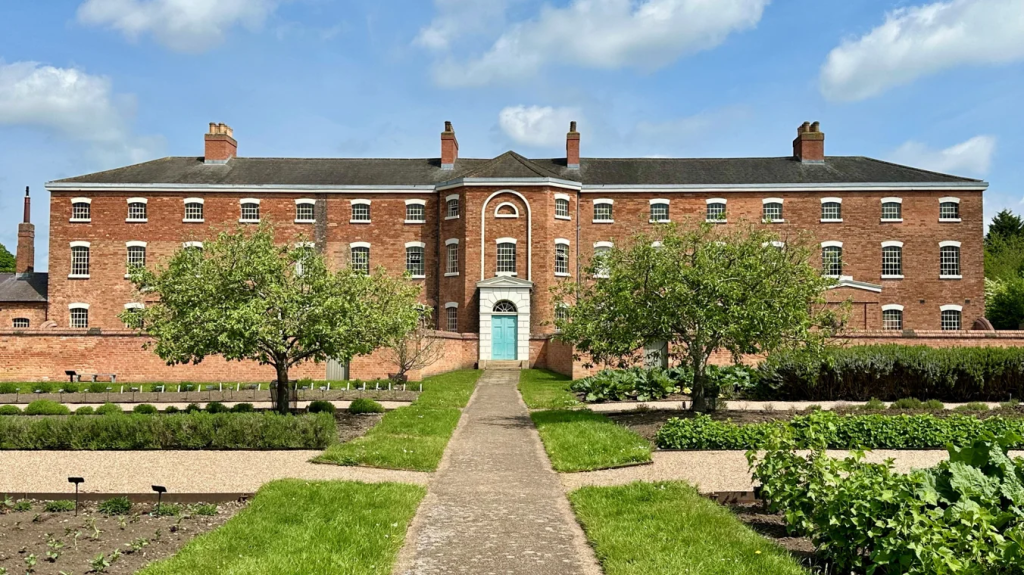
The Workhouse and Infirmary Atmospheric Georgian Workhouse and Victorian InfirmaryUpton Road, Southwell, Nottinghamshire, NG25 0PT
Sources & Further Reading:
- Robinson, Kathryn The Workhouse: A Study of Poor Law Buildings in England.
- Crowther, M.A. The Workhouse System, 1834–1929
- Norfolk Museums Collection – Lorina Bulwer Collection
- The Workhouse
- Historic UK: The Workhouse in Victorian Britain
References:
Image:
Websites:
 Rachel Bakewell