One of the things I’ve always loved is seeing glimpses into artists’ studios—the places where ideas take shape, transform, and slowly become the finished pieces we admire. There’s something uniquely fascinating about witnessing a work in progress, with all its raw edges and unfinished details. It reminds me that every artwork is a journey, not just an outcome.
Below, is an image by Tony Godfrey, showing a work in progress by Geraldine Javier. I find it inspiring to see her process unfold—how layers build up, how materials interact, and how an initial vision evolves over time. It’s a beautiful reminder that creativity is as much about exploration as it is about completion.
While taxidermy (an area of Geraldine Javier’s creative practice), has never particularly appealed to me as a medium, I find many of Geraldine Javier’s other artistic methods deeply compelling. Her use of textiles, painting, and layered mixed media to explore themes like memory, spirituality, and cultural tension really resonates with my own interests. It’s in those quieter, more tactile approaches that her work feels most powerful and personally engaging to me.
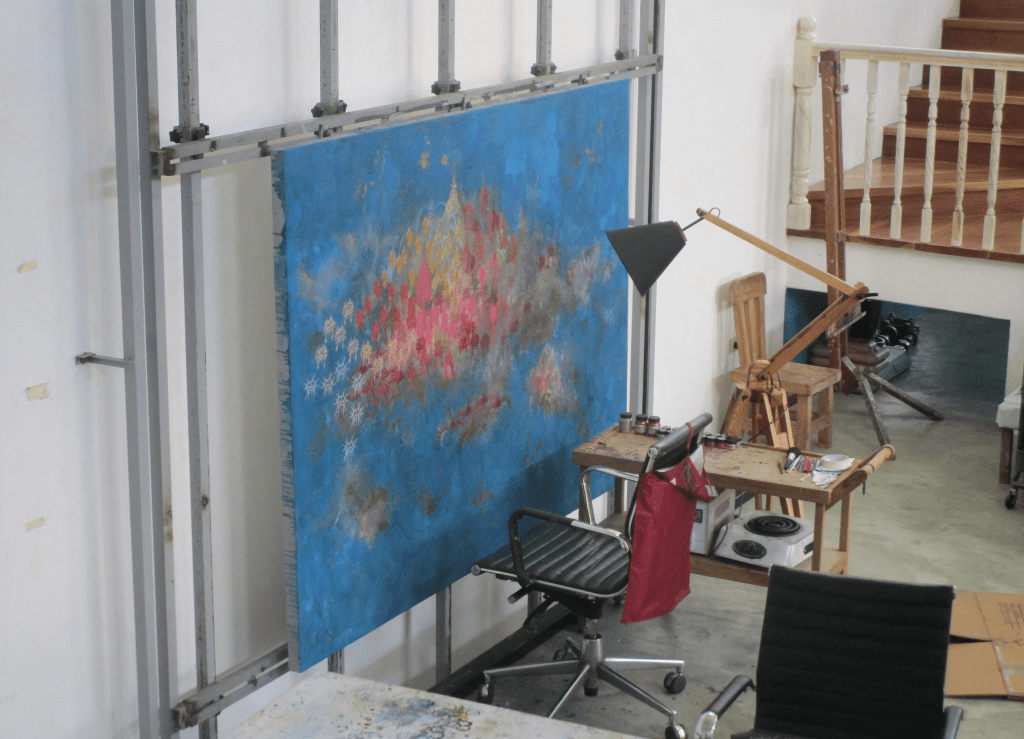
Fig 1 Work-in-progress at Geraldine Javier’s studio, photograph taken by Tony Godfrey. Image courtesy of Tony Godfrey.
Geraldine Javier is one of the most compelling voices in contemporary Filipino art. She is known for her evocative mixed-media paintings and installations. Her work weaves together themes of mortality, spirituality, memory, and the quiet weight of personal and collective history.
Artist Spotlight: Geraldine Javier
Born in Manila, Philippines in 1970, Geraldine Javier did not initially plan to become an artist—she trained as a nurse before pursuing her passion for painting.
Today, she is celebrated internationally for works that blend traditional oil painting with embroidery, collage, resin, taxidermy, and found objects.
Geraldine Javier is one of the most celebrated contemporary artists to emerge from Southeast Asia. She is based in the Philippines, where Geraldine Javier’s artistic journey began in art school, where her creative potential quickly stood out. Since 1995, she has exhibited widely in both solo and group shows across her home country, steadily gaining recognition for her deeply layered and thought-provoking work.
Her impact on the local art scene was further acknowledged when she was selected as one of the top 13 artists by the Cultural Centre of the Philippines—an honour that cemented her status as a leading voice in contemporary art. Today, she is recognised not just in the academic world, but across the global art field for her distinctive perspective and visual language.
Geraldine Javier’s work explores the universal realm of spirituality, transcending the boundaries of any single religious doctrine. Her themes are rooted in personal experience—specifically, her lifelong negotiation with the complexities of Catholic culture in the Philippines. This internal struggle informs her practice and lends it a powerful emotional depth.
What makes Geraldine Javier’s work especially compelling is the way she weaves together this personal history with the broader cultural textures of Southeast Asia—a region where centuries of Western influence have been deeply absorbed and reinterpreted. Rather than focusing on the dogma of religion, she seeks to illuminate more fundamental human values—those that resonate across beliefs, cultures, and identities.
Geraldine Javier’s art invites contemplation. It offers a quiet yet striking space where spirituality, memory, and cultural nuance coexist.
I always find myself drawn to her works not just for their visual beauty, but for the questions they raise and the inner conversations they spark.
Themes in Her Work
Geraldine Javier’s art often explores the fragility of life and the persistence of memory. Many of her pieces reflect on the tension between beauty and decay, the living and the dead, the sacred and the mundane.
Her practice is deeply rooted in the Filipino experience but resonates far beyond, offering meditations on loss, longing, and the traces we leave behind.
A few recurring themes you’ll notice in her work:
- Nature and Impermanence
Plants, insects, and organic materials appear frequently, evoking cycles of growth and decline. - Textiles and Embroidery
Geraldine Javier’s use of hand-stitched elements brings a tactile intimacy to her canvases, transforming paintings into hybrid objects that recall domestic crafts and ancestral traditions. - Spiritual and Religious Symbolism
Many pieces engage with Catholic imagery—altars, reliquaries, icons—reimagined through a contemporary lens.
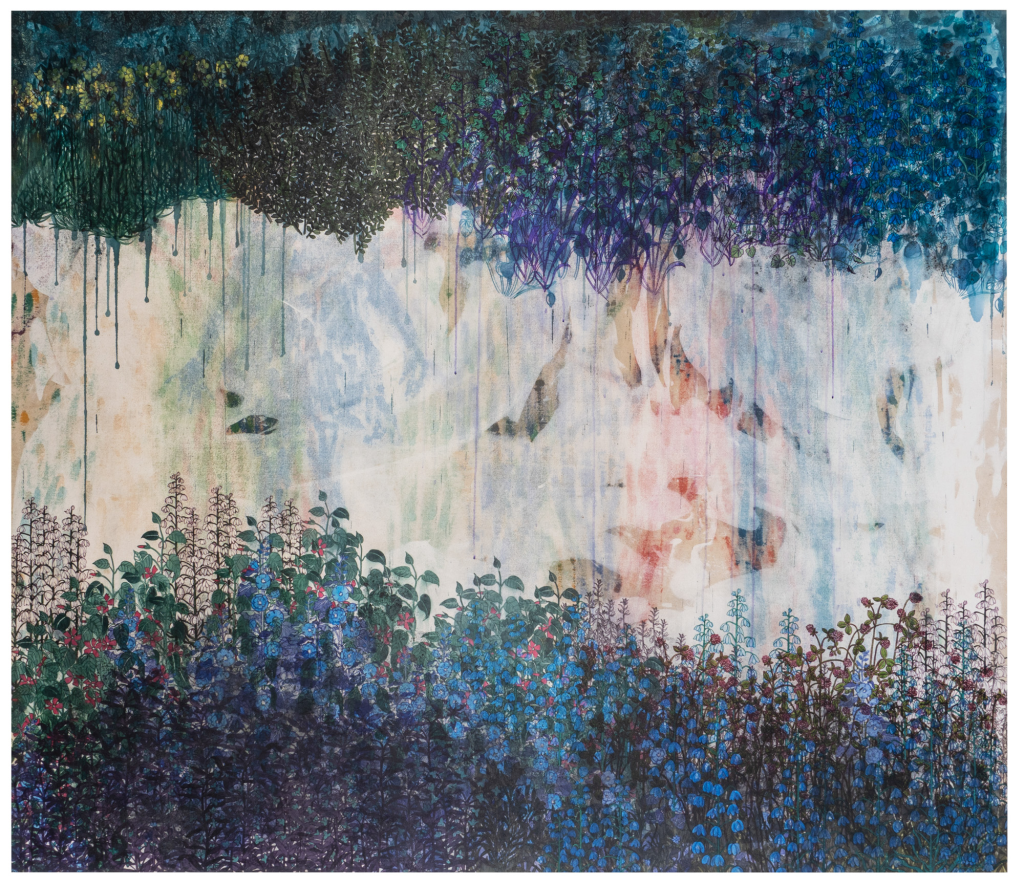
Fig 2 *GERALDINE JAVIER*, _Gertrude Jekyll (The Earth was Her Canvas II)_, 2020, acrylic on canvas, 182.9 x 198.1 cm. All images courtesy Artinformal Gallery, Manila.
Notable Works and Exhibitions
Here are a couple of her influential projects:
“Stuck in Reverse” (2008)
This installation combined paintings, and religious relics in glass cases, reflecting on death and the haunting power of memory.
Geraldine JAVIER: “BEYOND THE VEIL” (2013)
Geraldine Javier: Beyond the Veil offers a glimpse into the artist’s deeply introspective world, where themes of spirituality, memory, and mortality are explored through richly layered works. Drawing from her personal experiences with Catholic culture in the Philippines, Geraldine Javier creates haunting, poetic pieces that invite quiet reflection and challenge conventional narratives of faith and identity.
Seoul 7 June – 14 July 2013
You can find more projects here.
The Power of Material
One of the most striking qualities of Geraldine Javier’s work is her ability to combine painting with unexpected materials. By incorporating embroidery and taxidermy, she challenges traditional notions of what a painting can be.
Her use of textiles has been described as an act of “repair,” suturing together fragments of memory and loss. This layering of techniques also gestures toward the hidden labour of women’s work and the resilience found in domestic practices.
Further Reading & Resources
If you’d like to explore more about Geraldine Javier:
- Articles:
- Everyday, Elsewhere: Allegory in Philippine Art, Patrick D. Flores, University of the Philippines
Geraldine Javier: Lightness in Death, ARTASIA PACIFIC - Healing Nature: Geraldine Javier’s “Five Gardens”, ARTASIA PACIFIC
Geraldine Javier’s work invites us to slow down and look closely, to consider what we remember, what we leave behind, and what it means to create something beautiful in the face of impermanence.
Have you encountered her art in person or online? Feel free to share your thoughts in the comments below, I’d love to hear what resonates with you.
How Geraldine Javier’s Work Resonates with My Practice
When I first encountered the art of Geraldine Javier, I felt an immediate connection. Her thoughtful use of materials, her attention to the cycles of life and decay, and her exploration of memory echo many of the questions that guide my own work.
Below, I want to share a few ways her art inspires and challenges me, along with images that illustrate her unique approach.
Memory as a Living Presence
Geraldine Javier’s pieces often feel like altars to the past. They hold memories not as static relics but as living, evolving presences.
In my own practice, I am drawn to the idea that textiles can carry stories—the way an old scrap of fabric retains the trace of a touch or a moment in time. Geraldine Javier’s art validates this intuition, showing how painting, embroidery, and objects can come together to create a space of remembrance.
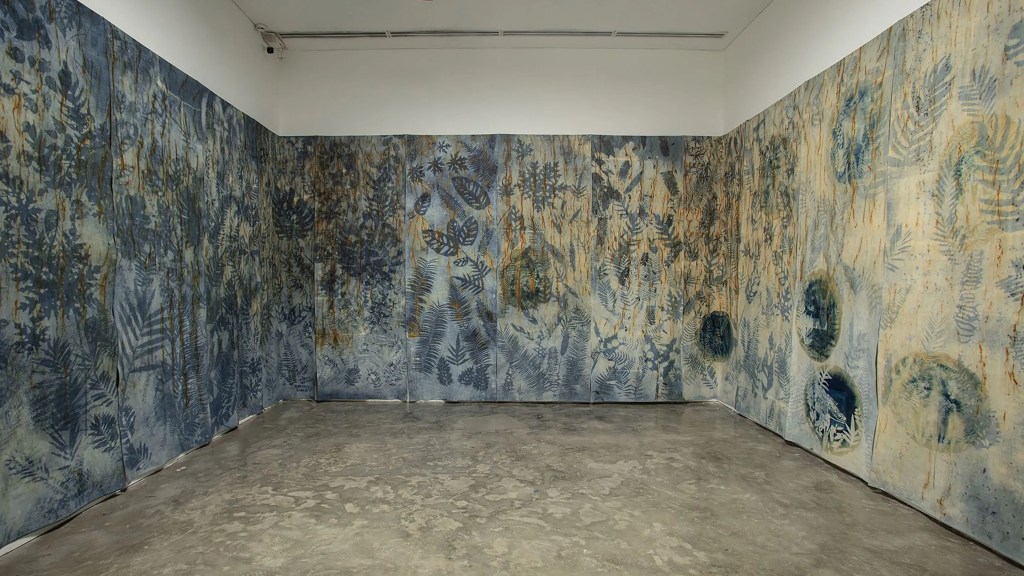
Fig 3 Ocula: Geraldine Javier
The Natural World and the Beauty of Impermanence
Geraldine Javier’s installations are often filled with natural imagery—moths, leaves, birds—that remind us how everything is fleeting.
I also find inspiration in this sense of impermanence. Whether I’m working with plant-dyed fabrics or ephemeral materials, I want my work to embrace change and decay rather than resist them.
Geraldine Javier’s art gives me permission to see the natural world not just as a subject but as a collaborator.
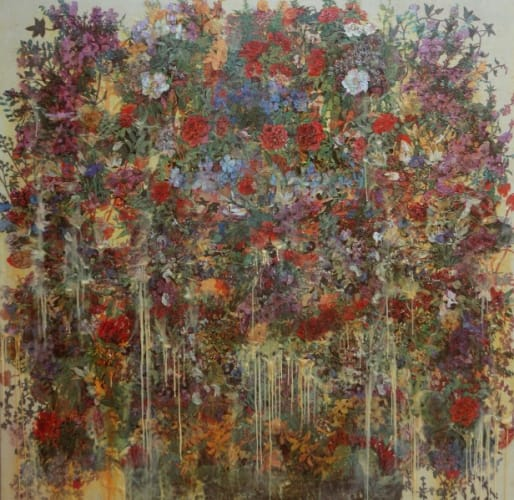
Fig 4 Art Basel – Untitled, 2018 Hong Kong 2018
Textiles as a Language
Geraldine Javier’s practice blurs the line between painting and craft. The embroidered sections in her work feel intimate, almost like private thoughts stitched onto a canvas.
In my own pieces, I often use hand-stitching as a way to slow down, to be present in the making, and to reflect. Seeing how Geraldine Javier elevates these materials within contemporary art inspires me to continue exploring textiles as a powerful visual language.
Example:
ARNDT Fine Art – Geraldine Javier
A Shared Sensibility
While our backgrounds and processes are different, I do feel an affinity with Geraldine Javier’s work. We ask similar questions:
- How can materials hold memory?
- What does it mean to honour life’s fragility?
- How do textiles become vessels of care and attention?
If you haven’t explored her art yet, I encourage you to spend time with her images. They offer so much to reflect on—especially for those of us drawn to the intersection of memory, the natural world, and handcraft.
If you’re working with textiles or exploring similar themes in your own art, I’d love to hear how these ideas resonate with you. Share your thoughts in the comments!
If you’ve enjoyed reading and want to stay updated on new posts, reflections, and featured artists, I’d love to have you subscribe to my blog. You’ll get fresh insights delivered straight to your inbox—no spam, just thoughtful content and creative inspiration. Sign up and join me on this ongoing journey of art, ideas, and discovery.
Reference & Attribution Disclaimer
This post is intended for educational and creative storytelling. Artist names, works, exhibitions, and affiliated institutions are referenced with care and respect, and all details are included for contextual purposes only. No endorsement or commercial affiliation is implied.
Efforts have been made to credit all sources and images appropriately. If you notice an omission or believe something needs correction, please feel free to reach out — I welcome the opportunity to acknowledge and honour all contributions with transparency and care.
Reference & Attribution Disclaimer
This post is intended for educational and creative storytelling. Artist names, works, exhibitions, and affiliated institutions are referenced with care and respect, and all details are included for contextual purposes only. No endorsement or commercial affiliation is implied.
Efforts have been made to credit all sources and images appropriately. If you notice an omission or believe something needs correction, please feel free to reach out — I welcome the opportunity to acknowledge and honour all contributions with transparency and care.
Additional attribution and referencing guidelines can be found on the About Me page.
References:
Image:
Fig 1: Mizuma Gallery
Fig 2: ArtAsia Pacific
Fig 3 Ocula: Geraldine Javier
Fig 4 Art Basel – Untitled, 2018 Hong Kong 2018
Website:
 Rachel Bakewell