In a world where protest is often imagined through fire and fury, the suffragettes remind us that resistance can also be stitched by hand, draped across shoulders, and quietly embroidered into banners. Far from being soft or decorative, these textiles of the suffragette movement—sashes, handkerchiefs, banners, and badges—were radical tools of visual and material dissent. These pieces reimagined “women’s work” as political work, asserting agency in a society that tried to stitch women into silence.
Suffragette textiles transformed the domestic into the defiant. They blurred the line between the personal and the political, turning fabric into manifesto. This blog post explores their power.
Stitched Solidarity: A Brief History
During the early 20th century, women campaigning for the vote—particularly in the UK and the US—used textiles as both messaging and medium. Whether hand-embroidered banners in public marches, sashes worn across the chest, or embroidered signatures smuggled out of prison, these items weren’t passive adornments. They were symbols of presence, precision, and persistence.
Colours mattered: Purple for dignity, white for purity, green for hope. These were worn proudly, repeated in flags and badges, uniting individuals into a larger visual movement. Organisations like the Women’s Social and Political Union (WSPU) understood the power of branding before the term existed.
Even behind bars, suffragettes stitched their resistance. One iconic artifact is the Suffragette Handkerchief (1912), embroidered with the names of 66 women imprisoned in Holloway Prison—some on hunger strike. This intimate piece of cloth survives as a document of collective defiance.
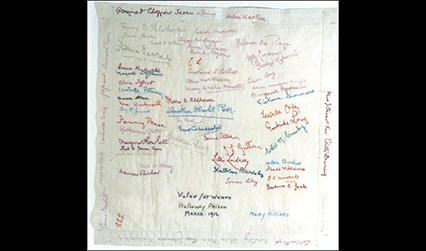
Fig 1: Handkerchief embroidered by suffragette inmates at Holloway Prison, 1912. Royal College of Physicians
Why Textiles?
Textiles have long been coded as feminine, domestic, and apolitical. The suffragette movement flipped that script. Using tools historically dismissed as women’s craft, they redefined embroidery, sewing, and fashion as tools of visibility and protest.
The strategic use of fashion—well-tailored suits, plumed hats, and colour-coded sashes—disrupted the stereotype of the “hysterical suffragette” Instead, women appeared disciplined, dignified, and united—visually controlling their own narrative in the public sphere.
Threads That Bind Today
Suffragette textile strategies still echo today—in pink pussyhats, protest quilts, DIY banner workshops, and the craftivist movement. These contemporary examples owe much to the suffragette legacy: the idea that making is political, that the quiet rhythm of thread can speak louder than words.
Textiles,, are made stitch by stitch. They are strong not because they shout, but because they hold—history, identity, memory, and defiance.
🧵 Want to Explore More?
Further reading:
The Role of the Sewing Machine in Women’s Suffrage
All references are used respectfully for educational storytelling. See About Me for full source credits.
Subscribe for fresh posts on art, poetry, and thoughtful storytelling — delivered with care.
References:
Images:
Fig 1: Royal College of Physicians
 Rachel Bakewell