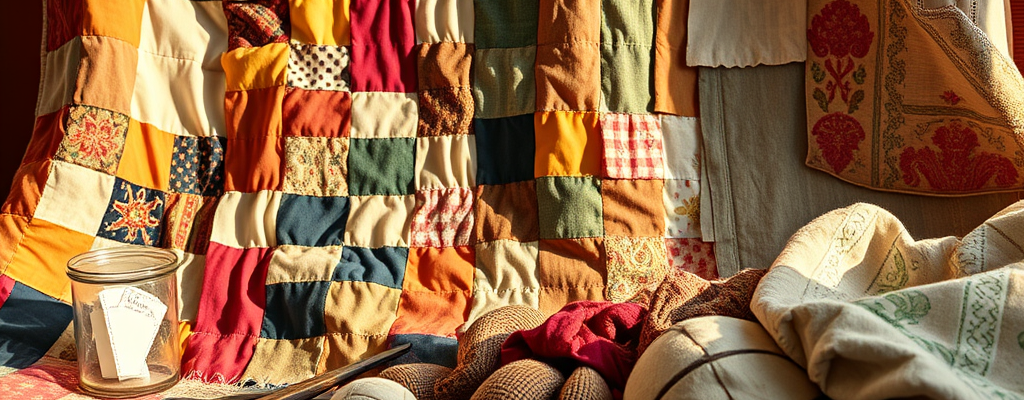
Textiles are more than just practical objects—they are sensory, symbolic, and deeply personal. Across cultures and centuries, cloth has served not only to clothe the body but also to comfort the soul. From the stitched stories of traditional quilts to medicinal fabric treatments used in ancient practices, textiles have long been tools of healing and remembrance.
Quilting as an Act of Memory and Connection
One of the most evocative examples of textiles used for memory is quilting. In many traditions, especially in North America and parts of the UK, quilting became a way to preserve family history, commemorate important life events, and pass on cultural knowledge. Memory quilts—often created from scraps of worn clothing—transform everyday fabric into a tangible legacy, stitching together the lives and loves of those remembered.
For enslaved African American communities, quilting carried layered meanings. Beyond warmth, quilts served as maps, signposts, and storytelling tools. Patterns held hidden messages, and quilting circles became vital social and cultural gatherings.
In times of grief, women often turned to quilting to process loss. Mourning quilts were made to honour the dead, providing a tactile space for remembrance and emotional healing.
Textiles in Medicinal and Ritual Healing
Textiles have also played important roles in physical and spiritual healing. In ancient Egypt and Greece, certain cloths were imbued with herbal oils and used in ritual or therapeutic contexts. Linen strips soaked in healing substances were wrapped around wounds or used to swaddle the sick, forming part of early medicinal practices.
In traditional Chinese medicine, herbal poultices wrapped in cotton or silk were used to treat aches and skin ailments. Similarly, in Ayurvedic practice from India, cloth soaked in herbal decoctions—known as panchakarma wraps—were used for detoxification and pain relief.
In 19th-century Britain, medicinal textiles became commercialised. “Patent” healing fabrics were infused with camphor, menthol, or vinegar, marketed to relieve everything from headaches to influenza. Though many of these treatments were later questioned, the core idea—that cloth could carry healing properties—remains influential in holistic and wellness traditions today.
Ritual Cloth and Spiritual Reassurance
In many Indigenous cultures, textiles are not just utilitarian but sacred. Prayer cloths, mourning veils, and healing shawls are imbued with meaning, representing the presence of ancestors or divine protection. In Japan, omamori cloth pouches filled with prayers are worn for protection and healing, while Tibetan prayer flags—textiles themselves—carry blessings on the wind.
Even in Western traditions, textile rituals persist: christening gowns passed down generations, wedding veils worn again and again, and comfort blankets offered in times of illness or grief.
Textiles as Modern Therapeutic Tools
Today, the healing potential of textiles continues in therapeutic and artistic contexts. Projects like The Loving Blanket in palliative care or textile art therapy in trauma recovery show how creating or touching cloth can calm the nervous system, evoke memory, and provide emotional release.
Crafting, knitting, and sewing are now widely recognised for their mental health benefits. The repetitive nature of stitching can mimic meditative practice, grounding individuals in the present moment—offering solace in an anxious world.
Conclusion: Cloth as Care
Textiles have always done more than cover us. They hold scent, memory, and meaning. They protect us, not only from cold or exposure, but from forgetting. In every carefully patched quilt or herb-infused wrap, there is the same impulse: to tend, to remember, to heal. As we continue to explore sustainable and holistic approaches to health and creativity, the healing history of textiles reminds us of the power in the everyday fabric that surrounds us.
Further Reading:
- Patchworks of Memory: Quilting Remembrance and Healing” by Lisa Gail Collins, published via Literary Hub and University of Washington Press, explores how African American women in Gee’s Bend, Alabama, used quilting as a way to preserve memory, process grief, and express resilience.
One of the most poignant examples is Missouri Pettway’s quilt, stitched from her late husband’s worn work clothes. Her daughter, Arlonzia Pettway, recalled helping her mother tear the garments into strips to shape a quilt that would “cover up under it for love” The act of piecing together his pants legs and shirttails became a tactile form of mourning — a way to hold onto love and loss simultaneously.
2. The article beautifully weaves personal testimony with cultural history, showing how these quilts are not just textiles but emotional landscapes — stitched with longing, memory, and grace.
Lisa Raye Garlock (2016), Stories in the Cloth: Art Therapy and Narrative Textiles, Art Therapy, 33(2), pp. 58–66. DOI: 10.1080/07421656.2016.1164004
3. Burnhope, Alice & Keighery, Lianne (2025–2026). Threads of Memory: Co-creating healing through sensory, tactile art. Arbor Arts Programme, UCL Faculty of Brain Sciences. Available via UCL
This interdisciplinary project beautifully interlaces neuroscience and participatory textile practice to explore how touch, texture, and sensory engagement can support emotional healing.
References:
Websites:
 Rachel Bakewell