In the early 19th century, as the Industrial Revolution surged through Britain, not everyone welcomed the wave of change. In towns like Hyde—particularly the hillside village of Gee Cross—anxiety and unrest grew among skilled textile workers. These men and women had spent years mastering their crafts, only to see new machines threaten their livelihoods.
Out of this tension emerged the Luddites
Far from being anti-progress or mindless saboteurs, the Luddites were skilled artisans—mostly weavers and framework knitters—who felt their survival was under threat. As mechanised looms and mills replaced traditional hand production, wages dropped, jobs were lost, and working conditions worsened.
Gee Cross, nestled on the slopes of Werneth Low, was home to many domestic weavers who worked out of cottages using handlooms. This “cottage industry” formed the backbone of local life before industrial mills began to dominate the landscape. As factories sprang up in nearby towns like Stockport, Dukinfield, and Ashton, tensions rose and Hyde was no exception.
Though the most documented Luddite uprisings took place in Nottinghamshire, Yorkshire, and Lancashire between 1811 and 1816, the spirit of resistance stirred quietly in Hyde. Formal records may be scarce, but oral histories and local accounts suggest that Gee Cross played its part — with whispers of clandestine meetings, acts of sabotage, and quiet solidarity. Some believe that sympathisers in the area offered shelter to Luddite leaders or helped relay messages across the region. The wooded paths and winding rural lanes provided natural cover for secret gatherings, leaving behind a legacy woven into the landscape and memory of Hyde.
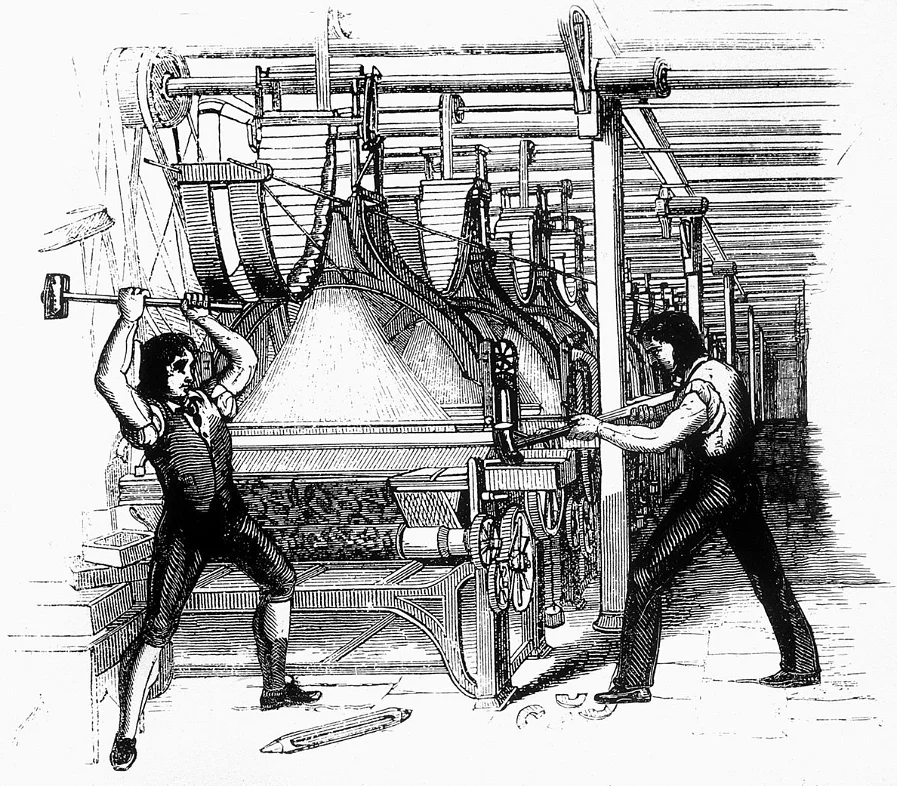
Fig 1: Image: Luddites breaking a loom. Unknown artist, Public Domain. Source: World History Encyclopedia.
The unrest peaked during a time of economic depression and food shortages, exacerbated by the Napoleonic Wars and inflation. Authorities responded with harsh crackdowns—arrests, executions, and deportations followed. In nearby towns, mill machinery was smashed, and some factories were burned down. While Gee Cross did not witness large-scale destruction, it shared in the tension and fear of the time.
Today, the Luddite legacy is often misunderstood. These workers weren’t opposed to technology itself—they were fighting for fair wages, decent conditions, and respect for their skills. In places like Gee Cross, where traditional craftsmanship once thrived, the Luddite story reminds us of a community caught at the crossroads of old and new.
As you walk the winding streets of Gee Cross or pass the remaining weavers‘ cottages—some later repurposed as schools, shops, and pubs—you’re treading the same paths once walked by people grappling with massive change. People who wanted their voices heard in a rapidly transforming world.
Timeline Highlights (1811–1816)
1811: Movement begins in Nottingham; spreads to the North West, including Hyde.
1812: Peak violence-machine-breaking and mill attacks reported in Hyde and Gee Cross.
1812: (Spring): Rawfolds Mill attack; Luddites shot under orders of mill owver Horsfall.
1813: Mass trials in York; executions and transportations weaken the movement.
1813-1815: Decline begins due to repression and military crackdown.
1816: Final resistance wave triggered by economic depression and poor harvests.
One evocative sketch by Albert Vincent Reade captures Hyde Chapel from Werneth Low, with the village of Gee Cross nestled quietly below, the work offers a glimpse into the landscape that once framed the lives of domestic weavers. Though the image isn’t reproduced here, it can be viewed on Artware Fine Art’s gallery.
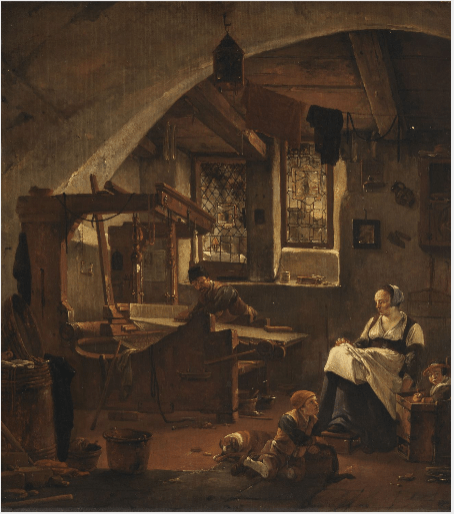
Fig 2: Interior of a Weaver’s Cottage – Wikimedia Commons
I tend to avoid Wikipedia as a primary source, preferring more grounded or archival references. But in this case, I haven’t found another image that captures the domestic layout of a weaver’s cottage quite like this one. Though it’s housed in the National Gallery of Ireland, the arrangement — loom beside hearth, work woven into daily life — closely echoes the cottages of northern England.
Interior of a Weaver’s Cottage – Wikimedia Commons
Further Reading:
According to Pigot & Co’s 1834 Trade Directory, Gee Cross was a populous village within the townships of Hyde and Werneth, its name derived from the Gee family who erected a stone cross there. The springs rising in the Arnold Hill estate provided remarkably soft water, and the area benefited from both canal and river transport. Hyde itself was rapidly industrialising, with cotton spinning and power looms transforming its economy and landscape. Tameside Local & Family History
An article Luddite, World History Encyclopedia
For those interested in the voices behind the resistance, Kevin Binfield’s Writings of the Luddites offers a powerful collection of letters, proclamations, and testimonies from the movement itself. The full text is available via the Internet Archive. Read the book on Archive.org.
Join my mailing list to receive the latest articles, resources, and insights on art, sustainability, and design.
References:
Image Credits:
Fig 1: World History Encyclopedia
Fig 2: Wikimedia Commons
Websites:
 Rachel Bakewell
