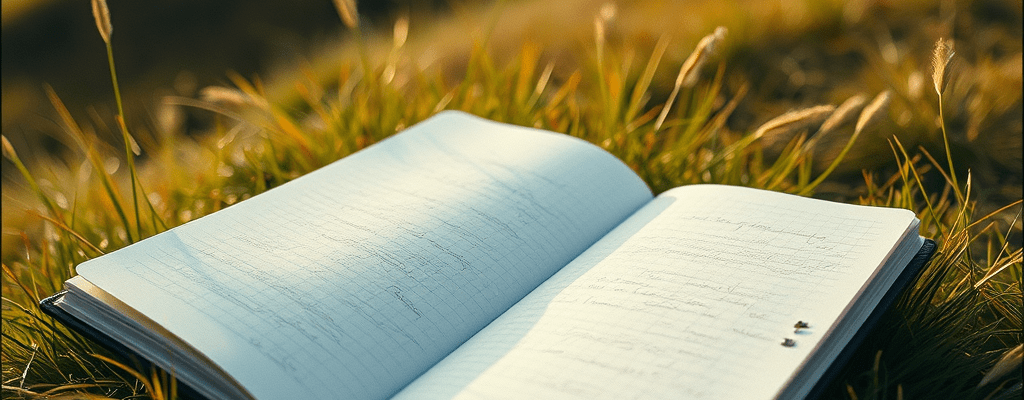
Pack a notebook—left hand or right, it’s all the same—and set out for a hillside, or even a breezy stretch of beach. Let the wind make the first marks: the shiver of grass, the metallic clink of a gate, the faint hum of a distant train. You’re not here to get it “right”—only to let your pencil roam the page the way your ears roam the air.
Draw “wind-notes”: long, wavering strokes for the big gusts; quick, jagged hatches for the snap and crackle in the hedgerow. Trace the rusty pitting of an old fence post, or the rough grain of a weather-worn bench—these are the percussion in the land’s score. Small dots, soft clouds for the sheep’s bleats, scattered across the silence.
A soundwalk is more than listening. It’s a quiet mapping—an atlas of where wind, land, and your own attention meet. And the beauty is in the imperfections—especially if you’re left-handed and your ink smears across the page. That smudge? That’s part of the music.
Further Reading:
5.2 Soundwalks Open Learn
Not about a sound walk but a soundscape, an interesting read R. Murray Schafer Jstor Daily
Truax, Barry. “World Soundscape Project.” Simon Fraser University. Accessed August 16, 2025. https://www.sfu.ca/~truax/wsp.html.
This page offers a rich overview of the project’s origins, key members (including Schafer, Truax, Westerkamp), and its landmark publications like The Vancouver Soundscape, European Sound Diary, and The Tuning of the World.
Westerkamp, H. (2001). Soundwalking. Hildegard Westerkamp. Retrieved August 16, 2025, from https://www.hildegardwesterkamp.ca/writings/writingsby/?post_id=13&title=soundwalking
This piece is often cited as the definitive articulation of soundwalking as both ecological practice and artistic method.
Join my mailing list to receive the latest articles, resources, and insights on art, sustainability, and design.
 Rachel Bakewell