See image credits (below)
In an age of fast fashion and disposable goods, slow stitching offers an antidote—a practice rooted in care, patience, and sustainability. At its heart, slow stitching is more than just thread on fabric; it’s about valuing time, honouring materials, and creating something that carries meaning beyond its stitches.
What Is Slow Stitching?
Slow stitching is an approach to textile work that embraces process over perfection. Unlike traditional embroidery or quilting that may follow rigid patterns, slow stitching encourages improvisation, intuitive design, and the visible presence of the maker’s hand. Each stitch is deliberate—a quiet mark of presence and time.
Stitching as Sustainability
One of the most compelling aspects of slow stitching is its alignment with sustainable values:
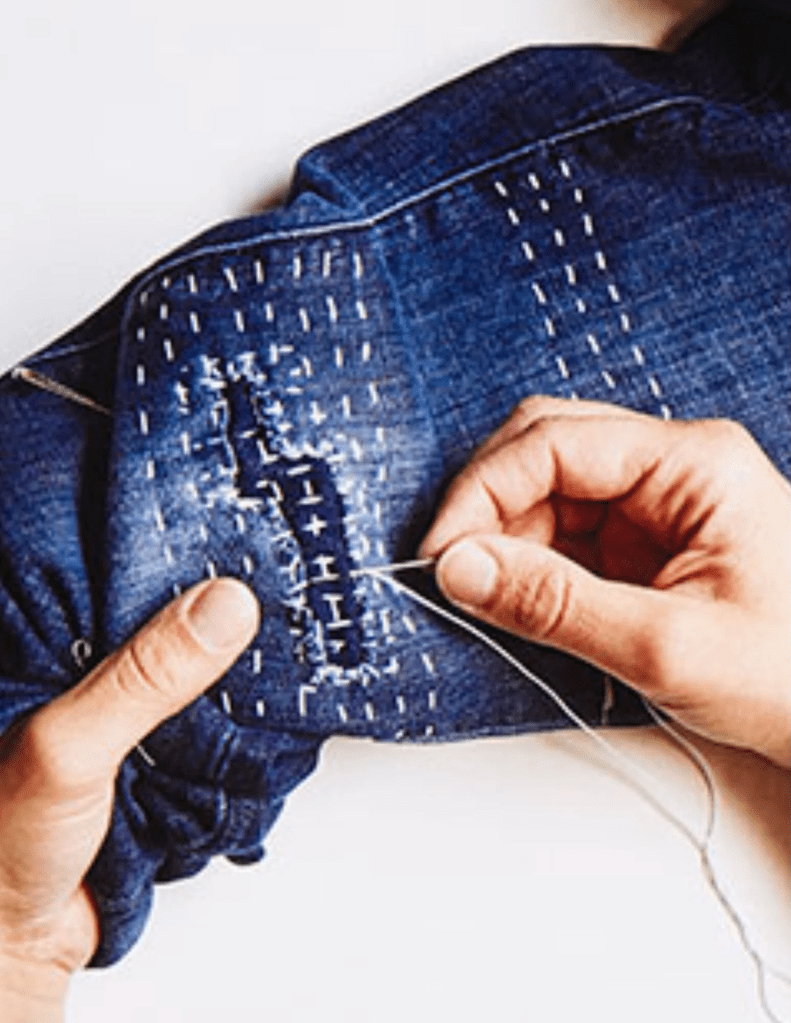
- Repair and reuse: Old garments, scraps, and found fabrics are often the canvas. Slow stitching extends their life, keeping textiles out of landfill.
- Mindful making: The emphasis is on process rather than speed, rejecting the “fast” ethos that dominates so much of consumer culture.
- Natural choices: Many slow stitchers turn to organic fabrics, natural dyes, and hand-spun threads, fostering an eco-conscious practice.
Working slowly not only yields something lasting—it gently quiets the impulse to consume.
A Sensory Practice
There is also a sensory richness to slow stitching. The feel of fabric between fingers, the rhythm of the needle, the sound of thread pulling through cloth—it all invites us into a meditative state. This sensory connection helps build a stronger relationship with the materials we use, and by extension, a deeper respect for their origins.
Stitching Stories
Slow stitching is not only sustainable—it is also expressive. Each patch, line, or layer of thread tells a story: of the fabric’s past life, of the maker’s mood, of the hours quietly invested. Many contemporary artists and craftspeople use slow stitching as a form of storytelling, layering history and memory into their cloth.
A Radical Simplicity
In a world that values speed and novelty, slow stitching is quietly radical. It asks us to slow down, to appreciate imperfection, and to see sustainability not as a trend but as a rhythm of life. Every piece created is unique, personal, and enduring—a small act of resistance against disposability.
Resources for Slow Stitching and Sustainable Textile Practice
Books
- Recommended reading: Claire Wellesley-Smith’s Slow Stitch: Mindful and Contemplative Textile Art — A contemplative invitation to slow down, reuse materials, and cultivate meaning through textile practice.
- Stitch Stories by Cas Holmes — A poetic exploration of memory, found objects, and layered stitch rooted in place.
- Katrina Rodabaugh’s Mending Matters — A practical and reflective guide to visible mending, emotional repair, and mindful fashion. Japan Crafts
Artists & Makers
- Claire Wellesley-Smith — A leading figure in the slow stitch movement, often working with natural dyes and community textile projects.
- Junko Oki — Japanese artist known for improvisational, abstract embroidery that embodies imperfection and meditative making.
- Katrina Rodabaugh — Artist and activist focusing on sustainable fashion, mending, and creative reuse.
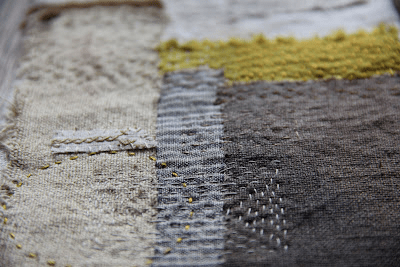
Lamb, Hannah. “In the Studio with Claire Wellesley-Smith.” Bradford Open, 18 May 2012. https://bradfordopen.blogspot.com/2012/05/in-studio-with-claire-wellesley-smith.html.
This post offers a brief but insightful glimpse into Claire Wellesley-Smith’s practice, highlighting her use of naturally dyed, hand-stitched textiles and her commitment to growing traditional dye plants. It also touches on her inspirations—traditional techniques, teaching, and sustainable sharing.
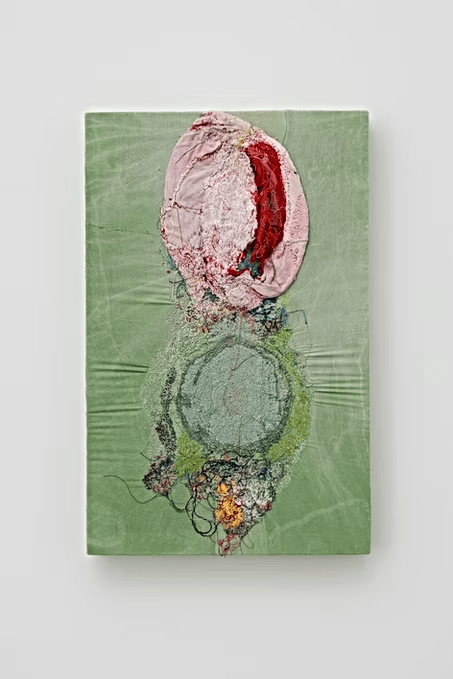
La Dolce Vita, 2022 — Textile artwork by Junko Oki, exhibited at Kosaku Kanechika Gallery, Tokyo. This piece features hand-stitched cotton, hemp, and silk, measuring 55 × 35.5 × 9.8 cm.
Photo: Keizo Kioku. Courtesy of Kosaku Kanechika Gallery and Junko Oki.
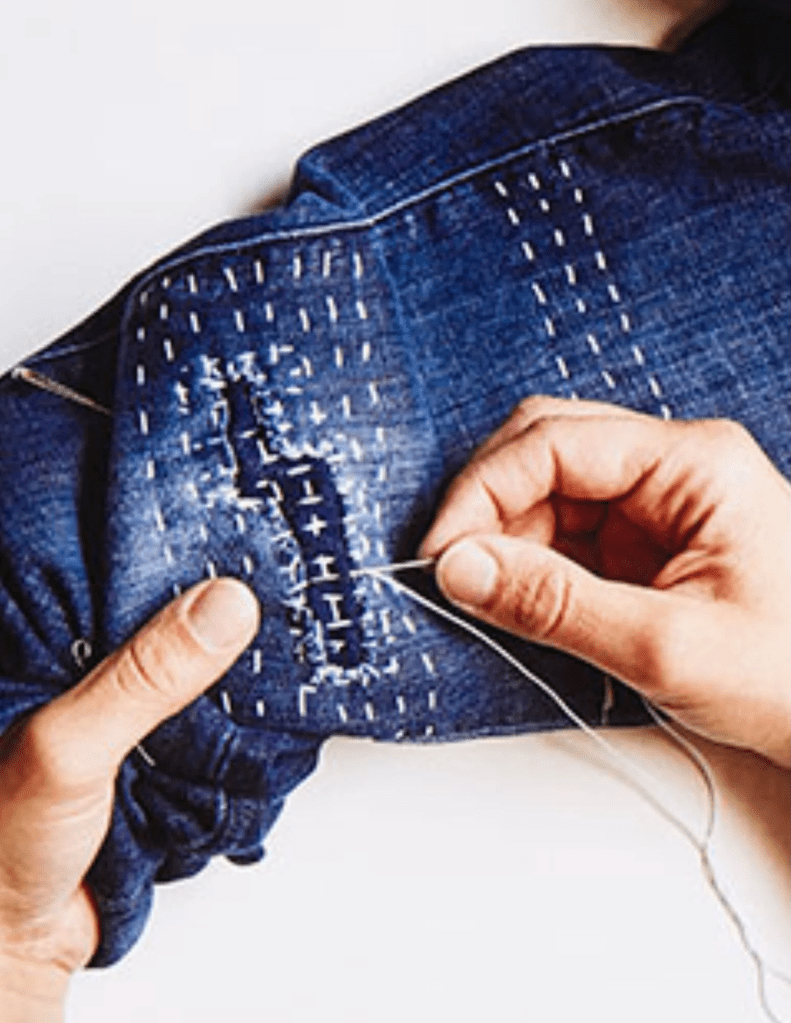
Rodabaugh, Katrina. Mending Matters. The Draper’s Daughter, 2025. https://drapersdaughter.com/products/mwnding-matters-katrina-rodabaugh.
This edition is beautifully photographed and presented, offering over 20 hands-on projects that explore visible mending through patching, darning, slow stitching, and weaving. Katrina Rodabaugh also reflects on mending as a metaphor for self-reliance, emotional repair, and mindful fashion choices.
Online Communities & Platforms
- Instagram hashtags: #slowstitching #visiblemending #textileart — Great for discovering contemporary makers and inspiration.
- TextileArtist.org — Offers articles, interviews, and courses with contemporary textile artists, including many who use slow stitching methods.
Personal Practice Ideas
- Start with scraps of fabric or worn clothing—give them new life through visible repair.
- Experiment with natural dyes (onion skins, avocado pits, indigo) to create a palette that feels connected to the earth.
- Treat stitching as a daily practice—even just a few minutes a day can build mindfulness and a body of work.
 Rachel Bakewell