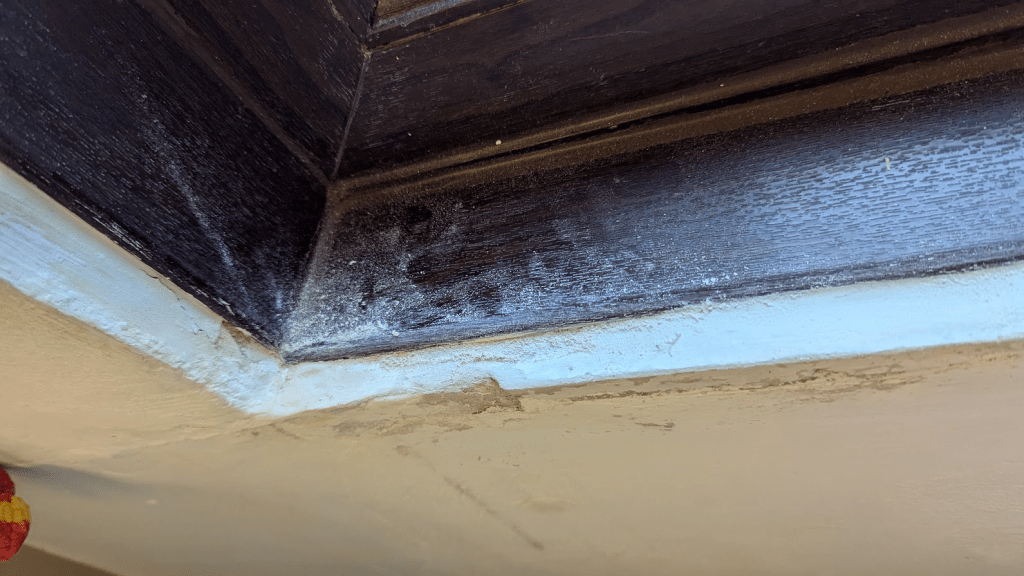
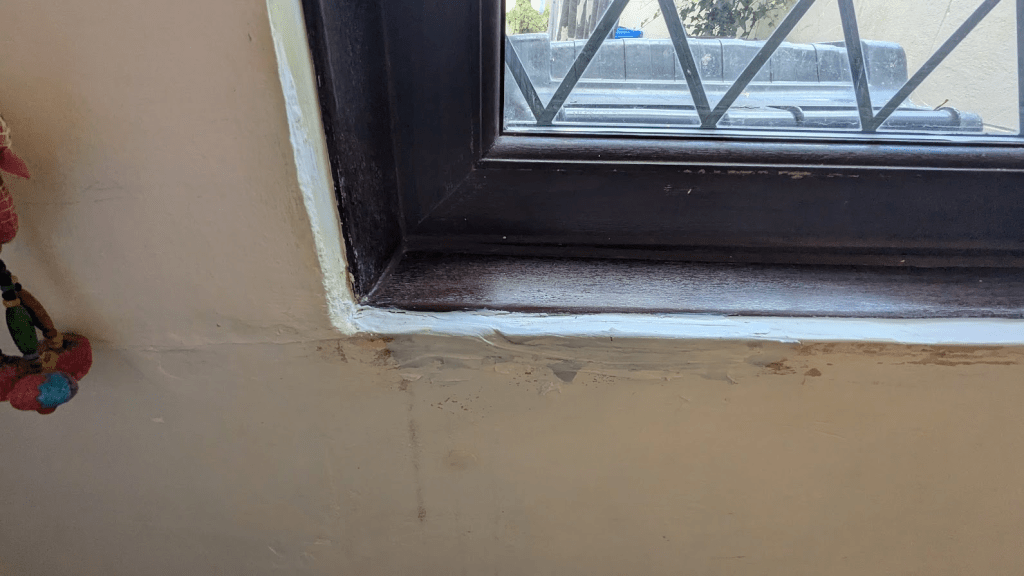
Before and after images rebuilding with filler
Living with a fluctuating neurological condition and navigating neurodivergence means that decorating isn’t a straightforward task. It’s a layered process shaped by sensory thresholds and emotional pacing.
I don’t decorate quickly. I decorate slowly, with care and consideration, because it’s important to me. The process isn’t just physical—it’s sensory, logistical, and quietly demanding, but I want to keep going.
I didn’t realise just how much it would impact me. Choosing paint isn’t just about colour or smell. It unsettles me—and sometimes becomes overpowering. Even standing near it can feel intrusive, getting it on my hands and my clothes. It’s not just discomfort—it’s a full-body negotiation. And now, I’m doing it alone. The first wall was shared with my daughter. These next two aren’t.
There’s a quiet tension in that—wanting to change my own lived environment, knowing how much it matters to me, but recognising there is a toll that it can take. I have only realised since I started doing it.
I’ve learned to pace myself gently and to do a little at a time and not have a schedule to follow. This allows me to pause when needed, and without apology.
Decorating with a disability and neurodivergence means working with what I have which I think is a sustainable approach towards the process—both emotionally, physically, and financially. It means choosing rest over rush. It means accepting the imminent gaps, the pauses, and the unfinished corners as part of my story.
I’m not decorating to impress. I’m decorating to stay in the present. To make space for comfort. To honour what’s possible.
If you’re navigating something similar, I hope you feel seen—and not judged, just quietly understood.
Ideas for Reflection:
- Debbie Lyddon’s textile practice: Her work often explores sensory thresholds, coastal rhythms, and emotional pacing through cloth and sound. I find Debbie Lyddon to be someone who “documents material response with emotional resonance.”
- Wilhelmina Barns-Graham’s late work: Her series “Energy and Space” reflects a shift toward internal rhythm and emotional abstraction.
- Why Graphic Design Should Engage More Than Just the Sense of Sight This article explores how designers can incorporate sensory dimensions—like touch, smell, and sound—into visual work, making it more accessible and emotionally resonant.
- Bruce Mau I recently visited Bruce Mau Design’s website. It’s bold, immersive, and full of layered visual storytelling. But for someone like me—navigating sensory thresholds and neurodivergence—it felt a little overwhelming. The animations and typography are striking, but they ask a lot of visual attention. I appreciate the ambition, truly, but I often need quieter design environments to engage comfortably and stay present.
- Kate McLean’s “smell maps Her maps invite viewers to consider how cities feel, not just how they look—challenging conventional ways of documenting place. McLean’s practice blends art, design, and sensory research, offering a poetic and data-informed approach to mapping memory, emotion, and atmosphere.
 Rachel Bakewell