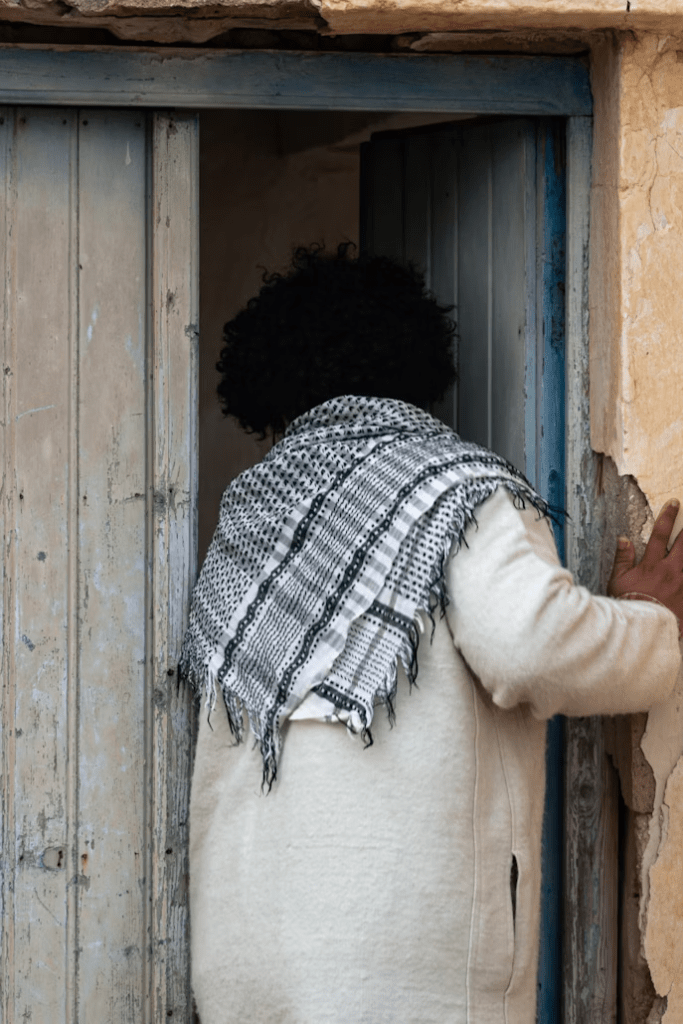
In my studio, textiles tell stories beyond language—they hold memory, offer comfort, and embody quiet resilience. Recently, the keffiyeh has been on my mind—a scarf crafted from more than just fabric. Born from necessity yet rich with meaning, it invites reflection on what it means to wear it—or to decide against it
A Garment of the Land
The keffiyeh, also known as shemagh or ghutra, began as a desert necessity. Worn by Bedouins and rural communities across the Middle East, it shields against the sun, sand, and cold. Its checkered pattern—often black-and-white or red-and-white—varied by region, sometimes signalling tribal affiliation..
But over time, it became more than protection. It became a motif of belonging.
Symbolism and Solidarity
During the Arab Revolt of the 1930s, the keffiyeh emerged as a symbol of Palestinian resistance against colonial rule. It was worn not just for function, but for identity. Today, the black-and-white keffiyeh is widely recognised as a symbol of Palestinian nationalism, resilience, and solidarity.
It’s worn at protests, rallies, and vigils. It’s carried by those who stand against injustice. And it’s embraced by people far beyond Palestine—as a quiet gesture of support, or a visible act of allyship.
Emotional Fit and Cultural Care
For me, wearing a keffiyeh would not be casual. It would be a considered act—one that asks: am I honouring its meaning? Am I wearing it with integrity, not aesthetic detachment?
I think of my own textile work—how I pair vintage machines with emotional resonance, how I restore patina with care. The keffiyeh, too, deserves that kind of stewardship. It’s not just a scarf. It’s a story.
Choosing with Care
I hold space for its layered meanings. I honour its roots in land and labour. I recognise its role in resistance. And I reflect on how textiles can carry both comfort and courage.
In a world of fast fashion and borrowed symbols, the keffiyeh reminds me to choose slowly. To ask what fits—not just on the body, but in the heart.
References:
Image Credit:
Websites:
 Rachel Bakewell