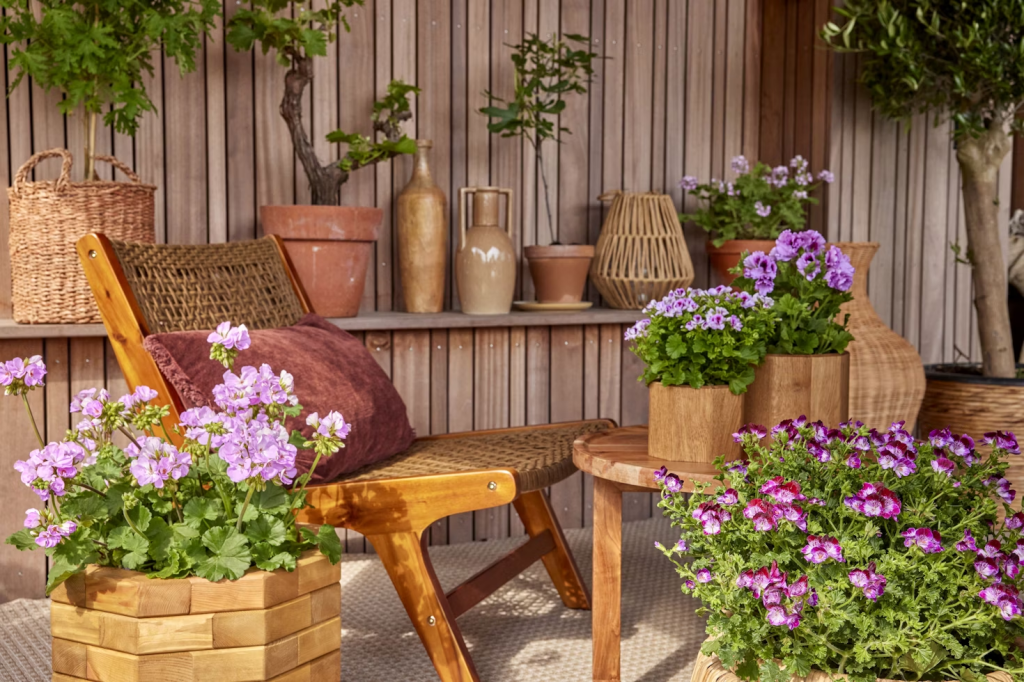
Image Credit: Charlotte Cowell Unsplash
I’m fascinated by this way of designing — not just for how it looks, but for how it feels.
Biophilic design is more than a trend. It’s a return. A quiet remembrance of the textures, colours, and rhythms that have always supported us: sunlight filtering through leaves, the hush of water, the grounding presence of natural materials beneath our hands. In a world shaped by concrete, glass, and screens, biophilic design reminds us that wellbeing is rooted in nature — not separate from it.
What Is Biophilic Design?
The word biophilia means “love of life.” It was coined by a biologist called E.O. Wilson in the 1980s. It describes our innate human connection to the natural world. Biophilic design brings that connection into the spaces we inhabit — weaving nature into architecture, interiors, and everyday environments to support physical and emotional wellbeing.
This isn’t about adding plants as decoration. It’s about building nature into the very fabric of a space:
- Light and air — maximising daylight, fresh airflow, and views of the outdoors.
- Natural materials — wood, stone, clay, linen, and bamboo offer tactile warmth and sensory grounding.
- Organic forms and patterns — curved shapes, fractals, and biomimicry soften harsh lines and evoke natural rhythm.
- Water and greenery — fountains, moss walls, planters, and even digital projections evoke calm and vitality.
Why It Matters
Research consistently shows that even indirect exposure to nature — through design — has measurable benefits. Biophilic environments can:
- Reduce stress and lower heart rate
- Improve focus and cognitive function
- Enhance creativity and emotional regulation
- Increase productivity and satisfaction in workplaces
- Support faster recovery in healthcare settings
In short, when we bring nature indoors, people feel better. We think more clearly. We breathe more deeply.
Everyday Examples: You don’t need to rebuild your home or studio to embrace biophilic design. Small, thoughtful shifts can make a meaningful difference:
- Position your workspace near a window or natural light source
- Add a few living plants — real ones offer the most impact
- Choose natural fibres and sustainable materials for textiles and furniture
- Use colour palettes inspired by earth, sky, and water
- Include artwork or photography of landscapes and organic forms
These gentle changes invite nature in — not just visually, but emotionally.
Beyond Aesthetic: A Philosophy of Care
At its core, biophilic design is about more than beauty. It’s about care. It asks us to value the materials we use, the light we invite in, and the living systems that sustain us. It reminds us that humans are part of nature — not separate from it.
Designing with biophilia means designing for connection: to the earth, to each other, and to a calmer, more rooted way of living.
Suggested References
Kellert, S.R., Heerwagen, J.H. and Mador, M.L. (eds.) (2008) Biophilic Design: The Theory, Science and Practice of Bringing Buildings to Life. Hoboken, NJ: Wiley.
Wilson, E.O. (1984) Biophilia. Cambridge, MA: Harvard University Press. Available at: https://archive.org/details/biophilia00wils (Accessed: 21 October 2025).
Browning, W.D., Ryan, C.O. and Clancy, J.O. (2014) 14 Patterns of Biophilic Design: Improving Health and Well-Being in the Built Environment. Terrapin Bright Green. Available at: https://www.terrapinbrightgreen.com/reports/14-patterns/ (Accessed: 21 October 2025).
Kellert, S.R. (2018) Nature by Design: The Practice of Biophilic Design. New Haven, CT: Yale University Press. Available at: https://yalebooks.yale.edu/book/9780300221756/nature-by-design/ (Accessed: 21 October 2025).
References:
Image Credit: Charlotte Cowell
Website: Unsplash
 Rachel Bakewell