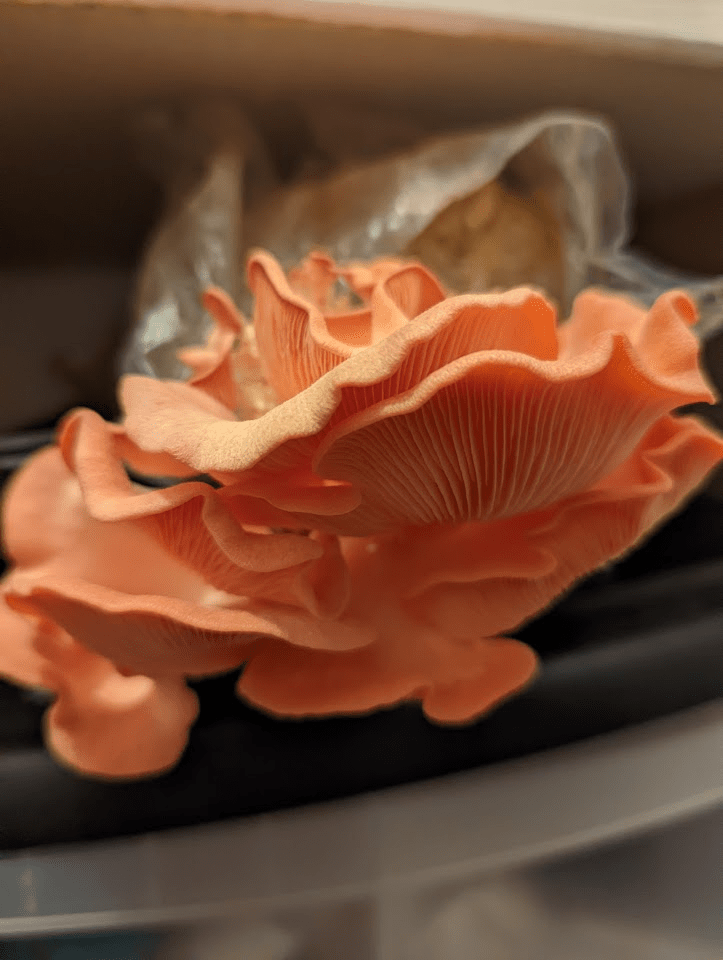
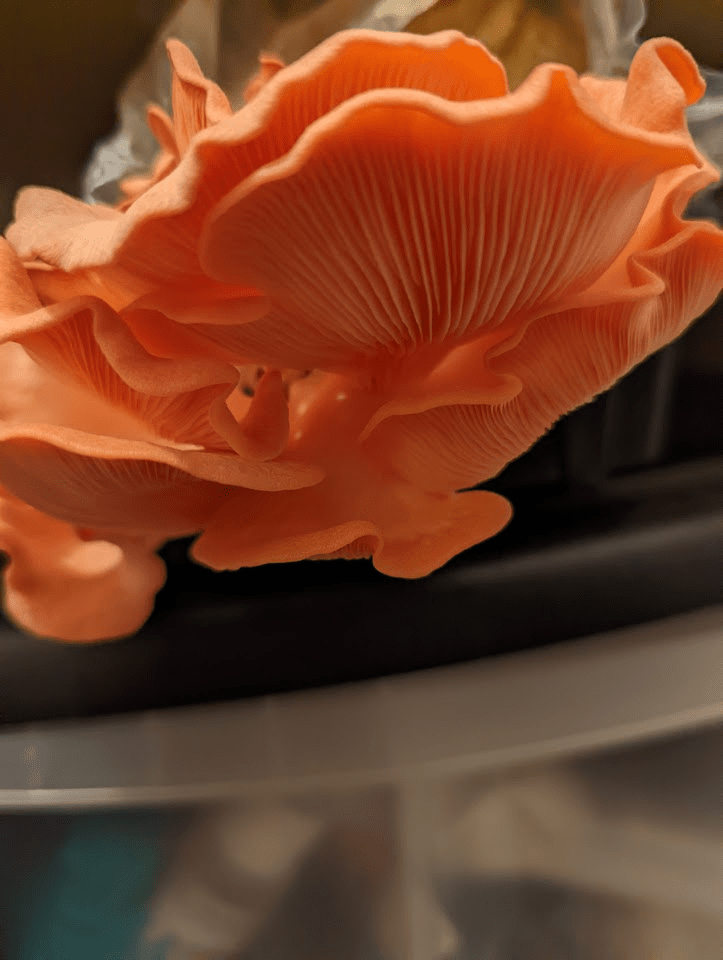
I first began growing pink oyster mushrooms out of curiosity—drawn to the quiet magic of mycelium and its potential for sustainable design. But what started as an experiment quickly became something more tactile and joyful. There’s a kind of alchemy in mushroom cultivation: a delicate balance of moisture, airflow, temperature, and substrate. When the conditions are right, these vibrant fungi flourish into edible clusters that feel both earned and enchanting. The substrate acts as a nourishing base—often made from straw, sawdust, or cardboard—and while the process can be costly, the reward is both visual and culinary. For me, it became less about theory and more about the rhythm of care, the satisfaction of growth, and the gentle complexity of working with living systems.
As I deepened my practice, I began exploring other edible mushrooms, each with its own temperament and growing needs. Pink oysters (Pleurotus djamor) remain a favourite—fast-growing, vivid, and best suited to warm, humid conditions with plenty of airflow. Blue and grey oyster mushrooms prefer cooler temperatures and are wonderfully forgiving for beginners. King oysters grow more slowly but reward you with thick, meaty stems, while lion’s mane mushrooms need high humidity and gentle handling, forming cascading white spines that resemble a snowy waterfall. Shiitake mushrooms thrive on hardwood logs or sawdust blocks and take longer to fruit, but their rich umami flavour is worth the wait. Enoki mushrooms prefer colder temperatures and low light, producing delicate, long-stemmed clusters. And chestnut mushrooms, with their nutty flavour and caramel caps, grow well on compost or straw and offer a satisfying middle ground between ease and complexity.
Each variety invites a different kind of relationship—some fast and forgiving, others slow and meditative. Over time, I’ve come to see mushroom growing not just as a skill, but as a quiet collaboration. In future posts, I’ll share more about each variety, from substrate prep to harvesting, and the small rituals that make the process feel grounding and alive.
Disclaimer
This post is based on publicly available research. While lion’s mane mushrooms have shown potential health benefits in early studies, this information is not intended to diagnose, treat, or replace professional medical advice. Always consult a qualified healthcare provider before using mushrooms or supplements for therapeutic purposes—especially if you have underlying health conditions, take medication, or are pregnant or breastfeeding.
 Rachel Bakewell