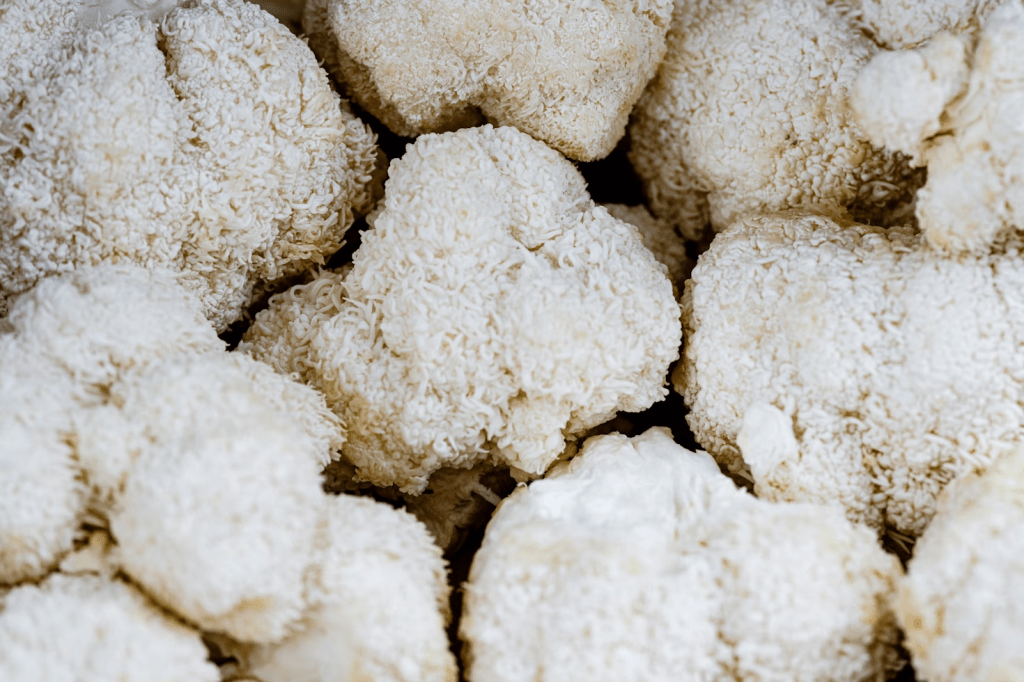
Photo by Kier in Sight Archives on Unsplash
Lion’s mane mushrooms (Hericium erinaceus) are more than just visually striking—they’re also deeply rooted in traditional medicine and modern wellness. Their cascading white spines resemble a snowy waterfall, and when grown with care, they offer both culinary delight and potential therapeutic value.
I first began growing mushrooms to experiment with mycelium, but quickly found myself drawn to the rhythm of care and the quiet satisfaction of growth. Lion’s mane, in particular, invites a kind of reverence. It’s slower to fruit than pink oysters, more sensitive to humidity, and best grown on hardwood sawdust or enriched blocks in temperatures between 18–24°C with 85–95% humidity. But when it flourishes, it feels like a gift—both visually and emotionally. Fresh lion’s mane contains bioactive compounds—notably hericenones (in the fruiting body) and erinacines (in the mycelium)—which are believed to stimulate nerve growth and support brain cell regeneration. These compounds have shown promise in early studies for improving memory, reducing symptoms of mild cognitive impairment, and protecting against Alzheimer’s-related damage.
Beyond brain health, lion’s mane may help:
- Reduce inflammation and oxidative stress, which are linked to heart disease, arthritis, and other chronic conditions
- Support immune function, thanks to its rich profile of vitamins (B1, B2, B3) and minerals like potassium, zinc, and manganese
- Ease mild symptoms of anxiety and depression, possibly by improving hippocampal function and reducing inflammatory markers
While most research focuses on concentrated extracts, freshly grown lion’s mane still contains these beneficial compounds, especially when harvested at peak maturity and cooked gently to preserve nutrients. It’s often described as having a seafood-like flavour—delicate, slightly sweet, and perfect in stir-fries or broths.
Growing lion’s mane can be a quiet collaboration—between care, patience, and the possibility of healing.
How to Grow Lion’s Mane Mushrooms
1. Choose Your Substrate:
Lion’s mane prefers hardwood sawdust, often enriched with bran or gypsum. You can also use pre-made grow blocks or supplemented straw, but sawdust offers the best yield and structure.
2. Inoculate with Spawn:
Use grain spawn or liquid culture to inoculate your substrate. Mix thoroughly in a clean container or bag, ensuring even distribution.
3. Incubation Phase:
- Keep in a dark, warm space (18–24°C) for 2–3 weeks
- The mycelium will colonise the substrate, turning it white and dense
- Avoid disturbing it—this is a quiet phase of internal growth
4. Fruiting Conditions:
- Move to a fruiting chamber with high humidity (85–95%), fresh air, and indirect light
- Cut small slits in the bag or expose the surface to encourage fruiting
- Mist gently or use a humidity tent to maintain moisture
5. Harvesting:
- When the spines are long and soft but still white, it’s time to harvest
- Use a clean knife to cut at the base
- Cook fresh or dry for later use—its flavour is often described as delicate, sweet, and seafood-like
6. Troubleshooting:
- Yellowing or drying tips = low humidity
- No fruiting = insufficient airflow or light
- Mould = contamination—discard and start fresh
Disclaimer
This post is based on publicly available research. While lion’s mane mushrooms have shown potential health benefits in early studies, this information is not intended to diagnose, treat, or replace professional medical advice. Always consult a qualified healthcare provider before using mushrooms or supplements for therapeutic purposes—especially if you have underlying health conditions, take medication, or are pregnant or breastfeeding.
Growing and consuming mushrooms requires care, cleanliness, and discernment. If you’re new to cultivation, start with trusted sources and safety guides. I share these reflections as part of a personal journey—not as a substitute for expert guidance.
Sources:
9 Health Benefits of Lion’s Mane Mushroom (Plus Side Effects) Healthline
Neurohealth Properties of Hericium erinaceus Mycelia Enriched with Erinacines National Library of Medicine
References:
Image:
Website:
Unsplash
 Rachel Bakewell