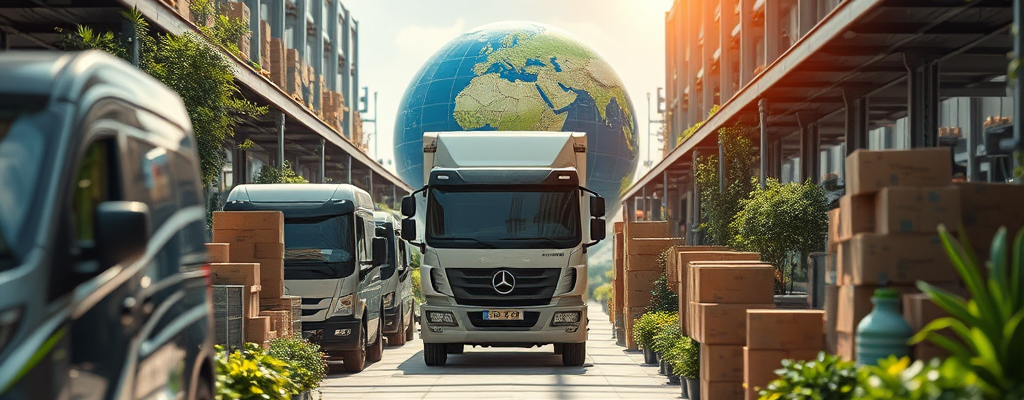
We often don’t think about the little choices that make a big difference — from the materials we buy to the way those products reach us. In a world where you can order almost anything from almost anywhere, these two questions naturally come up:
What impact do those choices really have? and Can global delivery ever truly be sustainable?
The simple answer is — it’s complicated, but not impossible.
Understanding the Impact
That package in your hands has likely journeyed by air, sea, or road — each with its own footprint. Let’s gently explore what that means, and how we can choose more thoughtfully:
- Air freight is fast — but it comes with a heavy carbon footprint.
- Sea freight is far more energy-efficient, though slower and often less flexible.
- Add in packaging waste, returns, or express delivery, and the environmental impact quickly multiplies.
Shipping alone accounts for around 3% of global greenhouse gas emissions — a figure projected to rise unless bold, systemic changes are made.
What Companies Are Doing
Many businesses are starting to take sustainability in logistics seriously. They’re:
- Offering carbon-neutral shipping through verified offset programs.
- Introducing electric and biofuel-powered delivery vehicles.
- Using AI route optimisation to reduce unnecessary mileage.
- Building regional warehouses to shorten transport routes and delivery times.
These steps don’t erase the environmental impact — but they do help shift the system in a better direction.
What We Can Do as Consumers
We have more influence than we often realise. A few mindful habits can make a meaningful difference:
- Choose slower delivery options where possible — they’re often more energy-efficient.
- Consolidate orders or buy in bulk to reduce packaging waste and transport emissions.
- Support local and regional businesses that reflect your values and reduce travel distance.
- Seek out brands with transparent shipping and sustainability practices — clarity matters.
Sustainable consumption isn’t about getting it perfect. It’s about making gentler, more thoughtful choices — one step at a time.
The Future of Sustainable Delivery
The logistics world is evolving — and fast. We’re beginning to see:
- Electric cargo ships and hydrogen-powered planes in early trials.
- Ports and warehouses powered by renewable energy.
- Smarter packaging solutions, using compostable or circular materials.
- Nearshore manufacturing, bringing production closer to where goods are sold.
As technology advances, the dream of global trade that’s both efficient and environmentally responsible is slowly becoming more tangible.
The Bottom Line
Global delivery will always carry some environmental cost — but it doesn’t have to be excessive.
Through innovation, transparency, and thoughtful consumer choices, we can shape a system that’s cleaner, fairer, and more responsible.
References
- International Maritime Organisation (IMO) – Fourth Greenhouse Gas Study 2020
Shipping emissions estimated at 2.89% of global GHGs in 2018, with projections for future growth.
Download the full report (PDF)
View the IMO summary page - World Economic Forum (2023) – The Future of Sustainable Freight and Logistics
Covers carbon markets, emissions accounting, and barriers to freight decarbonisation.
Read the article - International Energy Agency (IEA) – Tracking Transport 2024
Highlights trends in transport electrification, energy demand, and emissions scenarios.
Explore the WEO transport takeaways
View the Breakthrough Agenda Report - DHL GoGreen Solutions – Sustainable Logistics Overview
Details carbon-neutral shipping, sustainable fuels, and route optimisation.
Visit DHL’s GoGreen page - McKinsey & Company (2022) – The Race to Decarbonise Global Supply Chains
Explores scope-3 emissions, biofuels, and supply chain transparency.
Read the article
 Rachel Bakewell