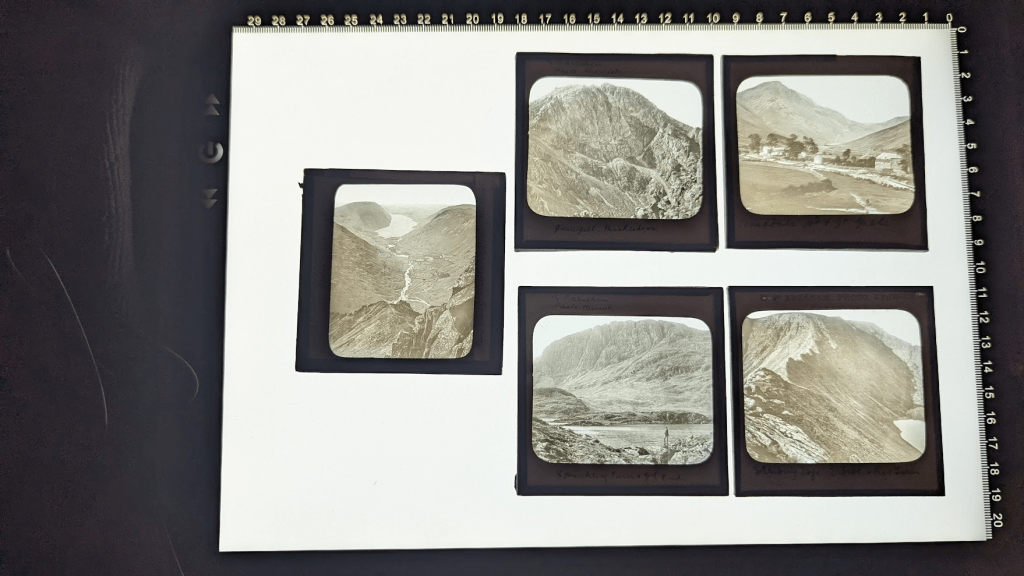
Image: Five glass lantern slides from my personal collection, showing early 20th‑century landscape views.
Glass lantern slides are small, luminous windows into the past. Made from two thin sheets of glass encasing a photographic image, they were once used in classrooms, lecture halls, scientific expeditions, and early art education. Long before digital projection or even 35mm slides, these fragile plates carried knowledge across continents.
How They Were Made
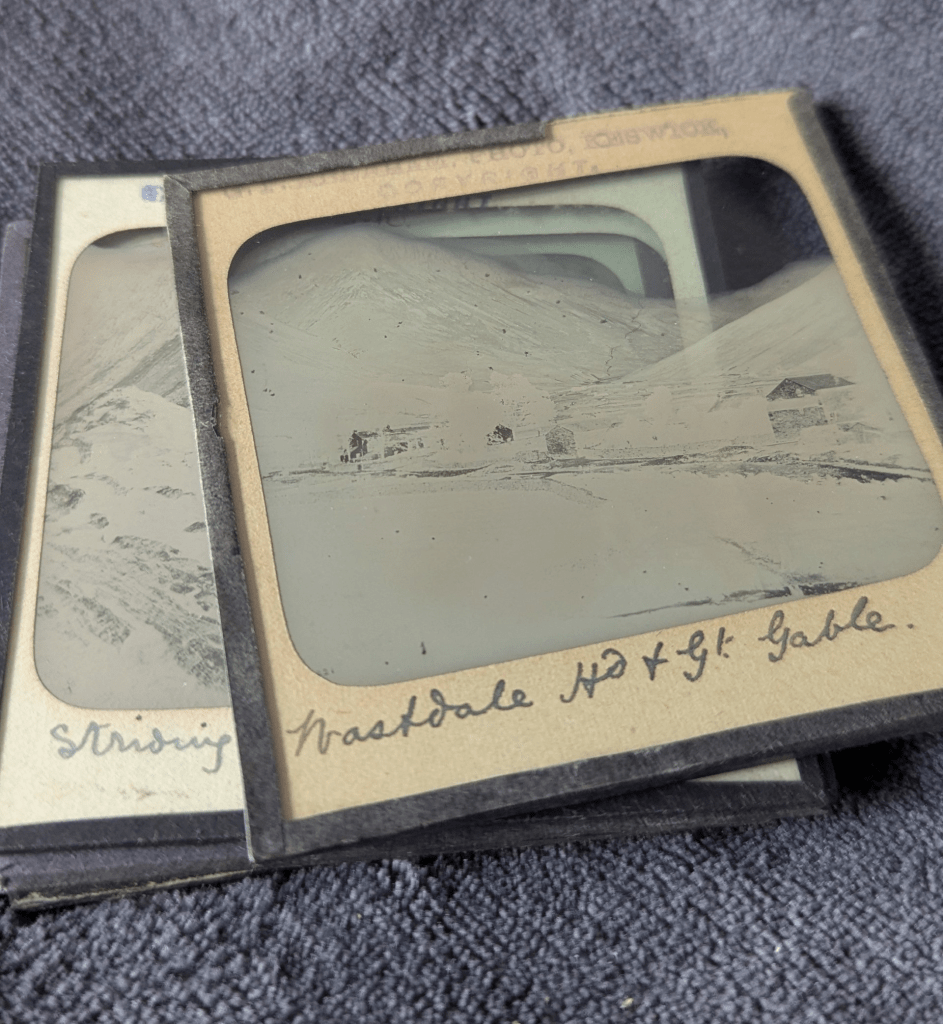
- A photographic negative was contact‑printed onto a glass plate coated with light‑sensitive emulsion.
- The image was often monochrome, though some were hand‑tinted with delicate washes of colour.
- A second piece of glass was placed on top to protect the emulsion, and the edges were bound with gummed tape.
- Labels were added by hand or typewriter — small archival clues about the maker, the institution, or the intended audience.
The result is an object that is both image and artefact: a photograph you can hold, with weight, temperature, and fragility.
How They Were Stored and Kept
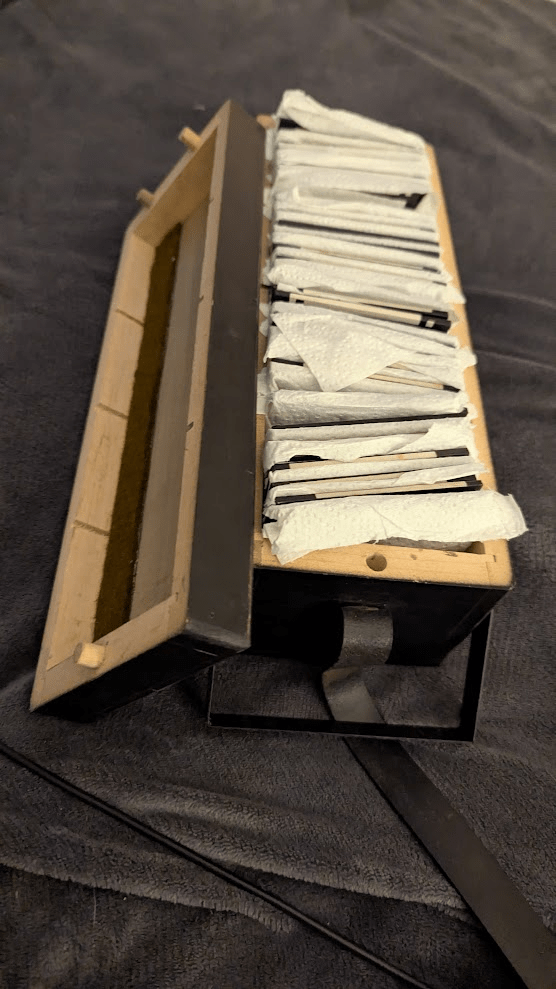
Image: Storage box containing glass lantern slides from my own collection
Glass lantern slides were usually kept in:
- a wooden or card box with dividers
- catalogued trays in museum or university collections
- drawers lined with felt or paper
- carefully numbered sequences for lectures
Because they are glass, they demand a kind of stewardship — gentle handling, upright storage, and protection from humidity and dust. Even their storage systems tell stories about the institutions that used them.
What They Were Used For
Glass lantern slides were the backbone of visual communication and education from the late 19th century to the mid‑20th century, and they were used for:
- art history lectures
- geological and glacial studies
- anthropology and world cultures
- architecture and archaeology
- travelogues and public talks
- early scientific documentation
They were a way of bringing the world into a room before mass travel or digital screens existed.
Why I Find Them Fascinating
For me, glass lantern slides sit in a space between document and artefact, and I’m drawn to:
- the monochrome tonal range — soft greys, deep blacks, the quiet drama of light on glass
- the intrigue of partial information: cropped edges, handwritten labels, missing context
- the sense of lineage — these images once taught someone something
- the materiality: the coolness of the glass, the weight in the hand, the way light transforms them
- the way they echo my own interests in place, memory, and the emotional residue of objects
They feel like remnants of a slower, more deliberate way of seeing. Each slide is a fragment of a larger narrative, and part of the pleasure is piecing together what remains.
 Rachel Bakewell