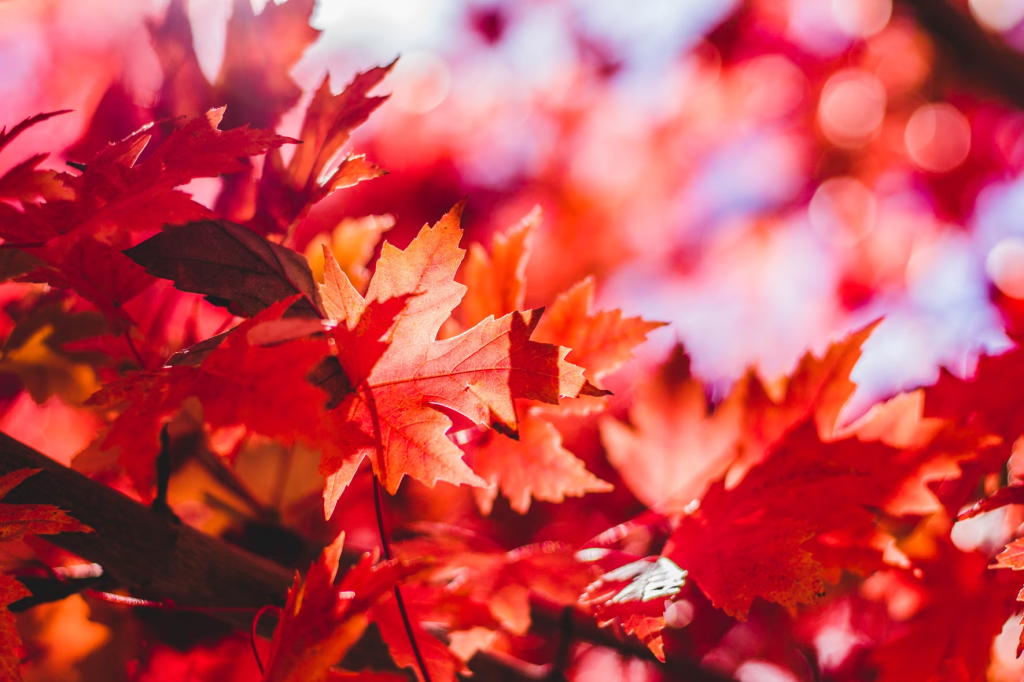
Autumn brings with it a wealth of vibrant colour, and one of the most beautiful displays is the deep red autumn leaves. These leaves, which are rich with tannins and natural pigments, can be used to create a warm, earthy dye leaving fabric with a soft reddish-brown tone. With just a few simple steps, you can transform fallen autumn leaves into a unique, sustainable dye that captures the season’s essence.
Materials Needed
- Red autumn leaves (freshly gathered at their peak colour)
- Large pot (preferably one that is dedicated to dyeing)
- Water (enough to cover the leaves in the pot)
- Fabric or yarn (natural fibres like cotton, wool, or silk work best)
- Salt (for setting the dye)
Step-by-Step Guide to Dyeing with Red Autumn Leaves
1. Gathering and Preparing the Leaves
Choose red autumn leaves at their peak, when they are a deep saturated colour. Maple and oak trees, as well as other red-leaf varieties, often work well for this purpose. The deeper the red of the leaf, the more intense the dye will be. Gather enough leaves to fill about half of your pot, as this will yield a stronger colour.
2. Creating the Dye Bath
Once your leaves are ready, follow these steps:
- Place the leaves in a large pot and cover them completely with water.
- Bring the water to a boil, then reduce the heat to a simmer.
- Allow the leaves to simmer for 1-2 hours, stirring occasionally. As they steep, the water will gradually take on a reddish-brown hue.
- After simmering, let the leaves sit in the pot for several hours or even overnight to deepen the colour.
3. Straining the Dye
Once the leaves have steeped long enough, remove the pot from the heat and let it cool. Strain the leaves out of the dye bath, and leave only the richly coloured liquid. You can use a fine mesh strainer or cheesecloth to catch any small particles, ensuring a smooth dye bath.
4. Preparing the Fabric
While your dye bath cools, prepare the fabric. For best results, use natural fibres like cotton, linen, wool, or silk, as they absorb natural dyes more effectively than synthetic fabrics. Pre-wash the fabric to remove any residues that could interfere with dye absorption.
5. Dyeing the Fabric
Once your fabric is prepped and your dye bath is ready:
- Submerge the fabric in the dye bath, making sure it’s fully saturated.
- Simmer the fabric in the dye bath for at least an hour, stirring occasionally to ensure even colour distribution. You can leave the fabric to sit in the dye bath for several hours (or overnight) to achieve a deeper, richer colour.
6. Setting the Dye
To help the colour last, rinse the dyed fabric in a saltwater solution:
- Mix 1 part salt to 16 parts water and soak the fabric for about 20-30 minutes.
- After the salt rinse, rinse the fabric in cold water until the water runs clear.
The saltwater solution acts as a natural fixative, helping to lock the colour into the fabric.
Tips for Success
- Experiment with Leaf Varieties: Different types of red leaves can produce colour variations. Try mixing maple and oak leaves or experimenting with other red-hued leaves for different shades.
- Colour Fastness: While natural dyes can be less vibrant than synthetic dyes, they offer unique, soft tones. Be aware that washing the fabric frequently may fade the colour, so handwashing in cold water is recommended.
- Layering for Richer Tones: If the initial dye bath isn’t as dark as desired, you can re-dip the fabric in a fresh dye bath or let it sit longer to deepen the colour.
Embrace the Season with Natural Dyeing
Dyeing with red autumn leaves is not only a creative way to use seasonal resources but also connects you with the cycles of nature. The soft reddish-brown tones capture the fleeting beauty of autumn and create textiles that carry the season’s warmth. Plus, it’s a sustainable way to add colour to fabrics without relying on synthetic dyes.
References:
Image:
Website:
https://unsplash.com/photos/closeup-photography-of-red-leaf-plant-Qw2CUd_9OWo
 Rachel Bakewell