Updated 15/01/25
As my project is based around research I have been looking into my local area and its history.
Polebank house (now Polebank Hall) has been renovated and is now a retirement home.
The house was built around 1820 by Samuel Ashton Junior (1773-1849) who was the son of Samuel Ashton Senior (1742-1812) and Mary Oldham. The Ashton family were Yeoman Farmers in Gee Cross. Samuel Ashton Senior had four sons James, Thomas, William and Edward.
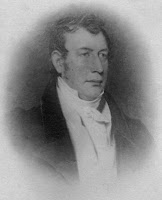
Samuel Ashton Junior
Samuel Ashton built Pole Bank house (now Polebank Hall) around 1820, who was the eldest brother and inherited the Gerrards estate. Samuel Ashton died at Pole Bank in 1849, (13 years earlier his wife Mary died in 1836).
James, (1807-1866) was Samuel Senior’s second son and married his first wife Elizabeth Bailey (1811-1843) in 1834 the couple moved to Highfield House in Bredbury, Stockport. Their marriage produced no children.
James met Frances, and didn’t marry her but had three children, two sons, Philip and Robert (who died young), and a daughter Elizabeth. Benjamin Ashton was the third son (1813-1889) and inherited his father’s fortune. Benjamin lived at Pole Bank house and operated “on a very laissez faire basis.” Astley Deep Pit in Dukinfield, at the time the pit was 3,000 feet deep and was the deepest mine in England.
Let’s take a moment to explore the meaning of laissez-faire.
Laissez-faire is a French term that translates to “let do” or “let it be.” When used in an economic or managerial context, a laissez-faire basis refers to a policy or an approach where there is minimal government intervention or regulatory oversight, allowing businesses and individuals to operate freely according to their own preferences.
When used in a business or an organisational context, a laissez-faire management style means that managers provide minimal direction and allow employees to make decisions and work independently. This approach relies on the belief that employees are self-motivated, capable, and responsible enough to manage their own tasks without constant supervision.
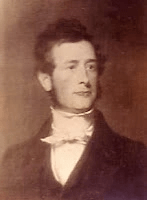
Benjamin Ashton
Benjamin Ashton lived at Pole Bank house for most of his life and remained a bachelor. A court case that was held shortly after Benjamin’s death where, a cheque for £1,375 which he had “signed in favour of a mysterious lady friend who absconded,” painted a sad picture of a “lonely miserly type.” His maid (who mysteriously ate with and slept in the same room as him) wanted to have better clothes, but was told not to wear them.
Benjamin had no buttons on any of his clothes, instead he used pieces of string to tie up his trousers. When Benjamin died he left a fortune of £224,860 (£30m in 2021). His estate went to his nephews Arthur Godfrey Buchardt (1854-1953) and his brother Frederick. The Buchardts, the sons of Otto Ernest Lebrecht Buchardt (1809-1882) a Prussian born Liverpool merchant and Prussian Consul, and his wife Jane Ashton (1816-1908) , Benjamin’s sister. It seems the boys had done well out of their inheritance, and travelled widely. Arthur changed his name to Buchardt-Ashton in grateful thanks however.
Thanks to the generosity of its last owner, George Byrom, Pole Bank still stands today. It stands in Hyde on Stockport Road, whilst the house itself is a care home these days, the grounds are still accessible as a park.

Its not thought that the Buchardts lived at Pole Bank, because the house was sold to Thomas Beeley (1833-1908).
Thomas Beeley (1833-1908), was the son of a Northumberland Grocer called Samuel Beeley (1793-1861) his mother was called Mary Jackson. Samuel moved to Hayfield where Thomas was born, and then moved to Newton. His first job was a cloth looker in Marlor’s mill in Newton, shortly after he entered Daniel Adamson’s works, as a timekeeper moving up through the business to become a bookkeeper and cashier later he became the General Manager. In 1867 he then set up on his own at the Hyde Junction Iron Works, here he specialised in the production of boilers and worked in innovating the design of boilers for the rest of his life. Samuel relied upon word of mouth to make sales, he never advertised or employed a sales force but landed lucrative contracts with large scale engineering firms and government departments. In 1898 he handed over control of his company to his son, Thomas Carter Beeley (1869-1909) and Samuel entered public life, serving on the Hyde and Dukinfield Local Boards and Cheshire County Council.

Thomas married Elizabeth Carter (1830-1901) and they lived first at Peak House in Dukinfield, and then to Pole Bank house in the 1890s, that had been vacated by Benjamin Ashton. Thomas died on the 5th June 1908 of heart failure at the Imperial Hotel in Blackpool whilst recuperating for his heart problems.
Thomas Carter Beeley took over from his father whilst at the same time he participated in public life. He became the Mayor of Hyde in 1899 at the young age of 30 he lived at Bowlacre in Hyde with his wife Jessie Ann Alexander Milligan (1868-1930). The couple had six children.
Thomas’ sister Elizabeth Edith Beeley (1867-1899) also had a short life. She was married to Edward Wood Calvert (1866-1905) who became a Leeds-born solicitor practising in Manchester, he died early in the marriage and had two children. Edward retired shortly after and spent a short amount of time on a farm in Hampshire, but emigrated to South Africa and died in Germiston in the Transvaal on 16th August 1905.
In 1920 Thomas Kerfoot (1840-1936) was living at Pole Bank house. Thomas was born on the 15th December 1840 in Patricroft. In 1861 he apprenticed at Thomas Herdson, Chemist and Postmaster on 75 Market Street, Hyde. He was able to put his skills to good use, purchasing a chemist’s business on London Road in Manchester, which was established in 1797. He began by pursuing only the retail trade but soon began to manufacture for himself. He then moved to Chester Street in 1890 but the building burnt down in 1896 when he moved to Bardsley Vale on the Medlock.
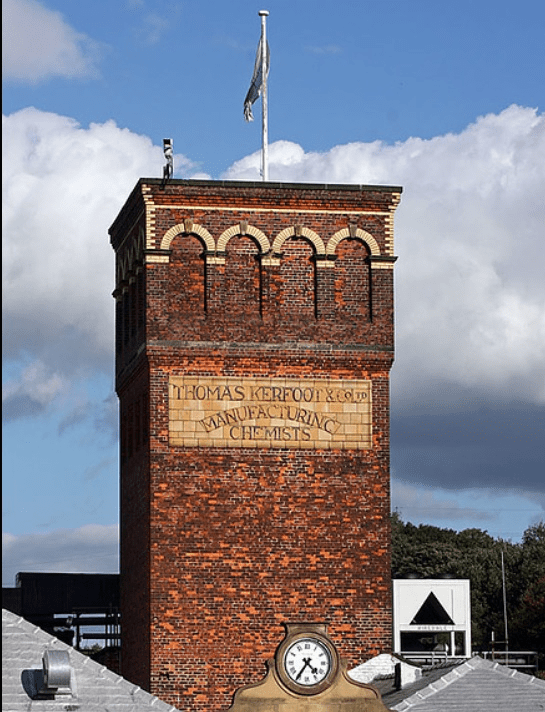
The company manufactured Vapex, Kerocain and Mineral Spring Health Granules. Thomas Kerfoot married Mary Ann Elizabeth Hodgson (1854-1881) in 1878 but unfortunately she died soon after, and left him a widower with a young son, Ernest Hodgson Kerfoot (1879-1944). Both Ernest, and his two sons Dr Thomas Hodgson Manners Kerfoot (1905-1984) and Henry Manners Kerfoot (1912-1962) joined the company, which produced Mepacrine, an anti malarial drug, and several other medicines for the troops. The company was bought out by Medeva plc in 1990. Thomas never remarried and after living at Pole Bank he settled with his son at Springwood Hall in Bardsley, where he died on 30 December 1936, a fortnight after his 96th birthday.
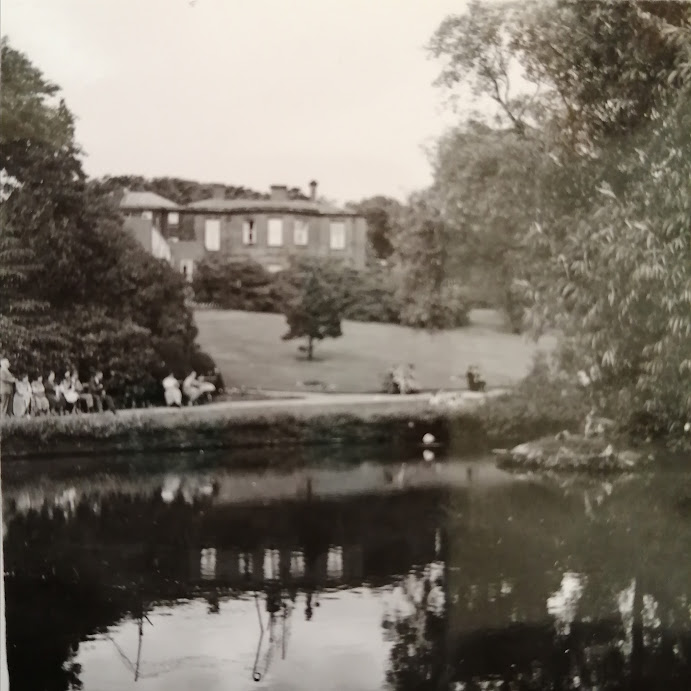

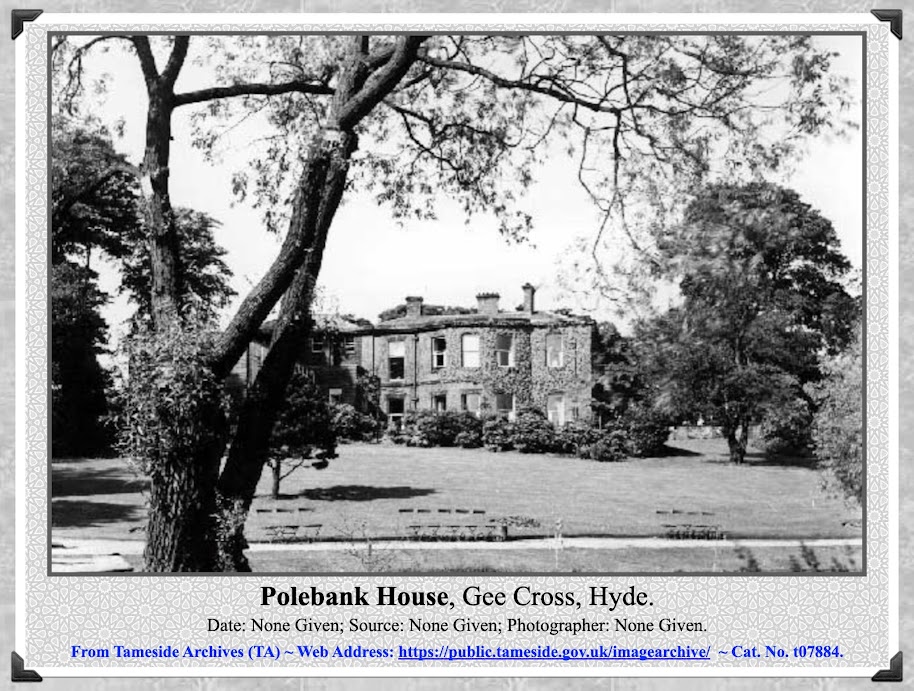
The source is unknown for the images above. If you would like me to take them down from the website I will do.
References:
The source is unknown for image 1.
Online Source: allanprussell (2022). 100 Halls Around Manchester Part 79: Pole Bank, Hyde. [online] 100 Halls Around Manchester. Available at: https://100hallsaroundmanchester.wordpress.com/2022/01/01/100-halls-around-manchester-part-79-pole-bank-hyde/ [Accessed 26 Apr. 2023].
 Rachel Bakewell