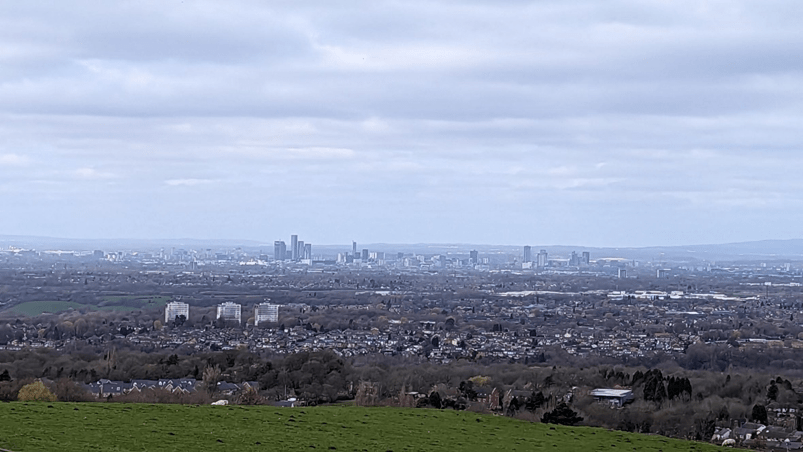
Fig 1 View of Manchester from the top of Werneth Low
Introduction
This report will answer two questions related to each other: How has the landscape changed from before the Industrial Revolution until today? (referring to the textile industry in Hyde). Also, how my family’s connection is relevant? My family members played an active role as weavers in the Ashton Brothers mill, Hyde, which was demolished but connected to the textile industry.
My brief is to create a body of work that includes locally inspired textile samples encapsulating sensory elements; this work has been influenced by disabled young people and adults with learning disabilities with whom I have worked. The body of work will have a contemporary theme, focusing on older people with a learning disability and is also related to synesthesia. My work is based around my local landscape and how it has changed.
My synthesis project was inspired whilst walking my dog on Werneth Low, near Gee Cross, Hyde. The stunning view is close to my home (photograph above). Manchester can be seen in the distance, along with towns and rolling hills of the Pennines. It is a popular spot for visitors, including the Hare and Hounds pub (built circa 1754), the oldest pub in Hyde. (pictured below)
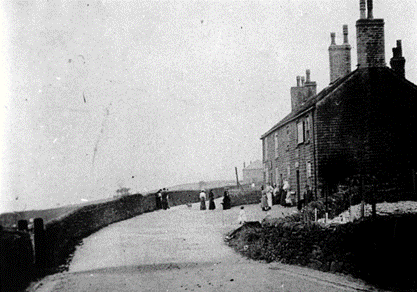

Fig 2 & 3 Hare and Hounds Pub, Werneth Low
Werneth Low Country Park has many hectares of meadows, meandering hills, and breathtaking views of the Pennines and beyond. One of the reasons why I love where I live is the juxtaposition of the urban sprawl of Manchester, seen in the distance, and the rugged rural landscape of ‘The Low’, fondly described by locals. Manchester is nearly 10 miles away; when viewed from the top, it looks like a stone’s throw away!
The Project
The Industrial Revolution must have transformed this stunning landscape, where it was once rugged hills would influence and skim the horizon to many tall chimneys blanketed with smog and great looming cotton mill buildings. I thought about how my family’s history was placed within this industrialised metropolis and how my own genealogy is deeply planted within this landscape; this was the place where they worked, lived, and spent the majority of their time. Unfortunately, many of my family members are no longer alive, but this has inspired me to research further to make connections to understand the landscape and how it has changed.
I have been inspired to recreate this idea of an ever-changing landscape using recycled threads and yarns as my family’s connection to it. The different textile elements have been created in a way that can be pieced together to form a completely different landscape by using a variety of recycled textiles. They incorporate an ideology that emanates from the age of the machine for the working class, political unrest, and then reform. With this in mind, I have produced a series of textile samples that, in theory, as mentioned above, could be pieced together to create this landscape.
The Industrial Revolution
The Industrial Revolution and the growth of the textile industry greatly impacted the small town of Hyde. As the factories grew, workers’ housing was built, which gradually formed the town and has grown ever since, up until its recent decline.
It is obvious, during a walk around Hyde or upon examination of a map, how the Industrial Revolution’s textile industry impacted the town. Many of the streets and what buildings are left in the area show signs of the influence that the textile industry had on the town.
Research
My first research visit was to Ashton Library and Archives, which contains many interesting sources of reference information about the local textile industry during the Industrial Revolution. [1]
The central library in Manchester is where I borrowed books and viewed the film archives to help compile a short film.
How has my local landscape changed from before the Industrial Revolution to today?
The landscape around Hyde was very different before the Industrial Revolution; it was mainly agricultural, with many farm buildings. Hyde didn’t exist at that time. When the age of mechanization began and cotton mills were built, the landscape began to change. It grew from 800 inhabitants in 1801 to 15,000 in 1851. (J. G. B. HILLS (1971) Before the Industrial Revolution, cloth weaving was done by men in their own homes while the rest of the family helped to prepare the wool. It was mainly woven in farm buildings, which allowed the families to earn a second income; when work on the land was reduced, they could supplement their income by producing cloth.
It is thought that “one of the best-studied areas of weavers’ cottages is the Tameside area, east of Manchester. Here in the foothills of the west Pennines can be found at least 77 extant vernacular workshops (weavers’ cottages), although only 13 are listed buildings, with notable concentrations in the Longdendale Valley (Hollingworth, Hyde, and Mottram).”(Michael Nevell (2008)
When cotton mills were built, houses were needed for their workers, and as the need for houses grew, the township of Hyde was born. The map below shows all the mills in Hyde; most of them are no longer in existence today. The map covers a radius of 1.5 miles[2] .
Today, the town of Hyde is sadly a shadow of its former self, but it is evidence of how the textile industry boomed, and it later started to struggle and ended in decline during the cotton famine and after both world wars.
It became cheaper and more affordable for clothing manufacturers to produce cloth abroad. This created a global fast-fashion empire, creating an influx of disposable fashion. The effects of fast fashion can now be seen and its impact on the environment.
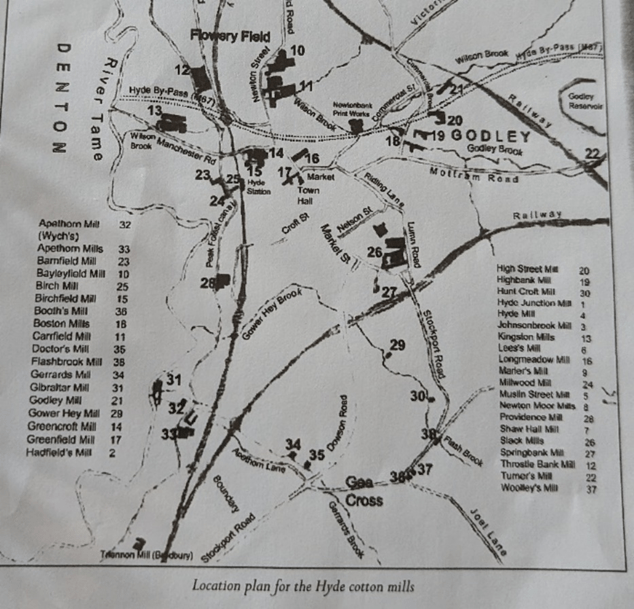
Fig 4 A map of the mills in Hyde
Unfortunately for workers in the cotton mills, it was an unsafe environment. There were no health and safety regulations, as there are today; they were not healthy or clean places, and there were many accidents, for example, the loss of a limb due to getting a leg or arm caught in the machinery. It was common for workers to have breathing-related illnesses due to the cotton in the air, which would be breathed in and became lodged in the lungs.
My maternal grandfather became ill and could no longer work, as he had paid into a fund at Ashton Brothers mill; he received a small amount of money each month. There were no welfare payments or food banks as there are today. Life was hard. If people could not pay their way, they were sent to debtors’ prison. This was eventually abolished due to prison overcrowding in 1869 when the Debtors Act became law.
Mee-Mawing
When my mum told me about mee-mawing and that my grandmother communicated in this way, I found this form of communication an interesting and clever form of speech; it was similar to lip reading. A person who used mee-mawing would expressively overpronounce words, enabling them to be understood by the other workers in the mills.
My grandmother learnt and used mee-mawing, and it became her main communication source in the mill. Many people lost their hearing and used mee-mawing to communicate due to the noise of the machines in the mills.
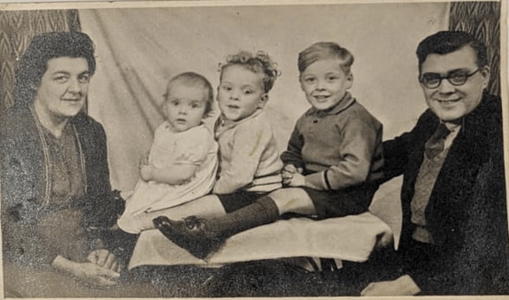
Fig 5 My mum’s family, her parents, and her two brothers
My mum’s parents worked in Ashton Brothers cotton mill in Flowery Field, Hyde. It was apparently the largest mill in the area. My mum’s father worked in the weaving sheds until, unfortunately, he became ill and could no longer work. My mum often took her dad in a wheelchair to Werneth Low from Flowery Field to let him see the wonderful view and get out in the fresh air. It was quite a climb and must have been hard. My mum would tell me stories of her and her dad baking; it is a shame I never met him as he died at quite a young age, but many people did at that time, unfortunately.
My mum’s mother had two other jobs besides working in the mill. The family had little money; they only had enough to get by. My mum’s parents rented their house, and my mum’s dad received an allowance after he had to retire from work in the mill. He was lucky as he had paid into a fund to help former workers. No other money was available to help, which made life very hard, with a long working day.
My mum describes her mum’s life as being exceptionally hard, and she had little time for herself. My mum says that she dedicated her life to her family. As mentioned earlier, most evenings, my mum would wheel her dad in his wheelchair to look at the view from Werneth Low. It shows the importance of a thriving green space to take refuge in for a few hours, away from the smog and life’s difficulties. A green space would have been of great importance for the communities of Hyde and Werneth Low. It is an accomplishment to walk to the top, and the view is stunning, which is one reason I walk up it most days of the week.
I asked my mum about her experiences and how her family lived. There were some notes that she had made alongside some of the old family photos. Her cousin, Margaret Buxton, wrote some books about the local area as her dad was a photographer for a local newspaper and had many images and stories about the area.
Bookbinding
My project began with making a handmade sketchbook in the bookbinding department at the university; I decided to make a sketchbook as they are so expensive to buy. It was not the best, but I felt proud of myself as it was my first attempt. I would definitely make more of these sketchbooks. This experience taught me that I needed to complete the book’s spine to a better standard. I moved on from the sketchbook to make a clamshell box; the reason for this is that I needed a box to keep fabric samples in. I also made a slightly different box to keep larger fabric samples in. It was important to start these projects early to ensure I had everything I needed to keep my work organised.
The production of the sketchbook and boxes took a long time, and I have decided not to describe the process for this report as it would take too much time to explain the complex process. I found it difficult to make them, but it was worth it for the finished result.
I wanted to take bookbinding a stage further. I began by making a photo etching, using an old image of a group of children amongst a group of family photographs (see fig 6). I thought it would work well as a photo etching.
I have learnt that bookbinding requires patience, practice and dedication.
- Patience as the creation of the quality and finish required is time-consuming.
- Practice as the quality and finish required needs experimentation and will not happen immediately.
- Dedication, as there is a point of frustration when giving up would be possible, but perseverance will reward experimentation.
Printmaking
I began printmaking when I studied at the Manchester School of Art in 2011, and three years later, I enrolled on an intensive printmaking course for a year at Hotbed Press in Salford. These different experiences in printmaking enabled me to create various prints, and I learned various techniques.
I have described how I processed the print below and explained the method and the determination needed. It went wrong many times.
The process is complicated and takes patience. I made a negative, reversed image for the photo etching. I used a matt acetate to do this; trial and error are needed when using Photoshop before using the photocopier. The image must be altered to a black-and-white image, not greyscale, using Photoshop. This is important as high contrast is needed. The photograph’s black areas transfer the image to the metal and act as a resist.

Fig 6 Original Photograph

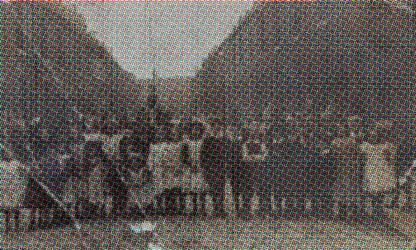
Fig 7 & 8 To create a negative for the photo etching process, I used bitmaps in Photoshop
A light-sensitive film is required. This also takes practice because the top layer of film cannot be lifted in daylight; it needs to be done in semi-dark conditions. Ultraviolet light is required to expose the image onto the plate; the image is then developed.
It took two metal plates to create the final image. One of the plates did not work as well as I hoped, but it was not wasted as it was used for practice. I made a few prints from the same plate; for the final image, I made a contemporary box for display, which was included in my degree show exhibition.


Fig 9 Photo Etching Fig 10 Contemporary Display Box
Filmmaking
I have always enjoyed watching various genres of films and wanted to make a short film. I looked at archive footage of Hyde online. I found the Northwest Film Archive (NWFA), based in Manchester Central Library, which had a vast archive, including a short film made in the 1950s, not far from where I live now, in Gee Cross.
I made an appointment with the NWFA to view the five films I had chosen for my short film. I completed an application form, and soon after, I received confirmation and the films to download. The archive footage I chose:
1 COTTON SPINNING AT OSBORNE MILL, OLDHAM – CUTTING COPY
2 OLDHAM MASTER COTTON SPINNERS ASSOCIATION LTD
3 QUEEN COTTON
4 MUCH ADO
5 MESSRS. BARLOW & JONES LTD. MANCHESTER AND BOLTON
I was lucky, as they arrived quickly, and there were no issues with copyright.
I was unsure how to edit and produce a film, especially with archives. I had a tutorial with Wiktoria in the SODA building at MMU, but unfortunately, I misplaced my notes and then sought a beginner’s tutorial on YouTube, from which I took comprehensive notes; this helped me complete the short film using Adobe Premiere Pro. The film is two and a half minutes long and was shown as part of my work in the degree show. I was pleased with the result, as I had not edited previously. However, it took a while to understand and practice what I had learnt.
This was an accomplishment, as I have anxiety and OCD, to write an email to the NWFA, organise a viewing appointment, and travel to Manchester. I struggle to meet new people and do things I am not used to. Learning new software from scratch and producing a short film made me feel happy, and filled me with pride and helped my confidence and self-esteem.
Textiles
My first idea for my synthesis project was to make a sensory textile wall panel. I sent a number of emails requesting a donation of any unused yarn and threads from various textile organisations. I was not expecting much of a response. Out of the blue, I received an email with a donation. To my surprise and excitement, it was bags of wool, threads, and decorative yarns. This daunted me, but I did not want to disappoint anyone. It has taken many months to find ideas for using this wonderful collection of treasures. I felt unsure of where to start, but I was determined to continue and find my way through the textile maze that became my creative path, which meandered aimlessly for quite some time without much to show for my persistence. I had some time at home and decided to make a panel using vintage hessian fabric and the abundance of textile threads and yarns. I did not really have a plan to begin with; I just wanted to create a response to the many photos I had taken and the drawings I had done of Werneth Low. I knew I needed to use the senses, so I used various colours and textures. At first, I felt very precious about it and took great care and attention to detail, but soon, it became a little looser and a very satisfying process. I knew I wanted to include drawing as part of my creative process and used the drawings to inspire my textile drawings. I absolutely loved doing it, and I intend to continue to do more of the same in future. I still have the vintage hessian fabric and many more recycled threads and yarns.
I felt relieved to have finally found a way forward, as I started feeling extremely concerned. I was determined to do this to the best of my ability.
The synthesis project experience has allowed me to find a concept to display my work to a wider audience. It gives awareness of local and wider history through film archives and research. I am meticulous with my research and will look at the project from various angles and viewpoints within a wider context. For instance, the production of the short film allowed me to bring a more contextual viewpoint and perspective into the final work.
As well as the textile wall panel, I wished to experiment with other sewing techniques. I was not sure what, and one morning, I was looking in one of the recycle bins in the sewing room at MMU and found a variety of fabric scraps. I decided to try the embellishing machine I observed during the induction for using the sewing machines to see what would happen. I wasn’t expecting much, as I had not used one before, and I believe from attending the induction that it was not a popular machine; it was a simple machine to use, with no threading of needles or winding on the bobbin, just switch on and go (using the foot pedal). I had to be careful because I could not work on the same area of fabric, as it would warp and eventually make an unsightly hole. After a while, I found that the machine created an interesting texture and had visual appeal. I felt happy it was working and quickly tried some recycled threads to see what texture they would create. The machine had good and bad qualities, but the best thing was that after such a long time experimenting, I had created a process and started my creative practice. It was a relief, and it felt good.
Website
I usually write and collate into a group of lever arch files. Instead, I decided to make a website. This website has my research, chosen artists, journal articles, and a blog. I have enjoyed this approach and wish I had done this for my previous projects. I think the reason I have enjoyed it is because it has helped me to formulate my ideas into a logical and readable format. Where I have needed to add a reference, I have included this at the bottom of each page, and, where possible, I have also included a section on my website for my artwork.
Conclusion
My work in context is simply “drawing with textiles”. I enjoy this method of communication; a “narrative is the binding thread of human experience”. It is also to understand what speaks to and underpins my experiences, what delights me, and what does not. I spend considerable time procrastinating and thinking deeply about my ideas; for me, it is about spontaneity and exuberance rather than perfection and ideals. I think about how ‘collection’ and ‘reminiscence’ can play a part in my work, especially memory, through consideration of how memories make a life lived rather than a life unlived. Creation of a moment or moments in time that are experienced by and connected to historical narrative, inspired by the mind and the heart. This begs the question, what is materiality? How can it connect with my life experiences? My recollections are deeply rooted in my consciousness and being, nature and its intent on creation and creativeness, recollection, and collection. A broad spectrum of nuances enables one to live and relive again. Incandescent feelings of grandeur are repelled but become more than a split second of self-consciousness and silliness but are an unprecedented manifestation of connected and interconnected morals.
I have collaborated with the Manchester Film Archive to produce a short film and soundscape that has been created alongside extensive research I have already undertaken for part of this project. As my project focuses on the senses, I decided to use film and sound as a method of sensory exploration and create work using various textile methodologies.
Images
Fig 1 View from the top of Werneth Low (my image)
Fig 2 & 3 Hare and Hounds Pub
www.chefandbrewer.com. (n.d.), Hare & Hounds Inn Restaurant in Hyde, [online] Available at: https://www.chefandbrewer.com/pubs/cheshire/hare-hounds-Inn/ [Accessed 20 Sep. 2023].
Tameside.gov.uk (2023). Local Studies and Archives Centre. [online] Available at https://www.tameside.gov.uk/LibrariesandLeisure/LocalStudiesandArchives/Local-Studies-and-Archives-Centre [Accessed 20 Sep. 2023].
Fig 4 Cotton mills in Hyde
Tameside.gov.uk. (2023). Local Studies and Archives Centre.[online] Available at: https://www.tameside.gov.uk/LibrariesandLeisure/LocalStudiesandArchives/Local-Studies-and-Archives-Centre [Accessed 20 Sep. 2023].
Fig 5 A photograph of my mum’s family (family photograph)
Fig 6 Old image of Children close to the street where my mum lived (family photograph)
Archive Material
Books
J. G. B. HILLS (1971) Summer Meeting in Manchester 1972, Transactions of the Newcomen Society, 44:1, 129-135, DOI: 10.1179/tns.1971.008
Articles
Michael Nevell (2008) The Archaeology of Industrialisation and the Textile Industry: the Example of Manchester and the South-western Pennine Uplands During the 18th Century (Part 1), Industrial Archaeology Review, 30:1, 33-48, DOI: 10.1179/174581908X285110
 Rachel Bakewell