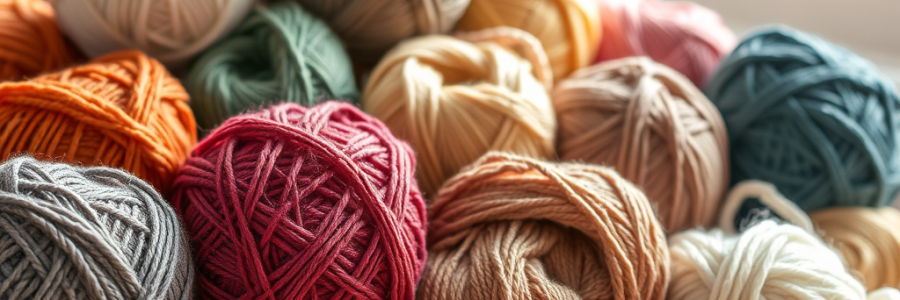
Understanding Yarn Weights Outside the UK: Differences & Conversions

Yarn weights can be confusing, especially when you venture beyond the UK to explore the diverse world of international knitting and crochet. Each region has its own naming conventions and weight categories, which can lead to misunderstandings if you’re following a pattern from a different country. This guide will help you navigate yarn weights outside… Read More Understanding Yarn Weights Outside the UK: Differences & Conversions

My Journey with Natural Dyeing: Lessons Learned & Challenges Faced With Learning Difficulties

Natural dyeing offers a rewarding creative experience but comes with challenges, particularly in handling yarn post-dyeing. The author shares personal anecdotes about frustrations and valuable lessons learned, including securing hanks to prevent tangling. Recognising neurodivergent traits has aided acceptance of difficulties, underscoring that mistakes enhance the learning journey in this craft.… Read More My Journey with Natural Dyeing: Lessons Learned & Challenges Faced With Learning Difficulties

Understanding the Different Weights of Wool and Yarn in the UK

Have you ever found it challenging to decipher the different weights of wool or yarn for a knitting or crochet project? Whether you’re a beginner exploring this creative world or an experienced crafter ready to tackle a more intricate pattern, understanding wool or yarn weights is essential to achieving the best results. Choosing the right… Read More Understanding the Different Weights of Wool and Yarn in the UK

Learning from Mistakes: My Journey with Yarn Selection and Therapeutic Textiles

When embarking on a new creative project, it’s easy to get swept up in the excitement and make impulsive decisions. Recently, I experienced this first-hand whilst sourcing yarn for a product I hope to create using therapeutic textiles. This endeavour, which combines my love for organic and traceable materials, has been a valuable learning experience—both… Read More Learning from Mistakes: My Journey with Yarn Selection and Therapeutic Textiles

Solar Dyeing: A Sustainable Approach to Natural Dyeing of Textiles

Solar dyeing is a sustainable method of dyeing textiles using sunlight to extract colours from natural materials. This slow process involves natural fibres, dye substances, and mordants in sealed jars, requiring minimal intervention. It reduces energy consumption and carbon footprint while producing unique and vibrant results, appealing to sustainable fashion enthusiasts.… Read More Solar Dyeing: A Sustainable Approach to Natural Dyeing of Textiles

The Chemistry of Plant Dyes: Nature’s Palette

Plant dyes, derived from various plant parts, produce a range of colours through natural compounds known as pigments and chromophores. While more sustainable than synthetic dyes, they face challenges like light-fastness and wash-fastness. Understanding the chemistry behind plant dyes enhances their application in textiles, promoting sustainable practices and innovative techniques in dyeing.… Read More The Chemistry of Plant Dyes: Nature’s Palette

Natural Dyeing with Onion Skins: Testing & Creating Samples

The natural dyeing experiment involved organic velour, raw silk, and flannel fabrics to assess colour absorption over varying time frames. Results showed velour absorbed dye well but presented patchiness. Raw silk displayed vibrant hues, while flannel needed longer immersion to achieve rich colours. Future tests will examine colourfastness and storage of onion skins for sustainable dyeing.… Read More Natural Dyeing with Onion Skins: Testing & Creating Samples

Beautiful Beetroot: Is It Really the Perfect Natural Dye?

Beetroot, known for its striking pink-purple colour due to Betalain, is not a reliable natural dye. Recent findings reveal that its colour is temporary, fading quickly due to sensitivity to light and pH changes. While unsuitable for long-lasting projects, it remains valuable for short-term applications and experimental textile art.… Read More Beautiful Beetroot: Is It Really the Perfect Natural Dye?